Category Archives: Buddhism

The Sutra Parrots

1409033364_couple-of-red-parrots_facebk

Recently I attended the engagement ceremony of a cousin. It was a Buddhist ritual. The monk recited the sutras & both the prospective bride & groom repeated those sutras.

All Buddhist sutras are recited in the Pali language. And in the repetition, the meaning is usually lost.

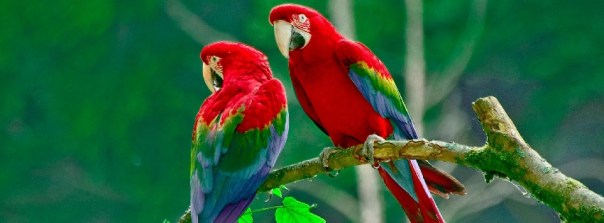
Wouldn’t it be better to say what the sutras mean rather than repeating them like a parrot?

Firstly it seems as if you are signing a document written in Chinese i.e. without understanding the content.

Going beyond the specific instance, this is a common problem while reciting sutras. If you understand the Pali language naturally then it makes sense but Pali is not anyone’s mother tongue.

​The Buddha chose to spread his message in the Pali language only because it was the common dialect & lay people did not understand the prevalent language of sutras – Sanskrit. So why can’t we speak the sutras in English or Hindi?

Wouldn’t it be better, instead of saying – Panatipata veramani sikkhapadam samadiyami; to say – “I undertake the precept to refrain from destroying living creatures.”?

I remember once I had been to a house warming ceremony. Again it was a Buddhist ritual & everyone recited the five precepts including this one – Suramerayamajja pamadatthana veramani sikkhapadam samadiyami. It means “I undertake the precept to refrain from intoxicating drinks and drugs which lead to carelessness.”

To my utter disgust I saw the people, after the Puja got over, get into a party mode with alcohol & meat.

So what the people said a while back in Pali language had no effect on them. If they had spoken the sutra in English or Hindi, it would have caused a contradiction in their minds.

You can repeat a sutra in an unknown language for a hundred thousand times without any benefit. but if you repeat it in a language you understand, it may sink in.

Arhat vs. Bodhisattva

Bodhisattva-2

Arhat and Bodhisattva are commonly understood terms in Buddhism. The Arhat is the pinnacle of spiritual achievement as mentioned in the Theravada scriptures while the Bodhisattva is an ideal which spiritual seekers aim for in order to achieve Buddhahood.

There are several sects within Buddhism, the main ones being the Theravada, also called as Hinayana and the other being Mahayana. Arhat is a term used by the Theravada sect while Bodhisattva is used by the Mahayana. And there is some amount of debate among the Buddhists on these terms and what they signify. In order to understand what this means, it is important to learn the context of the terms used.

THE ARHAT

In many Theravada texts, the Buddha is described as an Arhat, one who has completely extinguished birth and death. An Arhat is not reborn in any realm. This is the highest spiritual achievement, the goal of all meditation and practice. The Arhat is the final stage of 4 stages of spiritual evolution – the stream enterer, the once returnee, the non-returnee and the Arhat.

The stream enterer is one who has entered the path of Nirvana and within a maximum of 7 rebirths will attain to the level of Arhat. He cannot go back into the realm of suffering. The once-returnee as the name suggests is reborn only once before he becomes an Arhat. The non-returnee has no more rebirths in the lower realms but has not yet become an Arhat. The Arhat is one who has extinguished all desire, all ignorance which leads to rebirth.

There is a distinction which is made between the Buddha and the Arhat. A Buddha is one who discovers the supreme path with his own efforts, without recourse to a teacher. The Arhat on the other hand achieves Buddhahood but with the guidance from a Buddha. There is another category called Solitary Buddhas or PratyekaBuddhas, who also become Buddhas without any teacher, but they are unable to teach others. It is mentioned in several texts that after his disciples became Arhats, the Buddha sent them all across the land to preach the Dhamma.

THE BODHISATTVA

Bodhisattva, which is the Mahayana ideal, is someone who has taken the vow to save all sentient beings, wherever they are however innumerable they are, from ignorance and the rounds of rebirth and until then, he does not enter Nirvana. In order words, he does not free himself until he has helped each and every other being to free themselves. The Bodhisattva willingly gets reborn in order to fulfill his vow.

A Bodhisattva is also someone who is eventually going to become a Buddha in a time to come. So if you are intent of attaining Buddhahood, you need to take the Bodhisattva vow and help people in innumerable lifetimes, leading to the perfections and eventually to Buddhahood.

THE CONTENTION

The Mahayana Buddhists accuse the Arhat of being selfish, looking after his own salvation without helping others. Monks in the Theravada tradition go off into the jungles away from society, beg for their food and spend their time in meditation in order to become Arhats. The Mahayanists claim that you cannot become a Buddha unless you have the Bodhisattva attitude.

The source of the Bodhisattva ideal can be traced to the stories of the past life of Buddha as told in the Jataka tales. In each of these stories, Buddha recounts how he helped other people through millions of previous births as a human being or as animal, on his path to becoming the Buddha.

THE RESOLUTION

I believe the people who make a dispute out of Arhat and Bodhisattva have not really grasped the essential teaching of the Buddha. The core of the realization which makes a Buddha is that there is no Self, separate from the rest. It is not that you strive and meditate to destroy the Self. The Self does not exist right from the beginning. What you do is to eliminate the illusion or notion of its existence.

So looking at things from this view, there are no people to begin with. And if you really understand in your bones what impermanence is, what emptiness is, there is no more dispute. Then there is no difference whether you help people or not because you are not there at all and neither are they. When you eliminate the notion of self, there is no me and no others, so no sentient beings to save.

​But so long as you see others suffering, you also have a subtle notion of self. When you do away with this, whatever you do will be a help to people. You see, there is a limit to explanations with words.

If you are taking the Bodhisattva vow, it is good. It helps to direct the mind outwards away from the self-centeredness. But eventually, your goal is to become the Buddha when you no longer hold the view of Self. If you are coming back again and again into the world to help people, you are only increasing the delusion. On the other hand, if you consciously strive to become an Arhat, you are caught in the deepest swamp.

The true son of Buddha only looks directly into the mind, discovers there is emptiness, and stays there with nothing further to be done.

Reinterpreting the 3 Jewels of Buddhism

Global_Rise_of_Buddha_Dhamma_Sangha-01

The Buddha, the Dhamma and the Sangha – The Triple Gem

All practitioners of Buddhism take refuge in the triple gem. However, a deeper meaning can be interpreted about them apart from the conventional meaning.

The 3 jewels of Buddhism are the Buddha, the Dhamma and the Sangha. Conventionally, the Buddha stands for the person Gautama Buddha who taught 2500 years ago in India. The Dhamma stands for his teachings and the Sangha is the order of monks which he founded.

Whenever a lay person wants to get ordained as a Buddhist, he has to recite the three refuges thrice. By doing this, the person expresses his intention to lead his life by following the teachings of the Buddha. If the person wishes to become a monk, he must take formal vows.

Most lay people who consider themselves as Buddhists do not investigate the deeper meaning of the triple gem. They pay respects to the statue of the Buddha; they perform rites and rituals or read Dhamma and also offer food and robes for the monks in the Sangha. However, if one really investigates the true significance of the three jewels, one can discover the Buddha’s teaching for himself and become enlightened.

First Jewel – Buddham Saranam Gacchami (I Take Refuge in the Buddha)

Buddha literally means the ‘Awakened One’. It also stands for the Buddha Nature which is the underlying substance of all the phenomena of this universe and also one’s true self. So when one takes refuge in the Buddha, it is not bowing down to the image of Buddha or praying to that image. In a deeper sense, it means taking refuge in one’s true self or true nature.

Ordinarily, we are known by our individual names and are living according to the circumstances that life presents to us. However, in the Buddhist understanding, this is bondage. To be free, one must recognize one’s true nature and live in it, which puts an end to all striving because one has reached one’s home.

Second Jewel – Dhammam Saranam Gacchami (I Take Refuge in the Dhamma)

The word Dhamma has many meanings. The most commonly used is that of the body of teachings of the Buddha in the form of discourses and the sutras. However, a deeper meaning of the word Dhamma is also phenomena or ultimate reality. It is like saying that ‘water flows because it is the Dhamma of water to flow’.

Taking refuge in the Dhamma does mean, at the superficial level, studying the sutras and following the teachings in one’s life. However, in a deeper sense, one must take refuge in the true nature of things. One must understand that all things have the nature of impermanence, dissatisfaction and emptiness and live that understanding. This refuge meant to free oneself from attachment to things and wrong notions.

Third Jewel – Sangham Saranam Gacchami (I Take Refuge in the Sangha)

The Sangha is the community of monks who live according to the teachings of the Buddha. They beg for their food and spend their time in meditation. In the literal sense, taking refuge in the Sangha means to join their order by becoming a monk. However, in the deeper sense, it means living the right life oneself. Living in society, where one is tempted by all kinds of desires and influences, one must live rightly even if one has to stand alone.

Taking refuge means one is protected against all danger and calamity. And taking refuge in the triple gem is the true protection from the vicissitudes of life. However, one must take the refuge understanding the deeper significance of the three jewels.