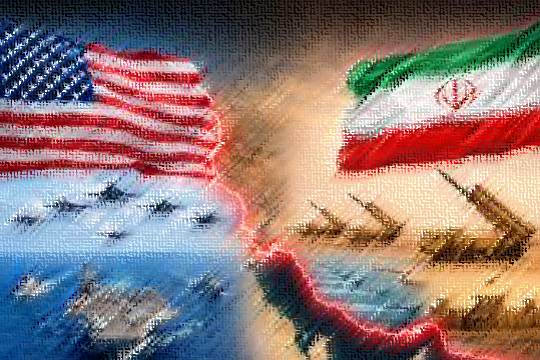
I met a friend M at a café. What began as a casual conversation took an interesting turn.
M: Crazy things going on in the world right now, isn’t it?
Me: You mean the war?
M: Yes. It feels wrong. The way the USA has approached Iran, and how it presents itself as the righteous side — it feels hard to accept.
At this point, most conversations drift in a familiar direction — recounting mistakes, exchanging opinions, or even mocking those involved.
But rarely do they go deeper.
Me: That may be true. But there’s something we often miss.
M: What?
Me: You and I can look at these actions and call them wrong or even foolish. But do you think those taking these actions see them that way?
I doubt it.
From their perspective, they are doing the right thing. In fact, they may feel the world is unfairly criticizing them and not supporting their effort.
M: What do you mean?
Me: Take the USA — or more specifically, leaders like Donald Trump and those who support such decisions. They are not directly experiencing what people on the receiving end of bombings go through.
From where they stand, their actions make sense.
They may genuinely believe that a nuclear-armed Iran is a threat to US interests and global stability — and that such a threat must be eliminated.
Iran, on the other hand, has lived under sanctions for decades and sees US military presence in neighbouring regions. From their perspective, developing nuclear capability may feel like the only way to deter aggression.
So both sides may claim they want peace.
And yet, their actions lead to war — the opposite of peace.
M: So are you saying both USA and Iran are right?
Me: I’m not focusing on who is right or wrong. That’s difficult to conclude.
What matters is this:
Our actions are shaped by how we see the situation.
How we see drives how we act. And that is what creates the wide range of situations and experiences we see in the world.
M: Can you explain that further?
Me: Donald Trump has spoken about wanting peace, even positioning himself as someone deserving recognition for it. Yet his actions — such as withdrawing from agreements and choosing military responses — appear misaligned with that intention.
But from his perspective, the world looks different.
If you see Iran as a serious and immediate threat, your actions will reflect that perception. He sees himself leading the world’s most powerful military — so why not use it to neutralize that threat?
Similarly, Iran may see itself as acting defensively. It knows that countries with nuclear capability are rarely challenged. With US bases surrounding it, the threat feels constant. From that view, nuclear capability becomes a deterrent.
So the USA sees Iran as a threat that must be stopped.
Iran sees nuclear capability as necessary for survival.
Both may want peace — but their perceptions lead to actions that create conflict.
M: That’s interesting. But what will make them change?
Me: I don’t know about Trump specifically. But in my experience, change comes from clear seeing.
When I see clearly — without justifying, without blaming others — that my actions are not aligned with my intention, or when I truly feel the impact of my actions on others, something shifts.
What we call conscience awakens.
And only that can change how we act.
M: Can you give an example?
Me: Sometimes individuals step away from positions of power or responsibility when they realize their actions are not aligned with what they truly stand for. You may have heard of officials in the Trump administration who resigned.
Not out of guilt.
But out of clarity.
M: So are you saying those who go to war have no conscience?
Me: It’s more subtle than that.
It’s not that people lack conscience.
It’s that it often remains dormant.
Most of us lose touch with our deeper intention. We move through life mechanically. In that process, our actions drift away from what we would truly stand for.
When that gap is not seen, nothing changes. We continue to justify our actions.
But when someone pauses, reflects, and clearly sees the mismatch between intention and action, conscience can awaken.
And with that clarity, action changes naturally, without any external force.
M: So one must remember one’s intention?
Me: Yes.
 Big Picture Zen