Category Archives: Reflections

A Poem by the Nameless One

Now that I have woken up
What shall I do

Shall I go to the playground
To run after the ball
But the scores no longer matter to me

Shall I go to the movies
To watch the song and dance
But I am no longer excited by fantasies

Shall I go to the office
To sit in front of the computer
But that makes me sleepy

Shall I stay at home
To play with my children and talk with my wife
But it does not give me any joy

I think I should read a book
But what will I do after I finish reading
I think I should go to the restaurant
But what will I do after I have finished eating

I do not know what I should do
Now that I have woken up

I can see people around me sleeping
Should I try to wake them up?

But they get angry because they do not want to be disturbed
Some can hear me but they talk in their sleep
Others cannot hear me because they are fast asleep

Oh how I long to look deeply into someone’s open eyes
And listen to their unspoken words

So I go along not knowing what I must do
Now that I have woken up

I run after the ball
I watch the songs and the dance
I sit in front of the computer
I play with my children and talk with my wife
I read a book
I eat at the hotel

But I do not know what I must do.
Now that I have woken up

Man or Machine

Human frailties are glorified so much that there seems to be no way of accepting a person who has overcome those weaknesses. “To err is to human” and other similar sayings tend to accept that humans are imperfect. Although, it is true, it also closes the door to perfection. It becomes an excuse to remain imperfect, remain mediocre.

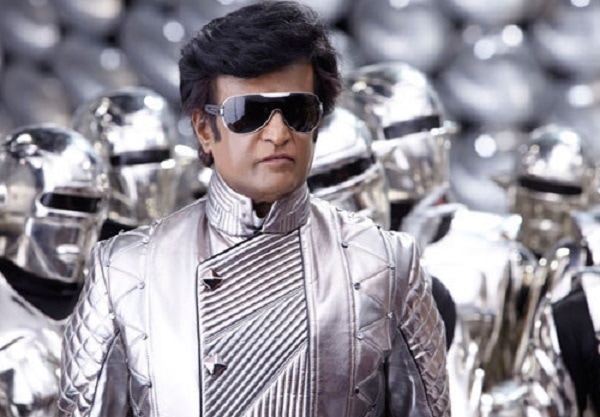
Man has always tried to make machines as intelligent or more powerful as humans. However, there is a general understanding that machines can never learn emotions. Rajnikanth may prove you otherwise.

1579815-enthiran-the-robot-movie-wallpapers-1_orig

Emotions are considered to be the touchstone on which to perform the Turing test (A test to differentiate between man and machine). In simple words, humans are humans because they have emotions, which machines can never have.

The point most of humanity misses is how mechanical our emotions are. Emotions are simply reactions to external stimuli. And despite all the talk about emotional intelligence, very few people even think about the possibility of being free of emotional outbursts.

Those who show little or no emotions are considered by other people to be mechanical. Emotions are seen to be so necessary to live and express oneself.

Take the case of Arnold Schwarzenegger in the movie Terminator 2: Judgement Day. He is shown to be a machine, yet when told by young John Connor, not to kill people, takes care not to do that. Now how many humans will be able to take such instructions and follow them? Obviously, we are not machines! We are emotional beings and we will not be able to do anything as perfectly as a machine can do, if we compare apples to apples.

t-800-terminator-arnold-schwarzenegger-c_orig

By thinking of machines as inferior to humans and by thinking that emotions are the hallmark of human beings, we can never see how machine-like all our actions and behavior really are.

Someone who realizes that his emotions are simply reactions over which he has no control whatsoever is in a far better position to understand himself than someone who believes she has a right to be angry to express her state of mind or a right to sulk when he does not get what he wants.

Attainment of self knowledge refers partly to this truth about oneself. Take it or leave it. If you take it, you might observe your machine, set it right and be able to do far more marvelous things and have the opportunity to gain something real. If you leave it, you do not lose anything cause you do not have anything in the first place.

Is Good Better Than Evil?

I am writing this with reference to the good and evil as depicted in Indian films. The hero or the protagonist is always shown to be on the good side while the evil is personified in the villain. The story is almost always a clash between good and evil and good is always shown to be victorious in the end.

If you have seen films like Ghajini, you see that Aamir Khan, the protagonist is the good guy while Ghajini, the villain is the bad guy. Ghajini kills the girlfriend Asin and injures Aamir Khan. Now, Aamir Khan is so filled with vengeance, that he has become more evil than the villain – just see the way he goes and bashes up the goons and eventually kills Ghajini.

jdwmtfbaefdsi_orig

This kind of story is the norm in Hindi films. First the villain does some harm to the hero or the society and then the hero destroys the villain’s business. But in order to do so, the hero must learn the evil ways first. So if good starts behaving in evil ways, what is the difference between good and evil?

Take another example – Sunny Deol. He becomes so angry in films that it becomes difficult to know whether he is the hero or the villain. You will seriously be afraid to associate with such a person (I am only talking of the character he portrays and not the person he is in real life) – I wonder how he even gets a girlfriend who would like to marry him.

An eye for an eye and tit for tat kind of revenge seems very much acceptable to our society. When the villain beats up the hero, the audience sympathizes and when the hero beats up the villain, the crowd cheers.

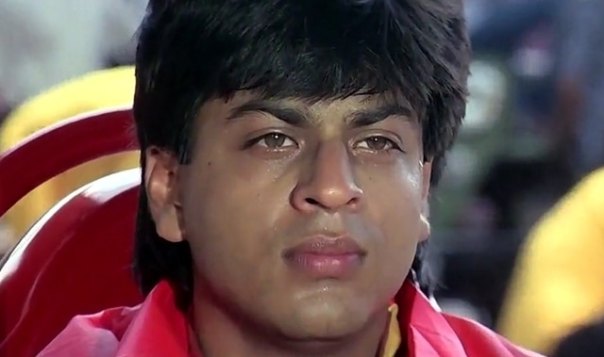
There are films where the protagonist plays a negative character such as Shahrukh Khan in Baazigar. He is taking revenge for the wrong done to his father and murders Shilpa Shetty (in the film of course). This violence is literally endless. It is possible that somebody from the villains family will one day kill Shahrukh Khan if the story would have continued.

srk-best-dialogues-in-baazigar_orig

Shahrukh’s justification in the film is simply – you started it first. It is a common dialogue in Hindi films – Yeh khel tumne shuru kiya tha aur main ise khatam karoonga. The film may end but the game never ends in real life.

In order to get hold of terrorists, police have to start thinking like terrorists. The idea is to instill fear of police in terrorists so that they will stop their evil activities. However, in the process, the police itself becomes so fearsome that they resemble terrorists.

In order to get hold of terrorists, police have to start thinking like terrorists. The idea is to instill fear of police in terrorists so that they will stop their evil activities. However, in the process, the police itself becomes so fearsome that they resemble terrorists.

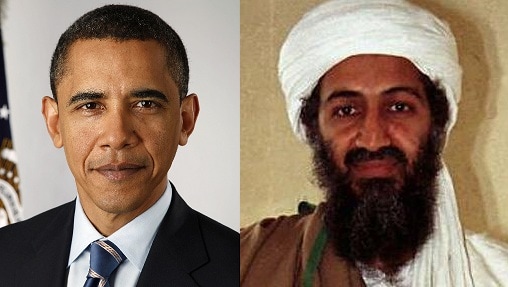
For Obama, Osama is the villain but for Osama, Obama is the villain. In films, the story is told only from the hero’s point of view. There is never, if any, any investigation in to the life of the villain – what kind of life he faced and what made him do the things he did.

obama-osama_orig

This is not an easy matter to solve. Real Goodness cannot be equated with the mundane goodness of ordinary life. Mundane goodness as depicted by heros in the films is just as evil as the evil villains they are trying to exterminate.

We must look for genuine Goodness beyond good and evil as normally understood.

Is There Anything To Be Done?

matrix_orig

We wake up in the morning and as soon as we finish washing our face and brushing our teeth, we get busy in boiling milk, reading newspaper, getting ready for the office. Then the rest of the day we spend in doing whatever our office work demands – typing on the computer, reading and sending emails, attending meetings, tea, coffee, lunch… then we get back home, watch television, read books, spend time with family and go to bed.

Day in and day out we do the same thing. On weekends we go to movies, do some shopping, eat at restaurants and go on a long drive to the countryside. That is what most of our life consists in.

We do all these things but never wonder why we do them. we might have reasons like – in order to survive, in order to earn money, to support our family, and so on. But those reasons are not the real reason why we do things.

We do things mostly by habit. We cannot do anything else. We are so used to doing things in the same way and same manner, it becomes a habit and we don’t realize what we are doing. Not only our physical actions like eating, bathing and dressing is determined by habits, even our psychological actions like thinking and feeling are driven by habit.

In reality we don’t know anything. So we tend to follow others thinking that they know. But they are following someone else. So everyone is simply following others blindly without knowing the underlying reason. This is the way we take decisions on buying a house, a car, going for a vacation and so on.

Fear is a strong motivator of actions. Based on experiences and memory we develop fear and that determines our actions in many situations.

Another strong influence for our actions is our desires. Most people think their desires are their own. But where did they find those? They did not decide to have those desires. It came as a natural inclination without any conscious effort.

So if we really look at the world and the people carefully, beginning with oneself, we find that everyone is sleepwalking, not realizing what they are doing, why they are doing, where they are going and so on. They meet with accidents, love, friendship, joy, grief and everything else without conscious effort. It happens to them. Their inner world of emotions and thoughts also happens.

When we say – I am thinking… it is the thoughts which are going on in my mind. I don’t think anything. Neither do I have any control on my thoughts. And it is the same with everyone.

Can you see how dangerous the situation is? People are living their life and dying completely unaware of who they are, what they are doing and whither they are going. They are dreaming happily with the story they invent of their name, education, job, achievements, children, family, love and friendship.

If you see the danger of this situation clearly, you instantly become conscious and you stop doing what you are doing. You become alert, mindful, and watchful. Suddenly there are no thoughts in your mind. The mind becomes calm and sharp.

And if you attain this state, you realize there is nothing to do. This non-doing is the real doing. All else that we normally call doing is only automatic reaction. No one is in control. The stopping of everything is the real doing.
What is the Purpose of Life?

So that’s the main question. Is it not? It is easy to say that you must discover your purpose in life or that different people have their own purposes. But I am not asking this question in the superficial sense. And if you have reflected for some time on this, you would have found that superficial answers do not really answer the question deeply.

Just to explain a little more. Is the purpose of my life to become somebody – a celebrity, a CEO, a wealthy person, a father, a grandfather, a good human being? Does my purpose lie in fulfilling all my responsibilities as a son, a husband, an employee, a citizen? Is my purpose gathering knowledge, learning how to do things, earning money, helping others?

All of that! We are doing all of that all our life? Is that all and then we simply die and hope that others will remember us for ever for the sons and daughters we leave behind, the houses and companies we have built. I don’t know about you but to me, none of these things seem to have any meaning. It seems to me that I engage in all these activities only because I don’t really know what I am supposed to do. So I just do what I have been educated in and what I see others doing.

The only way I can answer the question so that the question does not remain is to investigate where the question comes from and not by looking for an answer. The question is formed by the words – What, is, the, purpose, of, Life? Each word in itself has no meaning; neither does each alphabet of the word. Isn’t it true that I have composed the question simply because I can do so or have heard it or read it and then go about searching for the answer?

My mind and your mind have been trained to find answers to questions. Whenever a question is asked we are supposed to find an answer or else we will fail the exam. But can you drop the question altogether? If you can do that in reality, you might come across something which you never expected and come face to face with life in its naked form.

Popo was our parrot. He was a baby in a small little cage when we purchased him. With his round fluffy body, he could barely walk – hardly aware of his reality. We brought him up on the choicest of fruits and chillies. We used to whistle in front of him and teach words to him.

As he grew up, we shifted him into a larger cage, so that he had more space to move about. He was a fast learner and soon started whistling at girls passing in front of our house (we never taught him that). We loved this bird very much and sometimes used to allow him out of the cage in the living room. We kept the door and windows closed so that he does not fly away. His cute parrot-walk on the sofa – a kind of a curious drunken joker-like walk – was always a sight to watch. He used to get a chance to fly around the room for sometime.

But then he started to get restless within the cage and would always look for opportunities to get out. He tried his best to cut through the bars, damaging his beak in the process. He started biting some of us who were offering him food.

One day he escaped.

We were very sad to see the empty cage but were pleasantly delighted to see him back the next day sitting on top of the cage. We put him back in the cage and treated him with delicious food.

Very soon he started to become restless again. Just a few days later, he got another opportunity to fly off, as the cage door was not shut properly. But this time, a passing cat pounced on him and he became the cat’s lunch!

Makes me wonder whether I am in a cage too?
Have I also been given the choicest of food?
I also want to be free.
But do I have the skills to survive in the wild?