All posts by Big Picture Zen

Unknown's avatar

About Big Picture Zen

Center for Self-inquiry and Awakening is a space for inner exploration and self-realization.

The Elusive Zen Journalist

I enjoy reading Zen stories. It is so wonderful to read those interactions between master & student – the innocent question from the student and the crazy answer from the master.

Most of the times there is a question asked by the student, followed by the master’s enigmatic reply. The master’s reply is mysterious only to a non-enlightened student. The reply which takes many forms, not just words but sometimes a whack of a stick or a kick or a loud shout, is always intended to point directly to the mind.

Zen is described by many to be a teaching beyond scriptures & tradition, directly pointing to bare reality.

​So, not surprisingly, many students get enlightened on hearing the master’s reply. Such stories are the most interesting ones. We hope too to get an insight into the master’s response.

Zen Story of Gutei’s Finger

Whenever anyone asked him about Zen, the great master Gutei would quietly raise one finger into the air. A boy in the village began to imitate this behavior. Whenever he heard people talking about Gutei’s teachings, he would interrupt the discussion and raise his finger. Gutei heard about the boy’s mischief. When he saw him in the street, he asked the boy and asked him a question. The boy raised his finger as usual. Gutei grabbed his finger and cut it off with a knife. The boy cried and began to run away, but Gutei called out to him. When the boy turned to look, Gutei raised his own finger into the air. At that moment the boy became enlightened.

Zen Story of Dojen’s Enlightenment

One day Master Ju-Ching was scolding another monk for sleeping, and said, “The practice of Zazen (Sitting Meditation) is the dropping away of body and mind. What do you think dozing will accomplish?” Upon hearing these words, Dogen became fully enlightened.

Enlightenment apart, I really wonder who is it that takes the time to write down these stories?

The dialogue in a Zen story is a deeply intimate, intensely personal and mostly private exchange between the student & the master. So for the story to have passed down through the oral tradition, someone has to report it verbatim, for us to enjoy.

Is it the teacher who takes pride in his responses to his students & keeps repeating them to others so as to make stories out of it? I doubt it because if they are real Zen teachers, they would be more concerned about the student getting enlightened than about making a story of it to brag about.

So is it the student who reports his conversation with the teacher & shows off how he got enlightened? Again I doubt it because if the student really attained enlightenment, that would be such a great event, he would have been too out of his mind to cry “Eureka” and run down the street.

So there must be somebody else – the elusive journalist – who eavesdrops on the conversation, sees the changed expression on the face of the student & infers whether he got enlightened & then runs away to share the story with fellow students.

​There were no hidden microphones or voice recorders in those days & obviously neither Zen master nor the student who got enlightened would be interested in making silly stories, then WHO THE HELL NOTED ALL THESE ZEN STORIES? – TAKE IT AS A KOAN TO SOLVE.

Zen Story of Huike’s Enlightenment

Huike and Bodhidharma were climbing up a mountain peak. Bodhidharma asked, “Where are we going?” Huike replied, “Please go right ahead—that’s it.” Bodhidharma retorted, “If you go right ahead, you cannot move a step.” Upon hearing these words, Huike was enlightened.


The Missing Context in Zen Stories

Zen stories are very popular among students of Zen. These stories have been around since the time Bodhidharma went to China.

​Monk asked, “What is the meaning of Bodhidharma’s coming to China?” Joshu said, “The oak tree in the garden.”

All Zen stories have the same two characters – a student monk and the master – and it contains an interaction between them. The student wants to know “why did Bodhidharma come from the west?” in other words he wants to know the essence of the teaching or the true nature of reality. The Zen master responds & sometimes the student gets enlightened.

​The Zen master’s response is usually mysterious & that is the main reason why Zen stories are so popular. However the Zen master does not intend to be mysterious. He is as direct as one can be in that moment & intends to point to the essence directly.

​Monk asked, “What is Buddha?” Unmon said, “A dry shit-stick”

Over the centuries, as these stories have been retold by students & translators, they have lost their details. The only part that is passed down is about what the student asked & what the master said. The whole context & the situation in which the dialogue took place has gone missing.

​A Zen master helps a particular student at a particular point & it is so very intimate. Everything in that moment is important to the story – what the master was doing when the student asks him, how the student asks, things around the place, time of the day – not just the words.

Monk asked, “What is Buddha?” Tozan said, “Three pounds of flax”

For an astute student, knowing the context of the master’s response can help a lot in understanding what the master is pointing to.

Monk asked, “Does a dog have Buddha nature?” Joshu said, “Mu”

Joshu did not merely say “Mu”. He shouted at the top of his voice. Mu is a Japanese word that means No.

Slow and Steady Wins the Race

tortoise-and-hare_orig

A hare one day ridiculed the short feet and slow pace of the Tortoise, who replied, laughing: “Though you be swift as the wind, I will beat you in a race.” The Hare, believing her assertion to be simply impossible, assented to the proposal; and they agreed that the Fox should choose the course and fix the goal. On the day appointed for the race the two started together. The Tortoise never for a moment stopped, but went on with a slow but steady pace straight to the end of the course. The Hare, lying down by the wayside, fell fast asleep. At last waking up, and moving as fast as he could, he saw the Tortoise had reached the goal, and was comfortably dozing after her fatigue.

The moral of the story has always been told as – slow & steady wins the race.

Why is this the only moral of the story? Can the moral not be stated as – Do not be too proud of your strengths?

Is it not possible that this particular hare was foolish enough to doze off? Is it not possible that the hare learnt his lesson after losing the race?

What is the probability that the tortoise has more than 50% odds of winning in any given race with a hare? Will you bet on the hare or the tortoise?

Why is the moral told from the tortoise’s viewpoint but not from the hare’s viewpoint?

I think there would be no story if the hare had won the race. The tortoise was the underdog & therefore his winning is the crux of the story.

But it is still difficult to wrap one’s head around the point that a slow & steady approach of the tortoise will always be a winning strategy against the hare.

While this seems obvious, there is another perspective from which this approach makes real sense and this is what Aesop was referring to as the moral of the story.

​The slow and steady approach is actually a mental attitude towards attaining one’s aim. It refers to remembering one’s aim and not forgetting it. Even if one makes a slow and steady progress, it is better than making fast, random, distracted efforts like the hare, who got lazy, tired and slept off. The hare did not remember his aim and ultimately lost to the tortoise.

A Poem by the Nameless One

Now that I have woken up
What shall I do

Shall I go to the playground
To run after the ball
But the scores no longer matter to me

Shall I go to the movies
To watch the song and dance
But I am no longer excited by fantasies

Shall I go to the office
To sit in front of the computer
But that makes me sleepy

Shall I stay at home
To play with my children and talk with my wife
But it does not give me any joy

I think I should read a book
But what will I do after I finish reading
I think I should go to the restaurant
But what will I do after I have finished eating

I do not know what I should do
Now that I have woken up

I can see people around me sleeping
Should I try to wake them up?

But they get angry because they do not want to be disturbed
Some can hear me but they talk in their sleep
Others cannot hear me because they are fast asleep

Oh how I long to look deeply into someone’s open eyes
And listen to their unspoken words

So I go along not knowing what I must do
Now that I have woken up

I run after the ball
I watch the songs and the dance
I sit in front of the computer
I play with my children and talk with my wife
I read a book
I eat at the hotel

But I do not know what I must do.
Now that I have woken up

The Sutra Parrots

1409033364_couple-of-red-parrots_facebk

Recently I attended the engagement ceremony of a cousin. It was a Buddhist ritual. The monk recited the sutras & both the prospective bride & groom repeated those sutras.

All Buddhist sutras are recited in the Pali language. And in the repetition, the meaning is usually lost.

Wouldn’t it be better to say what the sutras mean rather than repeating them like a parrot?

Firstly it seems as if you are signing a document written in Chinese i.e. without understanding the content.

Going beyond the specific instance, this is a common problem while reciting sutras. If you understand the Pali language naturally then it makes sense but Pali is not anyone’s mother tongue.

​The Buddha chose to spread his message in the Pali language only because it was the common dialect & lay people did not understand the prevalent language of sutras – Sanskrit. So why can’t we speak the sutras in English or Hindi?

Wouldn’t it be better, instead of saying – Panatipata veramani sikkhapadam samadiyami; to say – “I undertake the precept to refrain from destroying living creatures.”?

I remember once I had been to a house warming ceremony. Again it was a Buddhist ritual & everyone recited the five precepts including this one – Suramerayamajja pamadatthana veramani sikkhapadam samadiyami. It means “I undertake the precept to refrain from intoxicating drinks and drugs which lead to carelessness.”

To my utter disgust I saw the people, after the Puja got over, get into a party mode with alcohol & meat.

So what the people said a while back in Pali language had no effect on them. If they had spoken the sutra in English or Hindi, it would have caused a contradiction in their minds.

You can repeat a sutra in an unknown language for a hundred thousand times without any benefit. but if you repeat it in a language you understand, it may sink in.

Waking Life (2001)

Director – Richard Linklater

7441066

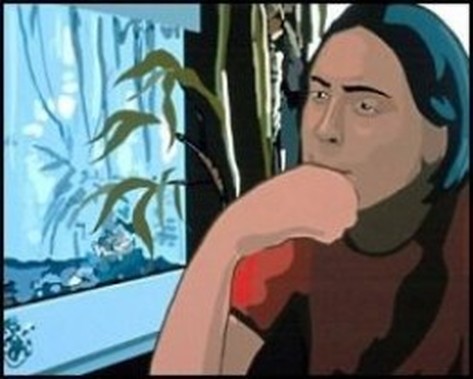
George Santayana said: “Sanity is a madness put to good uses; waking life is a dream controlled.” One of the persistent teachings of the spiritual masters is that our waking life – the life in which we walk, talk, think, eat, go to the office, marry, bring up children – is actually a dream. Even though we think we awake from sleep, we are actually day dreaming in our waking life. All our goals, ambitions, memories are simply a common dream. When one realizes this, there is the possibility of further waking up to the ultimate reality beyond time and space.

The film Waking Life is a unique film in many respects. It is a digitally enhanced live-action rotoscoped film. Everything is shaking and fuzzy as if in a dream. The story is about a young man who is in a continuous dream like consciousness – he keeps waking up from one dream but finds himself in another one like the layers of an onion. In his dreams, he meets other characters and discusses with them philosophical issues such as free will, relationships, existentialism, and so on.

I must say that you will need tremendous energy to watch this film – my most favorite mystical movie.

Man or Machine

Human frailties are glorified so much that there seems to be no way of accepting a person who has overcome those weaknesses. “To err is to human” and other similar sayings tend to accept that humans are imperfect. Although, it is true, it also closes the door to perfection. It becomes an excuse to remain imperfect, remain mediocre.

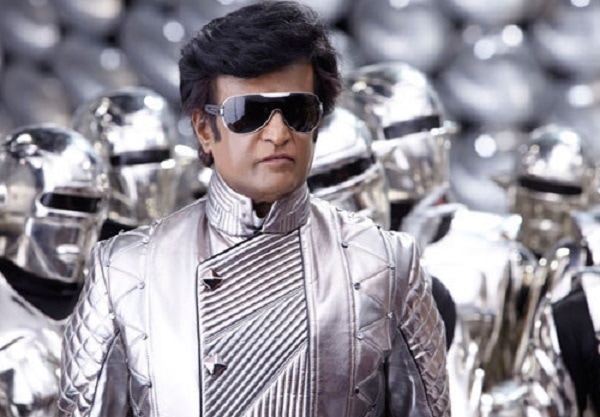
Man has always tried to make machines as intelligent or more powerful as humans. However, there is a general understanding that machines can never learn emotions. Rajnikanth may prove you otherwise.

1579815-enthiran-the-robot-movie-wallpapers-1_orig

Emotions are considered to be the touchstone on which to perform the Turing test (A test to differentiate between man and machine). In simple words, humans are humans because they have emotions, which machines can never have.

The point most of humanity misses is how mechanical our emotions are. Emotions are simply reactions to external stimuli. And despite all the talk about emotional intelligence, very few people even think about the possibility of being free of emotional outbursts.

Those who show little or no emotions are considered by other people to be mechanical. Emotions are seen to be so necessary to live and express oneself.

Take the case of Arnold Schwarzenegger in the movie Terminator 2: Judgement Day. He is shown to be a machine, yet when told by young John Connor, not to kill people, takes care not to do that. Now how many humans will be able to take such instructions and follow them? Obviously, we are not machines! We are emotional beings and we will not be able to do anything as perfectly as a machine can do, if we compare apples to apples.

t-800-terminator-arnold-schwarzenegger-c_orig

By thinking of machines as inferior to humans and by thinking that emotions are the hallmark of human beings, we can never see how machine-like all our actions and behavior really are.

Someone who realizes that his emotions are simply reactions over which he has no control whatsoever is in a far better position to understand himself than someone who believes she has a right to be angry to express her state of mind or a right to sulk when he does not get what he wants.

Attainment of self knowledge refers partly to this truth about oneself. Take it or leave it. If you take it, you might observe your machine, set it right and be able to do far more marvelous things and have the opportunity to gain something real. If you leave it, you do not lose anything cause you do not have anything in the first place.

Is Good Better Than Evil?

I am writing this with reference to the good and evil as depicted in Indian films. The hero or the protagonist is always shown to be on the good side while the evil is personified in the villain. The story is almost always a clash between good and evil and good is always shown to be victorious in the end.

If you have seen films like Ghajini, you see that Aamir Khan, the protagonist is the good guy while Ghajini, the villain is the bad guy. Ghajini kills the girlfriend Asin and injures Aamir Khan. Now, Aamir Khan is so filled with vengeance, that he has become more evil than the villain – just see the way he goes and bashes up the goons and eventually kills Ghajini.

jdwmtfbaefdsi_orig

This kind of story is the norm in Hindi films. First the villain does some harm to the hero or the society and then the hero destroys the villain’s business. But in order to do so, the hero must learn the evil ways first. So if good starts behaving in evil ways, what is the difference between good and evil?

Take another example – Sunny Deol. He becomes so angry in films that it becomes difficult to know whether he is the hero or the villain. You will seriously be afraid to associate with such a person (I am only talking of the character he portrays and not the person he is in real life) – I wonder how he even gets a girlfriend who would like to marry him.

An eye for an eye and tit for tat kind of revenge seems very much acceptable to our society. When the villain beats up the hero, the audience sympathizes and when the hero beats up the villain, the crowd cheers.

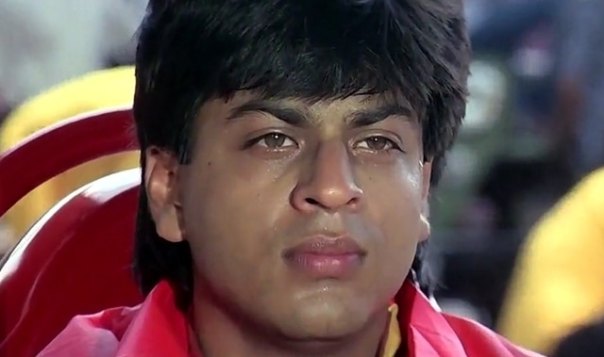
There are films where the protagonist plays a negative character such as Shahrukh Khan in Baazigar. He is taking revenge for the wrong done to his father and murders Shilpa Shetty (in the film of course). This violence is literally endless. It is possible that somebody from the villains family will one day kill Shahrukh Khan if the story would have continued.

srk-best-dialogues-in-baazigar_orig

Shahrukh’s justification in the film is simply – you started it first. It is a common dialogue in Hindi films – Yeh khel tumne shuru kiya tha aur main ise khatam karoonga. The film may end but the game never ends in real life.

In order to get hold of terrorists, police have to start thinking like terrorists. The idea is to instill fear of police in terrorists so that they will stop their evil activities. However, in the process, the police itself becomes so fearsome that they resemble terrorists.

In order to get hold of terrorists, police have to start thinking like terrorists. The idea is to instill fear of police in terrorists so that they will stop their evil activities. However, in the process, the police itself becomes so fearsome that they resemble terrorists.

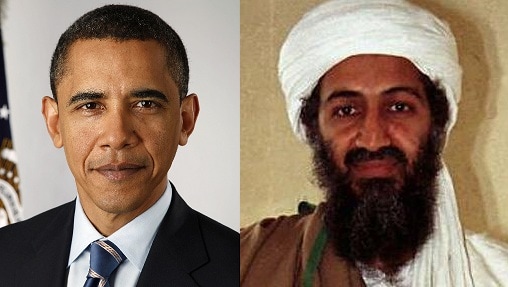
For Obama, Osama is the villain but for Osama, Obama is the villain. In films, the story is told only from the hero’s point of view. There is never, if any, any investigation in to the life of the villain – what kind of life he faced and what made him do the things he did.

obama-osama_orig

This is not an easy matter to solve. Real Goodness cannot be equated with the mundane goodness of ordinary life. Mundane goodness as depicted by heros in the films is just as evil as the evil villains they are trying to exterminate.

We must look for genuine Goodness beyond good and evil as normally understood.

Peaceful Warrior (2006)

Director – Victor Salva

2382126

The Zen-like paradoxical title of this film was what first attracted me to this movie. And I must say that the film surpassed all my expectations. The film is an adaptation of a novel written by Dan Millman and is partly autobiographical. It tells the story of a highly competitive college gymnast who happens to meet a mysterious individual whom he calls Socrates, who teaches him to live in the moment, not through theories and discourses but by actual demonstration.

Dan is initially attracted to Socrates after seeing a miraculous feat. He wants to learn from Socrates what he thinks are tricks which he can use to excel in gymnastics. However, when he discovers that he is becoming different from his peers, he becomes skeptical and afraid of what Socrates is teaching him and leaves him. As he goes back to his old ways, Dan meets with an accident which breaks his leg and he is removed from his college team. Dan turns to Socrates again in desperation, and he now truly begins to learn and understand. Socrates encourages him to train again for gymnastics and to get back on the team.

This movie is one of the best teacher-pupil movies I have seen. Movies based on sporting themes are always entertaining and this one combines spirituality which makes it a treat to watch.

One of my favorite quotes from the movie

Socrates to Dan: You practice gymnastics. I practice everything.

​I believe that “living in the moment” does not mean ignoring the future or forgetting the past. It is not something to be learned by practice and effort. This living happens when you realize that all there is exists in the NOW.

The Truman Show (1998)

Director – Peter Weir

8470060_orig

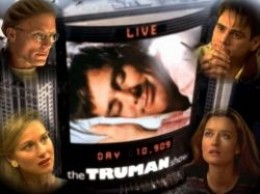
This movie is the mother of all reality shows on television. It takes the idea of Big Brother or Big Boss wherein participants are closeted in a house for 3 months, and extends it to the whole life of one individual.

Truman is born and grown-up on the sets of the reality show. A whole city is constructed as the set complete with neighbors, offices, and the beach. Everything including the weather is simulated. Except Truman, everyone else is an actor. The filming is done through hidden cameras and the show is televised round the clock to the world. Everything is fine until Truman finds some inconsistency about things happening to him and decides to investigate.

Now in the spiritual tradition, the world we live in is also a sort of a self-created reality show which sustains itself. Everyone is already hypnotized into believing what his identity is, based on which he or she lives. However, there are some individuals who find inconsistencies in the worldly affairs and decide to investigate the true meaning of life and become spiritual seekers.