Yesterday, late in the afternoon, after a sumptuous lunch, I was doing nothing (i.e. scrolling reels). I came across Shakespeare’s quote from King Lear
I paused to reflect – Am I doing something or doing nothing? I started to feel a bit uneasy & guilty. However, the next reel raised my spirit.
I relaxed on reading that. It was very sound advice but it lasted only a few reels until I came across Henry David Thoreau.
I had to read that a few times before it sank in. Having nothing to do, I must still do something. What could that be? As I was reflecting on what to do, I got the answer on the 12th reel.
Zen sayings have a magical effect. They stop your thinking and make you wonder. I couldn’t agree more. Everything happens on its own. Who am I to do something?
Energized by that I now aimed for perfection. However just then Robert Schuller, the author of ‘Tough Times Never Last but Tough People Do’ pitched in
Oh. Is it so? Doubts started to creep in about my doing nothing even though I did it perfectly. How can one handle such criticism? As I browsed through reels striving to achieve clarity. Aristotle made an appearance and helped me find inner peace by pointing out in a typically Greek way
I thought to myself that there must be some truth to his advice since no one criticized him for so many centuries for putting the Earth in the center of the Universe. I continued scrolling further…
Even before I could figure out what that ‘SOMETHING’ to do was…
I thought I finally found that ‘SOMETHING’ to do – ‘NOTHING’!
In a way the previous two quotes seemed to cancel each other. I wonder what Keillor and Lounsbrough would have discussed over a cup of coffee.
But I don’t like to regret my actions later. What if I was supposed to DO SOMETHING but I did NOTHING. Or what if I was supposed to DO NOTHING but did SOMETHING? Wouldn’t it be a disaster?
To hell with that.
Things were really getting heated up (My phone was also feeling warm in my hands). It was like nearing the climax of a mystery. Anytime now it would become crystal clear what I needed to do.
To Do or Not To do That is the Question!
The anticipation brought me to Warren Buffet, arguably the greatest ‘INVESTOR OF ALL TIME’ [unlike me]
I was going to settle on that as the final word when I heard my wife shout from the other room
I had asked you in the morning to get some fruits and vegetables. DID YOU GET IT?
One of the central teachings of the Buddha is that of No-Self. This teaching appears in the Anatta-lakkhana Sutta, which means the signs of no-self. Atta is pali word for Atma so Anatta is Anatman in Sanskrit, signifying no-soul or no-self. This teaching went against the grain of existing understanding that every person has an enduring ever-lasting soul which dies and is born again into a new body.
In the Anatta-lakkhana Sutta, the Buddha says: Form is not the self. If the form (of your body) were really the self or the soul, then it would not be a cause of suffering, of pain. Further, if it were really one’s soul or self, one could say – let my form is such. But since form is not self, it is a cause of suffering and you have no control on it.
The Buddha then goes on to say the same for feelings, mental formations, volition and consciousness, the other four aggregates which make up an individual. One by one he refutes each aggregate as the self.
The individual is composed of the aggregates but there is nothing permanent in any aggregate and hence, no self to be found in the individual.
The story goes on to claim that the 5 bhikkhus who listened to this teaching achieved the discernment into the non-selflessness of phenomena. It is possible, those bhikkhus were already wise enough to perceive this truth but for someone who likes to question and doubt, the Q&A session at the end of any talk is the most important part where he can clarify his own understanding by asking questions to the speaker.
Let’s assume, someone in the audience, has some doubts on what the Buddha said. Here is how the conversation might proceed.
Questioner: You say that there is no self. Then does it imply that it is ok to kill someone? You are not killing anyone if there is no one to kill, isn’t it?
Buddha: I say phenomena is made up of aggregates. If you consider non-living things like stones or mud, then there is only a form aggregate. There is no feeling, mental formations, volition or consciousness which can be combined into mind. There is no mind for a stone, only form. You can break a stone into pieces. There is no self in it. No problem. Now consider a living being or we can say sentient being because it has both body (form) and mind (mental formation, feelings, volition and consciousness). If you inflict a wound on such a living being whether human or animal, it is bound to create painful feelings, thoughts of fear, various mental formations like anger or revenge. If you hurt the living being to such an extent that the aggregates which were a part of the being are no longer functioning in harmony, we can say you have killed that being. However, there is no reason to assume a permanent soul or self in this case also. I always say that no living being wants to suffer and you must not make any living being suffer.
Questioner: It may be so. But ultimately, there is no one to kill or there is no one who suffers. Just a re-configuration of aggregates. So I am not clear about the implications of no-self.
Buddha: At a deeper level, no-self is a view, a mindset, a realization, an awakening. If you do not see it, you will see a self. You will see other persons and you will assume their agency. Being affected by someone’s words or actions, you may generate anger or fear which in turn might rouse you to harm them or kill them. However, if you see no-self, if you have the view of no-self, you will not see anyone. You will not ascribe agency to people. Words and actions of others might develop feelings and mental formations in you but you will clearly see them as impermanent aggregates only. This view prevents feelings from cascading into anger, rage to generate enough energy to harm and kill another being. I often give this example that if you are walking in a forest at dusk when visibility is low and you come across a snake on the ground, you may want to stamp on it to kill it. However when the sun rises and you see clearly, it was only a piece of rope not a snake, you will realize your folly.
Questioner: I understood. Thank you. But what if you mistook a snake for a rope? Wouldn’t the snake not bite you?
Buddha: I never said to walk without being alert. If you notice something, check it out or avoid it. In the case you are bitten, realize you are bitten and do whatever you can to save yourself. There is no magic that’s going to happen if you know about no-self.
Questioner: Ok, I got it. I understood what is no-self. I will live accordingly.
Buddha: Beware. It is not enough to just take the teaching of no-self and apply it blindly. You cannot take it as an excuse to either harm others or become less mindful. All actions have consequences. Aggregates behave as per the laws of nature. Water will flow, fire will burn and so on. Once you see aggregates for what they are – impermanent and fleeting with no controller, you will see they are doing their thing. You will attain wisdom. Till the time you see a self, a controller, a someone who is doing things, you will experience suffering. Please investigate deeply.
Have you ever felt like life is just going around in circles? The routines, the struggles, the repeating thought patterns, the same troublesome emotions, the same “new beginnings” that end up eventually in the same rut that one feels the need to start again.
At first, being in a pattern can feel safe, it is familiar, predictable, and gives a sense of rhythm. But after a while, the safety of the pattern turns into the suffocation of repetition.
Going in circles is deceptive. You feel you are moving but are always in the same place. You feel the momentum of motion, but in reality, you are orbiting the same thoughts, patterns, and habits. The scenery changes slightly – new job titles, different faces, altered circumstances – but the essence of your life remains the same.
Faster or Slower, it’s still the Circle
When we notice this pattern, our instinct is often to change the speed. We think: “If I push harder, go faster, and achieve more, I’ll break free.” Or sometimes the opposite: “If I slow down, practice patience, and let things unfold, maybe I’ll escape the monotony.”
But here’s the hard truth: whether you speed up or slow down, you are still moving in the same circle. Velocity does not change trajectory. The only way out of a circle is not acceleration or deceleration, it is deviation. You have to go off on a tangent.
The Tangent
A tangent is radical. It does not continue the curve; it breaks away from it. It looks like rebellion, disruption, or even recklessness from inside the circle. And that is exactly what makes it powerful.
But here’s what we often underestimate: going off on a tangent is not easy. There is a strong gravitational pull that keeps us tied to the center, the comfort of familiarity, the approval of others, the inertia of habit. Breaking away feels like tearing yourself from an invisible tether. You may step out briefly, but very soon, the force of conformity pulls you back.
That’s why tangents are often short-lived. People quit their jobs, leave a relationship, or embark on a bold new path, but before long, they find themselves in another circle that looks strikingly like the one they left. The old cycle has been replaced by a new one, and the illusion of freedom doesn’t last.
Tangent as both Freedom and Responsibility
From the perspective of the circle, a tangent looks like absolute freedom. You’ve escaped! You’re no longer bound to the endless loop. But once you are truly on the tangent, a deeper demand arises – the demand to see for yourself.
The circle gave you the comfort to close your eyes. It told you how to behave, what to expect, and what was acceptable. You did not have to think for yourself. The tangent offers no such guidance. It gives you freedom, but also the responsibility of discovery, of finding your own path. You cannot lean on the crowd anymore; you must rely on the integrity of your own mind.
This is what Ralph Waldo Emerson meant when he said:
Society everywhere is in Conspiracy against every one of its members. The virtue in most request is conformity. Self-reliance is its aversion. One who would gather immortal palms must not be hindered by the name of goodness, but must explore if it be goodness. Nothing is at last sacred but the integrity of your own mind.
The circle is society’s conspiracy of conformity. The tangent is self-reliance – the courage to explore goodness not as it is defined for you, but as you must discover for yourself.
The Hidden Trap: Circles Disguised as Tangents
There is another subtle danger here. Sometimes what looks like a tangent is just another circle waiting in disguise. You may think you’ve escaped by changing careers, moving cities, choosing a new partner or adopting new beliefs. But unless the movement is inwardly awake and conscious, it is easy to get trapped again – another orbit, another loop, another pattern.
The lesson here is that true tangents are not one-time events. They are not just about leaving a particular job, person, or place. They are about cultivating the courage to question, to step aside, to not be lulled into conformity every single day.
Being Always on a Tangent
To be truly free is to keep breaking the circles as they form. It means watching when you are being pulled back by habit or by society’s voice and daring, once again, to step out. Every day brings opportunities for tangents, small ones and large ones.
When you say no to a familiar but draining pattern, you’ve taken a tangent.
When you question a belief that everyone around you holds, you’ve taken a tangent.
When you dare to listen to your own integrity over collective approval, you’ve taken a tangent.
The point is not to escape once and be done with it once and for all, but to live in such a way that tangents become your mode of life. And to realize and accept that others might think you are crazy not to follow the path of the circle.
Breaking away from circles, going off on a tangent
So if your life feels like it’s going around in circles, recognize that speeding up or slowing down will not change the geometry. The only real move is to break away. And yes, it’s uncomfortable. Yes, it comes with the risk of being misunderstood. Yes, you may even end up in another circle. But in the act of choosing the tangent, you awaken to yourself.
Life’s vitality comes not from perfect routines or flawless circles, but from the courage to keep breaking them. The tangent is not just the way out, it is the way to be alive. The real point is not about going off on a tangent but to not get trapped in a circle.
P.S. The Illusion of the Circle and the Tangent
If you really investigate the circle, you will find it is not some solid structure that traps you. It is made only of people moving in circles, repeating patterns, conforming to expectations. The circle has no independent existence. It is only maintained because we keep walking on it, following others blindly. And so, while it seems difficult to break free, the truth is that nothing actually binds you. The circle dissolves the moment you become aware.
Yesterday afternoon, I dropped my daughter off at her guitar class and parked my car in front of a closed laundry shop. Since the class was an hour long, I settled in with a book as I waited.
About half an hour later, someone knocked on my window. I looked up to see a balding man in a loose shirt and trousers, with a stubble. In a loud, slightly annoyed tone he said: “गाडी पुढे घे” (move the car ahead).
For a moment, I was stunned. I wasn’t blocking anyone; I was parked at the kerb. Then I realized—he was the laundry shop owner, wanting to park his two-wheeler in front of his shop, and my car was in the way.
I moved the car a few feet forward, but I found myself unsettled. It wasn’t what he said, but how he said it. I kept thinking about it and soon realized: he said “गाडी पुढे घे”. What I had expected was “गाडी पुढे घ्या.”
For those who know Marathi, the distinction is clear. घे is casual, often used with peers or those considered of lower status. घ्या, on the other hand, is polite and respectful, used for elders or those higher in status.
Why was I upset? Because I felt he hadn’t addressed me “politely.” Somewhere, unconsciously, I was thinking: I am a car owner, an educated person; surely, he should have the courtesy to use the proper words with me.
As I reflected further, I realized something uncomfortable. In my own interactions, I am polite to everyone—the maid at home, the building sweeper, the auto-rickshaw driver. I always use घ्या for strangers. And so, I expected the same courtesy in return.
But on thinking deeper, I recognized another truth. In Marathi, the casual घे is far more common in everyday speech, especially on the streets. For the shop owner, his language was normal and unfiltered. He wasn’t being rude—he was simply speaking the way he always does.
The real lesson here was not about language, but about triggers. If we aren’t aware of them, small things—like a single word—can upset us without our realizing why. But if we pause, observe our feelings, and trace them back to their source, we begin to see the trigger for what it is. And often, we see that the other person never intended to offend us at all. The sense of being offended is created because of our own tacit expectations.
So the next time you feel disturbed, pause and ask yourself: what exactly triggered me? Awareness is the first step to freedom.
Director: Matt Spicer Actors: Aubrey Plaza, Elizabeth Olsen
This is a film that shows how things can go from bad to worse when you are not being authentic about yourself, when you try to be like someone else and when you try too hard to make that someone else like you.
Ingrid is a young girl attracted to the life of social media influencers. She keeps following their posts and also stalking them in person, trying to emulate them and become famous like them. Being jealous of one influencer, she sprays pepper in her eyes on her wedding day, for which she is sent to a facility for psychological treatment.
Once she comes back from the recovery, she is attracted to another influencer Taylor who lives in Los Angeles. Ingrid gets a huge sum of money in inheritance from her mother and uses that to shift to LA near Taylor. In order to get acquainted with Taylor, she even kidnaps her pet dog and pretends to find it and return it to her to become friends.
Being obsessed with Taylor, Ingrid goes to great lengths to develop closer friendship with Taylor and be a part of her society and circle. She reads the same books, uses the same cosmetics as Taylor and even accidently lands up in the same parties as Taylor.
Taylor’s brother Nikki finds Ingrid’s actions very suspicious and discovers that she is even using Taylor’s birthday as her phone’s password. When Nikki tries to blackmail Ingrid to stay away from Taylor, Ingrid tries to scare Nikki with the help of her boyfriend Dan, who she was forced to make her boyfriend when Taylor insisted on bringing him, but ended up almost killing Nikki.
Eventually, her cover is blown and although she tries hard to win back the friendship of Taylor, she realizes it is all over. Left with no choice, she records a video for the social media before consuming sleeping pills.
Luckily Dan sees the post and calls 911. While recovering in the hospital, Dan tells Ingrid that her post went viral and she herself has become a social media celebrity for being authentic about herself. She even got her own hashtag. That brings a smile on Ingrid’s face.
Being Authentic
I doubt there is anyone who has not been rubbed off by the pernicious influence of social media. Continuously browsing social media sinks us deeper into our darker selves. Various emotions, mostly negative, are sub-consciously evoked without our being aware of them. And then our actions are provoked by those emotions and we don’t understand why we become irritable or angry when nothing in our surroundings gives us any reason to be so.
Watching posts on social media makes us feel that the whole world is having fun and everyone is so damn successful while I alone am a loser. If I am not aware of this phenomena, then I am sucked into it. I need to show to others I am also having fun and I am also someone who can get likes and appreciation. So I will post content just for the sake of getting likes and then will keep an eye on how many likes I got and who liked it and who commented on the post. It becomes an addiction very soon.
If you happen to fall in love with a person and their social media posts, it could get ugly. At this moment, we can say that it is not just about social media. Many people go to great lengths to be like the film actors they idolize. They will wear the same kind of clothes, eat the same food, copy their mannerisms and way of walking and speaking. They start living a false life. They don’t be themselves but pretend to be like their idol.
Living a false life is always unsatisfactory. You need constant stimulation. If you don’t see that person for a day, you will start to get withdrawal symptoms. If you are used to getting a response to your post within seconds, then you will be agitated if you don’t get a reply within the first few minutes.
Ingrid was lucky that Taylor discovered her pretense and she was brave enough to admit it. Committing suicide is not the option but dying to the false self is surely the right way. It takes tremendous courage to face oneself as one is with all the inner ugliness. Aubrey Plaza is simply superb as Ingrid.
I haven’t been living a glamorous life in LA… I’m just a loser. I’m pathetic… I know there’s something wrong with me but I don’t know how to fix it and I don’t know how to change and I just don’t think I can change. So maybe I’m just maybe this is just who I am and maybe I’m just tired of trying to make people like me and I’m tired of pretending like I’m someone I’m not and I’m tired of being alone and I’m just tired of being me. So I just I feel like if you don’t have anyone to share anything with them what’s the point of living. Yeah so I guess I’m just making this video just so you guys can see the real me at last.
My Journey to Being Authentic
There was a time early in my career where I completed the Johari Window exercise. It came as a shock to me to get some feedback that I was not expecting. I was always pretending to be a good person and when it became clear that others were seeing through to the real me, I felt very ashamed of myself. At first, I denied the feedback, saying it was all a conspiracy to blame me. But in moments of self-reflection, I knew who I was in reality. All my efforts to keep pretending to be a good person and making others like me was futile. I could relate very much to what Ingrid was going through.
In the normal course of life, we are always pretending to be someone, to be good enough, to be capable, to be competent. That is an image we create for ourselves. And then we do everything possible to protect it. We can go to any lengths to prevent people finding out our real selves, which we believe is bad deep within.
There is a lot to gain in terms of one’s spiritual growth if one gathers the courage to face one’s real self someday.
Mostly we keep ourselves so busy so as to keep our deepest questions submerged under the surface of our daily consciousness. The questions poke their nose time and again but we push them back with some or the other busyness or temporary gratification.
What questions are these? The question of boredom, dissatisfaction, lack of direction, uneasiness about everything, fear and insecurity. These are just the surface questions. We don’t even touch the real deeper questions.
We search for the answers in some book or in the words of some guru or spiritual teacher. We may listen to their talks or spend few days in some silent retreat. And we may keep doing the same for years together without any substantial benefit, except the ability to more easily push back the questions with canned answers that we collected from our efforts.
The truth is that the answers cannot be found in words and sutras. You cannot find them in the past or the future, neither at home nor in the wilderness, neither in temple nor in a brothel. The answer is not of space and time. It is not of belief or doubt, neither of God or nature. It cannot be found by logical reasoning or blind faith. It cannot be found by striving or sitting in meditation. It cannot be found on Google or ChatGPT
The answer you are seeking is a reaction to a question. So long as the question exists you will seek an answer. The question will not allow you to rest in peace. But the fact is that to find the answer, you must first understand the question and the questioner.
Most spiritual seekers engage themselves with trying to find the answer to the question – “Who am I?” but in reality, they need to seek the answer to the question – “Who is asking the question who am I?”
The question must be asked without words. If you ask the question in words, you will get the answer in words but that answer cannot satisfy your hunger. You must get the wordless answer – direct sight! So you must ask the wordless question.
Turn your whole being into a question. Become the question, don’t just repeat the words in your mind. When you do this, you become still. And stillness is the invitation to the answer you are seeking!
Everyone advises letting go but no one precisely tells how to let go. One of the best instructions I have come across for letting go is from David Hawkins. It goes as follows
Letting go involves being aware of a feeling, letting it come up, staying with it and letting it run its course without wanting to make it different or do anything about it. It means simply to let the feeling be there and focus on letting out the energy behind it. The first step is to allow yourself to have the feeling without resisting it, venting it, fearing it, condemning it or moralizing about it. It means to drop judgment and to see that it is just a feeling. The technique is to be with the feeling and surrender all efforts to modify it in any way. Let go of wanting to resist the feeling. It is resistance that keeps the feeling going. When you give up resisting, or trying to modify the feeling , it will shift to the next feeling and be accompanied by a lighter sensation. A feeling that is not resisted will disappear as the energy behind it dissipates.
David Hawkins
That’s all there is to letting go. Most people are unable to let go because they are caught up in the thoughts of letting go. But realize one thing very clearly that thoughts, feelings and sensations are one body. They are not separate. When there is a thought, there is also feeling and also sensation.
Most people talk about letting go of attachments. You can let go of attachments only in the moment the attachment arises, not at any other time. Same is the case of letting go of fears.
Supposing you are afraid of dogs and you want to get over the fear of dogs. If you are at your home, you cannot do anything to get over the fear of dogs. There is no dog around so there is no fear. The fear arises when there is a dog around. And that is the time, the only time, you can deal with the fear and let go of it. If you are attentive, you will see the fear arising and the feeling take over you. That is the time you need to follow the instructions on letting go as described above. Allow the feeling of fear to arise, to stay and to subside. If you are watching it in the moment without resisting or without following your usual habitual reactions to the dog, then that feeling will come, arise, stay and disappear. If you have done this (allowed this to happen) then you will notice that you do not have the same intensity of fear the next time you are around a dog. Because you do not allow the fear to arise in the first place, because you resist that feeling the instant it arises, you are unable to let go of that completely. Instead, it becomes stronger and stronger.
This is true of any other fear or attachment. If you want to break the habit of smoking for example, then you have to deal with it when the urge to smoke arises. No amount of thinking or talking to yourself will get you to stop smoking. The only thing you can do in the time when that feeling is not there is to develop awareness or mindfulness. When you are developing your awareness, then that awareness helps you when the real fear or the urge arises.
Most of our feelings are learnt by the automatic nervous system in a state when we were not aware, like in early childhood or when we did not know the words for certain things. These become automatic reactions hard wired in our system. The continuous practice of letting go can help us to become free step by step. As you become more and more aware, you become more sensitive to the feelings arising within your body, you are more aware to the sensations in your body and the movement of your thought. It becomes easier to let go.
Experience is a continuous process. It is always there from the time we are born till we die. It is always there from the time we wake up to the time we sleep. It is also there during our sleep. However, the nature of our experience changes during different times of the day and age. Each experience is not the same.
Come to think of it, how do we know we have experienced something? Because it stands out from the rest of the stream of experience isn’t it? We only notice the peaks of experience. If nothing has happened in the past one hour, it does not mean we have not experienced anything.
However, if suddenly there is a loud crash on the road and you are jolted from your sofa, then you say you experienced a loud noise. You may run out to the balcony to see what happened. If you see someone you know has met with an accident, you will experience something more than if you see some stranger involved in the accident.
If life is just a series of events that you experience day in and day out, then are you in control of what experiences you get? It seems not. Is our mind or brain just a box meant to receive sights and sounds and tastes and smells and experiences?
Are our experiences just a reaction to the external world? It does seem so. If it is hot outside, we feel miserable. If it is chilly outside, we feel uncomfortable. If someone says “You are a great person” you experience some emotion of happiness or pride. But if someone says “you are a lousy person” you may experience anger or sadness.
Is our inner life so tightly connected with what we see, hear or feel that we have no control on our own experience? It does seem to be the case. But we never pay attention to this. It seems so natural for us to blame some person or some condition for the experience we are having.
It should therefore come as a big surprise to you if I declare that you can experience any emotion you want in any situation. Since you have never exercised your ability to choose the emotion you want, it may seem difficult at first. Moreover, the external world is constantly throwing sensory impressions at you and you are constantly experiencing something or the other depending on your prior experiences and habitual tendencies. Further, you are continuously blaming something or someone for your experiences so the thought of being responsible for your own experiences never occurs to you.
To get out of this negative loop, we need to remember that we can choose our experience. The first step in that direction is to notice our current experience. If you notice what you are experiencing right now, then only you will be in a position to replace it with another experience. So the next question is obviously, with what experience would you like to replace your current experience?
It is not worthwhile to imagine replacing a sad experience with a happy one on the flick of a switch. It would seem odd that while others are crying because they have lost someone in an accident and you suddenly burst out happy and laughing. That is not the kind of experience changing I am talking about. What is reasonable to be able to do is that while others are crying, you may not experience that level of anguish. And even if you are crying, you may notice that you are crying. Noticing itself is a big thing. Noticing itself if maintained as pure noticing, will bring about a change in the experience.
If you continue to notice, you do not need to choose another emotion to replace your current experience with. The natural process will automatically bring you to a stable experience. That experience, if practiced, is also known as a equanimous calm or inner joy. This experience when practiced through non-judgmental noticing becomes unshakeable in due course.
Then you will not experience the ups and downs of your earlier emotional roller coaster which was totally under the influence of external events and persons. Now, there is an experience of a constant source of energy and joy underneath your outer appearance and which is not a result of any forced effort. But it is just there and you continue to notice the same.
This inner joy is your true nature. You will know yourself as this inner joy and not be caught up with your name and designation and other egoistic identifiers. There is no name for this inner joy but this is your true nature.
May you find this inner joy. There is nothing more valuable than this in the whole universe.
In life we are making assumptions of all kinds all the time. We assume that the milkman will come on time, the product you bought online will turn out to be good, the traffic will be as usual on the way to the office, and the spouse’s mood will be normal in the evening. And because on most days, these things turn out to be according to what we assumed, we tend to take these assumptions for granted.
So when, the next time we are caught in an unexpected traffic jam, we either curse ourselves or wonder how the city life is deteriorating. Next time when the maid does not come on time, we pick up an argument. Next time your boss overlooks your report, you become uneasy and start to worry about your impression.
Assumptions in themselves are not a problem. We need to make assumptions to keep our life running. If we had to live our life without any assumptions, then we would be living in a constant state of panic and fear, not trusting anyone around us.
The mistake we make is that we are not aware that we are making assumptions.
When you sit in a cab, you make an assumption that the driver will take you to the destination you told him. It is possible that the driver will take you somewhere else. The possibility, however small, does exist. And when that happens, you panic, you begin to shout, become angry and later start to wonder why it happens to you only.
There is another assumption at work here – your assumption that the world moves according to how you think it is supposed to work. The truth is that the world moves in mysterious ways and despite all the patterns and laws we have superimposed on reality to make it more predictable, we encounter situations where our assumptions turn out to be false.
To stop taking reality for granted, we need to develop awareness of our assumptions, even when they seem to be serving the purpose.
Reality is not following our assumptions but it is the way it is.
If we observe reality keenly and accept whatever it presents to us, we will be in a better position to navigate through life.
Whenever you are in a situation which makes you suffer, try to discover what assumptions you made about something or someone and instead of blaming the situation or another person, realize that it was merely your assumption.
Alternatively, ask, clarify, investigate and inquire about the cause of the situation. This will help you to update your assumptions. For instance, if you notice that your spouse is in a bad mood, ask what is the problem instead of reacting to the mood. You might think this is difficult to do but who knows it might be another assumption you are nurturing.
The ability to become aware of our own assumptions is a skill that can be developed with some practice. You will realize that your experience of life moves several notches up when you are more aware of what assumptions you are making about your life and are able to realize them as assumptions and not laws of nature. You will then be able to learn every moment and enjoy life every moment.
Is reality merely an illusion? The wise keep saying that. But it is difficult to wrap our heads around this notion. After all, we see, hear, smell, taste and feel things. How can all this be an illusion?
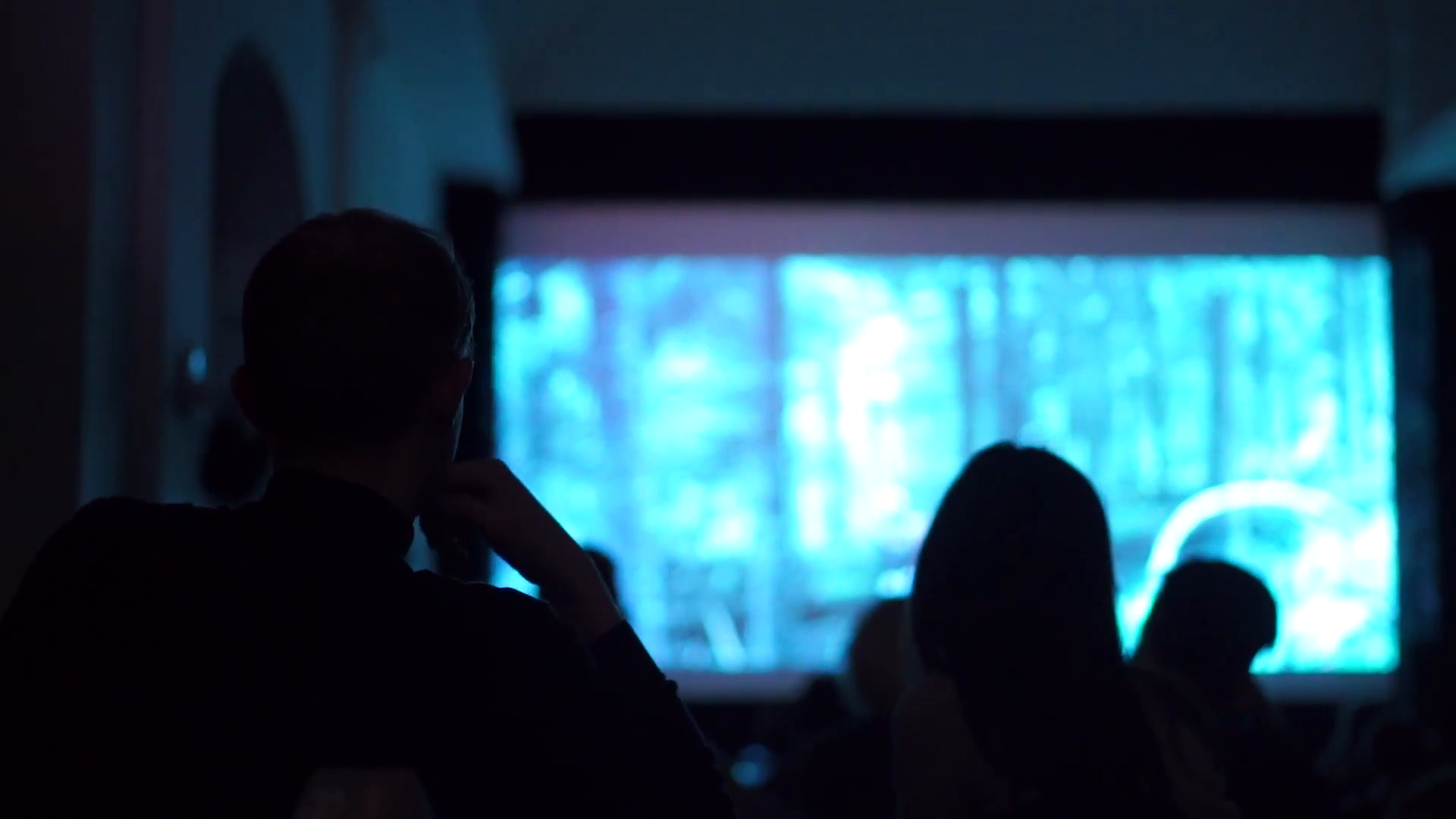
Imagine you are in a movie hall engrossed in an exciting movie. As the movie captivates your attention, it begins to influence your emotions and state of mind. Depending on whether the movie is a thriller or a horror movie, you experience the ups and downs of emotions along with the characters in the movie.
So the question is – Is the movie real? Yes it is. It is playing in front of you. But it is not real. The characters are not real. It is an illusion created on the screen in front of you.
I am sure you would have experienced a movie which made you cry, laugh, and once in a while make you jump out of your chair. We think the movie is good, well made, well directed and the actors were superb. However, we forget one very important thing – the fact that we invest reality into the movie. Although it is not done by explicitly thinking “I am going to consider this movie as real” but the overall effect of lights out and loud volume immerses you into the movie and makes it appear as real. Without this serious participation in the movie on our part, we will not enjoy it.
Similarly it is with other things in life. Take for example sports. We have to invest seriousness into something which is fundamentally non-serious. Scoring a goal or taking a wicket is nothing in itself without us making a serious business of it.
Therefore, the wise say that life is merely the game of God – Lila.
All the world’s a stage and all the men and women merely players… (Shakespeare)
So it takes a slight turning around of our view, although happening in an unaware state, to consider an illusory thing as real. Similarly, it takes a reversal of that turning around in our view, by doing it consciously, to come back to normal perspective on things.
As a child, I cried when Amitabh died in Sholay. My parents told me it is only a movie and that he did not die in reality. Many people are upset when their team loses a match. But it only takes a minor realization that it is only a game in order to get over the sadness.
Getting Stuck
The problem is not that we consider as serious business what is not serious but it is staying for long in that specific state. When we continuously invest seriousness into everything in life, we experience stress. Even a small one minute delay will raise our blood pressure. We become cranky, demanding and pushy if we take everything as real.
However, staying too much on the other extreme is also equally problematic. If we assume the position that nothing in life is serious, then we will not be able to act appropriately in life. We will become casual, non committal when we take everything as illusion.
Those are the two extremes. The true path is in the middle. Discard both views that life is real or illusion and take life as it is. Do not ask how!
Everything is real and is not real. Both real and not real. Neither real nor not real. This is Lord Buddha’s teaching. (Mulamadhyamakakarika – Root verses of the Middle Way by Nagarjuna)
Just notice and be aware and be conscious whenever you invest seriousness (when you act as if it was real and it mattered) or non-seriousness (when you act as it it did not matter at all) into any situation in life.
So life is not serious but let us not take it casually or life is serious but let us not take it seriously!


 Big Picture Zen