All posts by Big Picture Zen

Unknown's avatar

About Big Picture Zen

Center for Self-inquiry and Awakening is a space for inner exploration and self-realization.

The Story of a Lazy Boy

This is a short story composed by my 6 year old daughter Aarika

Once upon a time, there was a lazy boy. He was very lazy. His name was Soma and he lived in Pune. He went to school daily but because he was very lazy he did not study. As a result he got a wrong in everything at school.

He became very upset. So he said to his mother one day that he wanted to get out of this school. Then his mother admitted him to another school. In that new school, everything was Ulta-Pulta. They gave right for wrong answers and wrong for right answers. This worked well for Soma because now  in the final exam when he gave wrong answers, he got everything right and full marks. He was very happy now. He decided to stay in this school till college.

As the years went by, he reached the last standard in the school. He remembered his decision to stay back in this school till college. So he told the principal about it. But the Principal said no. Soma asked the Principal to allow him to continue college in the same school because it was a good school. But the Principal refused.

So Soma went back to his mother and told her about it. His mother also said it was not possible. Soma was unhappy.

One night, he tore a page from an old notebook and wrote on it – “I am leaving home and going to see the world”. He stuck the note on the door and left.

He boarded a train. He looked around and saw that all the people in the train looked like Chinese people. So he thought that the train was going to China. He wanted to go to Mumbai but since the train was going to China, he thought he will get down in Mumbai. But in reality, the train was going to Ahmedabad. So he reached Ahmedabad in the morning.

He thought what to do now because he wanted to go to Mumbai. So he bought a house which had a computer. Using the computer he booked a flight ticket for Mumbai. It was a late night flight. After reaching Mumbai, he found another house and a college. He studied in the college and grew up.

Meanwhile, his father and mother did not find him at home in the morning and saw the note on the door, which said that – I am leaving home and going to see the world. They tore the note and threw it away in the dustbin.

Soma’s parents had a magic computer which they never showed to him. They opened the computer and saw everything on it – how Soma boarded the train, reached Ahmedabad and then to Mumbai and also which college he joined. They also typed into the computer – How many years old is Soma now?

Soma wanted to get married but he did not find any girl. He became old and still could not marry because he did not get any girl.

Moral of the Story – Remember that kids must stay at home with parents in order to find a girl to marry.


Seeking For The Truth

Where Can I Find Truth

Lot of people seek for the truth.

But truth is not something that can be seen as some image.

It is not something that can be heard as some sound.

It is not something that can be smelled or tasted.

It is not something that can be touched.

So in what way do people expect to find the truth?

Is it an idea?

Is it some thought that is considered as the truth?

Is it an experience?

Note that in order to be sure that one has found the truth, one must be in a position to recognize it.

How can one recognize the truth if one has never had an experience of it before, when one does not know what it is?

Some say that truth is to be found within

True we can search for it within but what does one expect to find.

When the search begins one does not know what one is searching for & there are many falsities masquerading as the truth. So how does one differentiate ?

What if truth is right there in front of us but we miss it & go on seeking somewhere else ?

These are some questions that every sincere seeker of truth must investigate.  He or she must not accept or discard anything without proper investigation.


The Three Monkeys

The 3 monkeys are popularly attributed to Mahatma Gandhi. However, their origins are probably hidden in ancient times.

pasted-image-at-2016_05_13-01_38-pm_custom-e569ed62fa53ee379f151c4b80502f1af049787f-s900-c85

Each of the three monkeys have a different posture. The first one is covering his eyes signifying – See No Evil. The second one is covering his ears signifying – Hear No Evil. And the third one is covering his mouth signifying – Speak No Evil. In some cases, there is a fourth monkey also who is shown crossing his arms signifying – Do No Evil.

Whether 3 monkeys or 4 monkeys, I am not concerned with that. What I wish to point out is that the 3 monkeys are not serving their purpose. If their purpose is to remind people to speak no evil, hear no evil and see no evil, then I really doubt whether anyone is reminded of that in daily life. The 3 monkeys then just become a good show piece at home.

Think of it – If the advice was meant for human beings, then why show monkeys giving the advice to humans? Will humans ever listen to monkeys? Obviously not. So is there a deeper message in the sense that humans only look like humans but deep down they are only monkeys?

There is a good possibility that the monkeys refer to the ‘monkey mind’ of the humans as a metaphor for the restless nature of the mind that keeps jumping from one thing to another. And for such a mind, it is important not to get involved in anything evil. So fundamentally, the intention of the 3 monkeys is to warn humans about evil and to keep them away from it.

However, there are some problems in this if someone tries to take the monkeys seriously. People anyways do not take them seriously but that is not because they have tried to in the first place. Most people are not bothered. They simply assume the advice is for monkeys and not for them.

Say, for example, you decide not to see any evil. So, when you come across any evil, you will close your eyes. Maybe you see one person hurting another and you realize that is evil, so you will close your eyes and not look at it. Maybe you see someone cheating or someone killing or someone behaving badly, then you will close your eyes because you are advised not to see evil.

The same applies to hearing no evil. Suppose you decide not to hear any evil. So when you find one person shouting at another or passing lewd comments about some woman, then that is evil. So you will cover your ears and not hear it.

In both the above cases, you actually turn away from what is happening. Is that an outcome we wish to have? Do we really want people to turn a blind eye and a deaf ear to all the evil in the world? If one does it, will it safeguard the person from evil?

Please note that before deciding to close one’s eyes or cover one’s ears, one must identify that the thing one is seeing or hearing is evil. This means that the definition of evil and the database of all evil things must be in the mind in the first place for someone to decide what one is seeing or hearing is evil, in order to take the action of closing one’s eyes or ears.

This is more clear in the case of speaking no evil. It presumes that if one gets the impulse to swear at someone, or speak a lie or bitch about someone, which I think can all be classified as being evil, then one is supposed not to speak it because the monkey tells – speak no evil. So one is asked to control one’s tongue. But all the while, the evil thoughts are going on in the mind uncontrolled.

So if evil and what is evil is already in the mind, then just not seeing, not speaking or not hearing does not serve any purpose. If we understand the 3 monkeys at this superficial level, then it does not make any sense.

In fact, Osho gave an interesting twist to the 3 monkeys. He said that the first monkey stands for – Don’t listen to the truth because it will disturb all your consoling lies. The second monkey stands for – Don’t look at the truth; otherwise your God will be dead and your heaven and hell will disappear. The third monkey stands for – Don’t speak the truth, otherwise you will be condemned, crucified, poisoned, tortured by the whole crowd, the unconscious people. You will be condemned, don’t speak the truth! The fourth monkey stands for – Keep your pleasures, your joys, hidden. Don’t let anybody know that you are a cheerful man, a blissful man, an ecstatic man, because that will destroy your very life. It is dangerous.

While Osho gave his own interpretation to the 3 monkeys, it does not solve the original puzzle of the meaning of see no evil, hear no evil and speak no evil.

I would like to propose that we understand the monkeys from the perspective of intention. When you see or hear anything, accept it the way it is. Do not find fault with it. Do not observe its negative aspects. Do not pay attention to its positive aspects. Do not differentiate between good and evil at all. Accept everything as it is. And when you speak, you speak about things as they are, not with any intention of doing good or evil, not with any intention of harming someone or benefiting oneself.

When one is able to do this, I believe the 3 monkeys’ true purpose is being served. I would rather be a monkey who lives up to this standard than a human being who thinks himself to be superior to monkeys.


Groundhog Day (1993)

Director – Harold Ramis

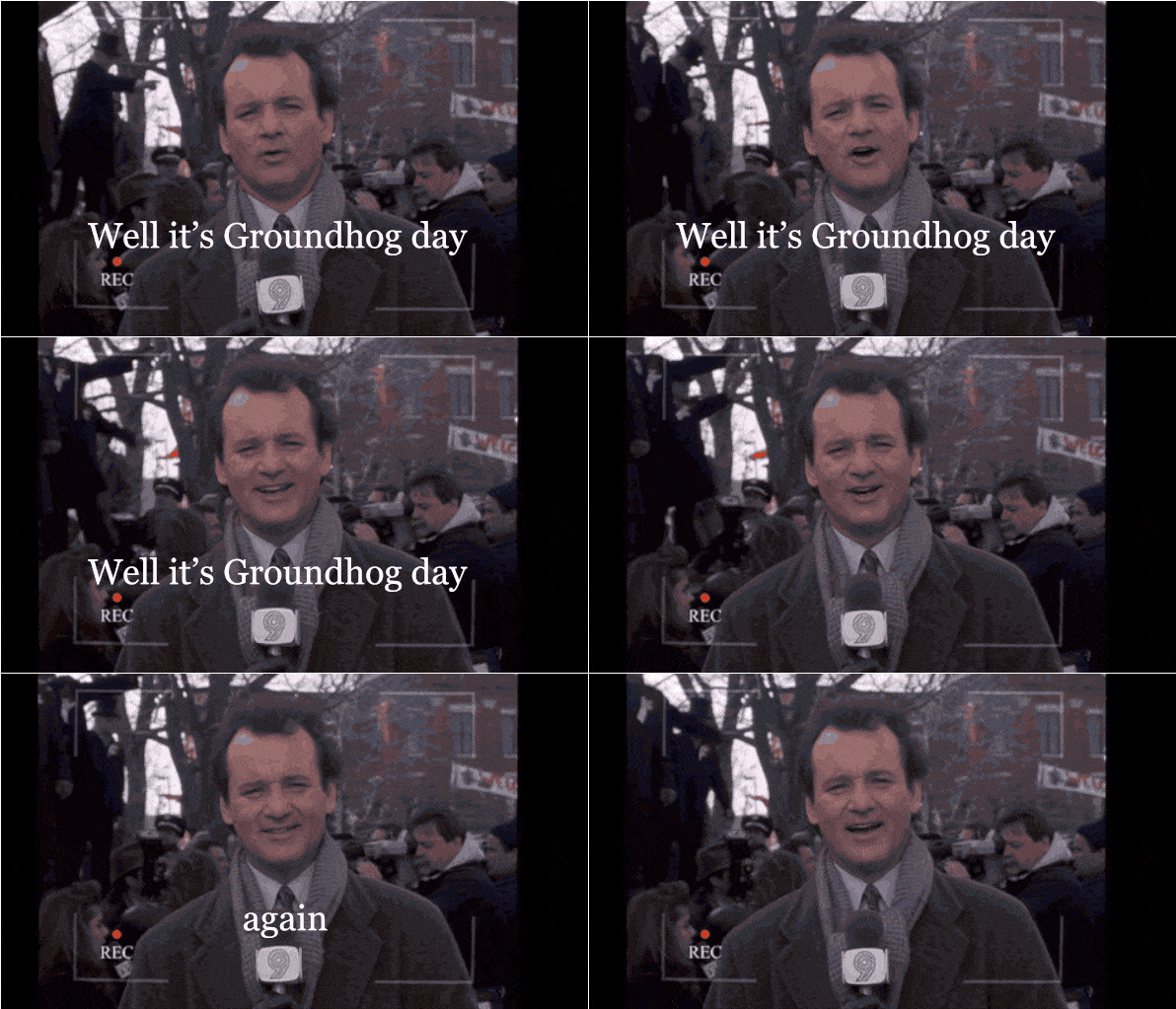
anigif_sub-buzz-6171-1486051117-3

One of my most favorite films – The Groundhog Day is an unforgettable movie. And Bill Murray makes it even more special. He is amazing in this film as always.

There is a superstition around the Groundhog, a squirrel kind of a creature. Depending on whether the Groundhog after appearing from its burrow, goes back in or comes out, people can predict whether the winter will continue for longer than 6 weeks or end within six weeks. The Groundhog Day is celebrated in USA and Canada on Feb 2nd every year.

In the movie, Bill plays the role of a television reporter who is frustrated about having to cover the celebrations of Groundhog day year after year. But this year something unusual happens. Every day he gets up in the morning, it is Groundhog day again. It seems that his life has become a broken record which has got stuck on the Groundhog day. The same sequence of events unfold every single day. And only he seems to be aware of it. He gets so bored of his repeating life that he even tries to end it but unsuccessfully. He again wakes up to the Groundhog day.

In a funny manner, the film draws our attention to how repetitive our own life is – Wake up, get ready, go to office, meet the same people, have tea, have lunch, attend meetings with the same decisions again and again, return home, watch TV and go to sleep. And to somebody who is aware of this repetition, it seems the other people are totally unaware because they seem to be going about their life as if nothing unusual is happening.

In the film, Bill learns to finally accept the repetitions and starts to take advantage of all the knowledge he has about what happened during the day to impress people with his predictions. But as long as he is giving the same report on the Groundhog day, his life keeps repeating. Finally, one day, he gives a very enthusiastic report on the celebrations and also proposes to his girlfriend. The next day he finds he has broken the loop and moved on to the next day.

To me this is highly symbolic. If you do not do anything to change your life, your life will keep repeating as usual. And that change is nothing but in your attitude. You can say the same things and do the same things but when you do it consciously, it has a different outcome.

Another story that follows a similar theme is P D Ouspensky’s The Strange Life of Ivan Osokin. In this story, Ivan gets a chance to live his life again with all the memories of his first life available to him. Armed with this knowledge, Ivan thinks that he will be able to correct all the mistakes he made in his previous innings. But that does not happen. Despite knowing everything, he still takes the same decisions and actions and makes the same mistakes again. This goes to show that it is not easy to change oneself so easily. All our actions follow mechanically from the environment we live in.

Death on a Mountain – A Parable

As I was taking a stroll down a winding mountain path in the late hours of a pleasant evening in the hope of catching a glimpse of a beautiful sunset, I saw a figure in the distance standing perilously close to the edge of what seemed like a cliff. He was standing with arms outstretched overlooking the valley. A thought flashed across my mind that this person was about to jump. I ran towards him as quickly as I could.

I shouted. “Hey. Stop”

“Hey. You there. Wait.”

He heard my voice and turned around. I reached there almost panting. I noticed his face was calm with just a hint of a smile. I almost bumped into him as there was a slope near the edge of the cliff and if he would not have held me, I would have gone down the edge myself.

Catching my breath, I said, “What.. What were you going to do? I thought you were going to jump.”

He said, “Yes, I was going to when I heard you.” He answered as a matter of fact as if it was the most natural thing to do at the edge of a cliff.

I blurted, “WHAT!. You were going to jump.. You mean you were going to… commit suicide. No. No. You can’t. You cannot do that!”

“Why not?”, he asked in the same calm tone. Something about his calmness had an effect on me and I gained my composure.

“Uh. I mean, you cannot just jump like that and kill yourself. It’s illegal to commit suicide.”

“You mean to say I will be punished if I commit suicide and die?” he looked at me with amusement.

I suddenly realized the stupidity of my question. I tried to gather my wits. He did not seem to be in a hurry to do anything and in a way was even enjoying the moment. What kind of man was he who was going to commit suicide and did not even show any sign of being troubled.

“Why? Why do you want to kill yourself? Any financial troubles?”

“No.”

“Any trouble in your relationships”

“No.”

I did not know what to ask next. Most people who commit suicide do so under great emotional duress caused by financial or emotional problems and here was a man who claimed to have no such problems and yet wanted to die. I was confused and curious at the same time.

The sky was beginning to get dark and the moon was a shining crescent. But I wanted to get to the bottom of this. I knew if I left him now, he would certainly jump. So I decided to engage him in a conversation.

“So why do you want to end your life? Are you not happy?”

“Are you happy?”

The question took me by surprise. I did not expect that.

“No I meant aren’t you happy in life? Why are you committing suicide?”

“I can never be happy. That is why I am killing it.”

“Yes, that’s why I am asking. What is the reason for you being unhappy? Look. It is a beautiful life. One must live and not end one’s life just like that.”

With a deep sigh, he looked at me and then looked at the horizon which was now turning pink and orange just after the sunset. He sat down stretching his legs in front of him. I also sat down beside him.

He said looking at the clouds in the distant sky, “Sooner or later, everyone has to die”

I said, “Yes, that’s right. We will all die but let life take its natural course. Who are you to kill yourself?” I felt some inconsistency in my question the moment I asked it. Does one need anybody’s permission to die? Does my life belong to somebody else that I need to take approval for ending it?

Agreed that my parents gave birth to me and raised me and now the organization pays my salary. Still, I am an independent individual and I don’t think anyone else can have a say about my life, definitely not the government.

God maybe. After all, God or nature or whatever is that force that created me is the only one that can or has the right to take life away from me. I cannot complain to anyone when I die of old age.

Come to think of it, I have no clue when I will die and under what circumstances – old age, accident, cancer, who knows. But surely, I will not end my own life. I have many things to do in life. I want to travel and visit different countries, experience the pleasures of life and fulfill my responsibilities towards my family and society. I also have to complete that project on which I am working.

“Do you know the story of the businessman and the fisherman?” his words broke my thought process.

I remembered the story quite well. A businessman advises a fisherman, who was happily relaxing under a tree to work harder and harder until one day he could earn enough money to happily relax under a tree. The fisherman asked him – what do you think I am doing now?

I said, “Yes, I know that story. What about it?”

“You see, Alexander conquered the whole world and still died. Julius Caesar was king of the world and still died. Genghis Khan dominated the whole world and still died. Everyone who ever wanted to rule the world ended up dying. In the course of their conquests, they became the cause of the death of millions of people. What is the meaning of their life?”

I almost began to explain how their life is a great example and what a great achievement it is to conquer the world but I stopped. The way he framed that question against the outcome of their conquests made me hesitate and reflect.

History is usually presented to us as a one sided story. No doubt, Alexander conquered the world but it is also a fact that he killed millions of people in his way. To prove what? Were these people posing any problem to his kingdom? Definitely not. I instantly lost all regard for all the people engaged in war and battles through the ages. There was a contradiction created in my mind. I was arguing that it is not right to end one’s own life and here I was unconsciously appreciating all those who killed others. If I cannot end my own life, what right do I have to end someone else’s life?

He saw the puzzled look on my face and smiled. He got up and started to walk away from the cliff back towards the mountain path. I quickly got up and started following him. I was relieved that he might have changed his mind about jumping off the cliff. Some stars were visible in the sky now although it was not completely dark.

“Every person is born in a certain environment, a certain atmosphere imbued with certain potentials.” I heard him saying. Although he was a few feet ahead of me, I could hear him clearly.

He continued, “Alexander was born in an environment where he had swords and spears as his training tools and playing toys. Young men in his time aspired to be in the army as that was honorable and prestigious. Further, even if he had the idea in his imagination, he could not have come up with a usable rifle or a battle tank. He was limited to horses. Follow me?”

“Yes, I do.” I said. I could see some sense in what he was saying. My thoughts started associating. Alexander Graham Bell could not have invented the iPhone. The technology simply was not there in his time. All he could do in his time and age was to invent the telephone. The industrial revolution of the early 19th century would have inspired many desirous young men at the time to get into the rapidly growing manufacturing industry to seek out a fortune.

In our times, we see young men aspire for a life in computing or information technology. We have now a well-established school curriculum to inject students with all the knowledge needed to be able to make a career for themselves. Most end up doing jobs and some enterprising ones become successful in creating new companies and new products.

“In the end everyone is going to die.”

Did I say that or did he say that? I was not sure. Was he reading my thoughts?

I asked, “What did you say?”. He did not reply, just kept walking.

I tried to connect the ideas. We are born, we are influenced by our environment, we pursue those ideals which the atmosphere around us projects and ultimately we die. Like there is no fun in watching a suspense movie when right from the beginning you know who the culprit is, there is no fun in living a life when you know the end result.

If I am anyway going to die someday, why not today? Why not end this? What is the point of accomplishing a hundred things and then dying? Like the fisherman said to the businessman – what do you think I am doing now, I asked myself, what is the point of living if I am going to die?

Suddenly he turned around and coming closer said, “Exactly. That’s the question.”

We had reached another higher spot on the mountain. The wind was blowing fast and I had started to feel cold. I wish I had brought my windcheater. Obviously I had not planned on meeting this person and staying out so late. As I saw him moving closer to the edge of the precipice I felt another chill. Had he changed his mind again? He probably wanted to jump off from a higher spot after all. Maybe he was aspiring for a higher death. Shut up, I said to myself.

I decided to divert his attention by asking, “Hey tell me one thing. I do see the point that since I am going to die anyway, I see the futility of all the struggles and achievements in life even if all my craziest desires are fulfilled. But at the same time, something in me is definitely not convinced that the only option is to end my life right now. So if suicide is not an option and living is also not an option, what option do I have?”

“Did you have any choice in your birth – to what parents to be born to, in what year and age to be born in, in which country to be born in?”, he asked.

“No.”

“Do you have a choice in your death – with what illness to die, at what age to die, in which country to die, in which accident or disaster to die?”

“No.”

“Then what makes you certain you have a choice in anything that happens between the two points of birth and death?”

I frowned. I did not understand what he said but I knew he had said something of deep significance. I reflected on it. I am born in this year and age, to my parents in the social and economic environment of my times. All my aspirations and desires are molded by the atmosphere in which I live.

If today for instance, I decide to take a sword and spear and announce my mission of conquering the world, I would be caught and put in an asylum. I do not desire a telephone but an iPhone because that is what is available.

I may desire to travel to space one day because that is on the horizon of being a reality but I cannot desire something that I have no idea about. I have a desire to earn money but now the atmosphere is in the process of creating the desire to earn cryptocurrencies.

I started to feel a strange sensation. I realized that I am aware of the atmosphere and the environment more clearly than I am aware of who I am as a separate entity from the rest of everything. I knew a lot about the universe, the earth, countries, languages, economics, politics, history, science, mathematics, people in my life, my experiences and memories. But who am I? This I do not know.

“You want to know?” He again seemed to have mysteriously read my mind.

I did not have to answer. He knew I wanted to.

“Come up here.” He asked me to come close to the edge where he was standing. It was already night and the lights from the city down below was the only way to know how far up we were on the mountain. It was scary.

He stepped back and asked me stand on the edge. I hesitated. He asked me to close my eyes to keep the fear away. The cold wind was blowing hard on my face.

All of a sudden he pushed me from behind. Was it that he pushed me or was it that he entered my body. I could not make out. I was not falling. I opened my eyes instinctively.

The sky was full of stars like never before I had seen. Every inch of the sky was filled with stars. I could feel as if in slow motion I on this earth was moving in this celestial vast emptiness of space. I did not feel my body or hands or legs. Just plain awareness of being. Infinite. Timeless.

That moment I realized, there was no birth, no death, neither me, nor another.

“Stop reading those spooky stories”, my wife shouted from the bedroom. “Switch off the lights and sleep. Have to wake up the kids for school at six”. I quickly closed the book and jumped into the blanket with her.


Self Realization Seminar

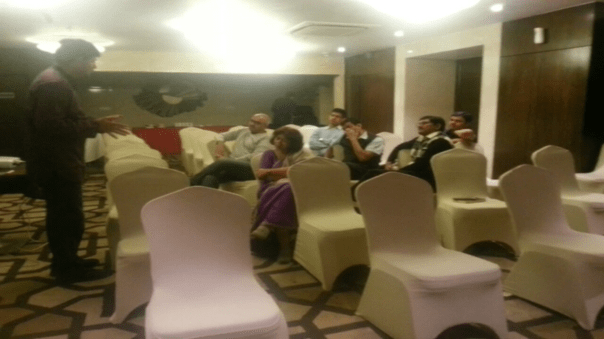
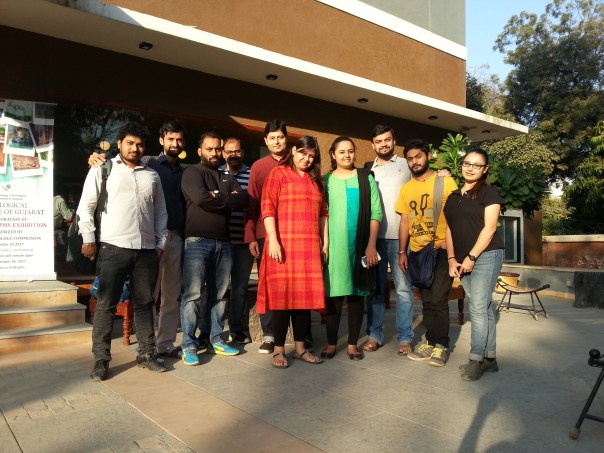
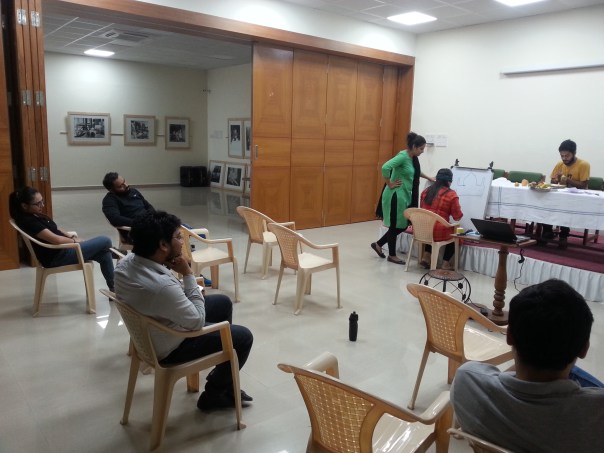
I had invited school and college friends for this seminar to share some of my deepest insights into the nature of life. I was quite glad to get a very warm reception for the ideas and want to thank all those who came and all those who expressed interest in knowing more. I deeply enjoyed the quality of the interaction and hope they also found something worth reflecting about.

EVENT SNAPS

IMG_20171227_172652053

IMG_20171227_172714323

2017-12-27-21-45-49

From Right – Lalit, Prakash, Vivek, Ajay, Madhavi, Rajat

Watch the recording on YouTube

EVENT INVITE

An intimate talk about the forgotten key to the mystery of life.

Life at once seems familiar and mysterious. Familiar in the sense that we know what to do to earn money, how to relate with people and how to enjoy and have fun. Mysterious in the sense that we do not know why we are here, what is our purpose and what is the meaning of life and death.

Most of us learn how to live the external life reasonably well and even learn how to put up a pretense of living well but unfortunately we have no clue on managing our inner world of thoughts and feelings, hope and despair, fears and suffering. The incessant busyness of life prevents us from exploring the roots of the mystery which by any means is the only way to genuine unshakable happiness.

Is life merely an illusion? If yes, then what is the reality behind that illusion? Can these answers make any difference in the life we are living and what we are experiencing? If these questions and the mystery of life is something that piques your curiosity, then you are most welcome to attend this free seminar.

Day 1: Solving the Mystery of Life
Date: 27 Dec 2017, 5 pm to 7 pm

Day 2: Breaking Through The Illusion
Date: 28 Dec 2017, 5 pm to 7 pm

Venue: Hotel Urban Hermitage, Opp. Airport, Wardha Road, Nagpur.

Stop! Really Stop

12

Can you really stop? I mean really stop – not just physically but mentally also?

Say for instance, you are walking and you decide to stop and you stop. That only means your body stopped moving. What about your mind, your thoughts? Did they also stopped? Let’s take another example. You are reading this sentence. And I ask you to stop reading. STOP!


.

.

.

.

.

.

.

.

.

.

.

.

.

.

.

.

.

.

.

.

.

.

.


What did you notice? Different people might notice different things. Some would have tensed up and started to stare at the word STOP!. Some would have gone blank for a few moment before their thoughts started to flow again. Some would have started moving their eyes around and maybe scrolled down to read further. Some would have started to hear sounds around them or started to feel some sensations in their bodies which were blocked out from consciousness because all the attention was on reading. This is an important observation if you noticed it. Try it again. Go back to the beginning of the post and do it again.

As we get engrossed into our tasks, our attention starts to get focused on the activity and the stream of thoughts (relevant to the task or not relevant). Simultaneously, the inputs from our bodily sensations and the sounds around us are filtered out. Muscles are tensed, even those which are not used in the activity. For instance, if you are working on a computer screen, comfortably sitting on a chair, yet if you notice, your leg muscles are tensed up for no reason.

What does it mean to stop? We really do not experience the state of a full stop because the mind is constantly throwing up thoughts and is literally pushing us around, even if the body is stationary. A mind that is constantly moving is not a happy state of mind. But that’s what is the situation for everyone. Where is the problem?

It is just that some people have reported that there is a state of mind in which there is complete stillness, and when there is complete stillness of the mind, you will experience bliss. So this revelation causes many other people to seek this still/blissful state of mind. Unfortunately, they end up increasing the velocity of their thoughts through this very seeking even if they are sitting absolutely still in meditation. It is not that these people are seeking a mirage. In moments of wonder, for instance when one comes across a breathtaking landscape or some other natural scenery, one’s thoughts are blown away for some time and one experiences that stillness of mind and the accompanied bliss. But it is obviously not possible to experience that bliss/that stillness in the cacophony of a honking traffic jam. Is it really so?

CEOZ-VpVIAAcoGX

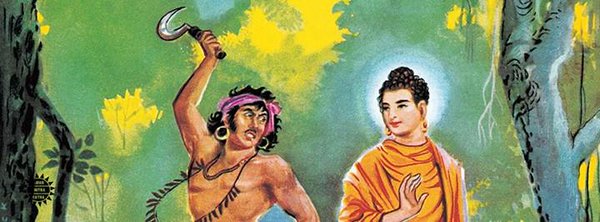
When Angulimala saw a monk walking in the forest, he thought to himself, “Ah, with his little finger, I will finally be able to get my hundredth finger”. As the story goes, he started running after the monk but even though the monk was walking, Angulimala could not catch him. Tired after a long run, Angulimala called out – Stop. Hey monk. Stop. How come I am running and you are walking and yet I am unable to catch you?. The Buddha replied, “I have stopped long back. It is you who are moving.” That struck a chord somewhere in Angulimala’s mind and he bowed down to the Buddha and the story goes on.

The stopping here refers to the stopping of the seeking mind – the mind that is constantly fluttering like a butterfly from one thing to another.

In this sense, we never really stop. Since the time we are born and since the time the first thoughts come to our minds, they have never really stopped. Even when we are so to say relaxing on a beach or while listening to our favorite music, the mind is constantly latching on to something. And when the mind is doing that, we are living as if in an automatic mode, like a self-driving car controlled by various signals and you are just the passenger who is busy with his work.

Have you played the game of Statue (aka Freeze) in your childhood? In this game, one child calls out “Statue” and all the other children have to literally freeze in whatever position they are in till the time they are relieved. There is even a musical freeze version in which music is played and everyone dances. As soon as the music stops, everyone has to freeze.

While these games are for fun, Gurdjieff designed an effective STOP exercise for the purpose of self-observation. As his students were working on the assigned activities, Gurdjieff would sneak in unannounced and say STOP. Everyone would have to freeze in the position they are in, without moving a muscle and simultaneously observe what they were thinking and observe any sensations in their bodies. The purpose of this exercise was to demonstrate how unconsciously we do our work and in effect begin to develop self-awareness in all positions at all times.

There is another story of a Zen master who would hit his student with a stick from behind while the student was walking, working, meditating, eating, and even while sleeping. The intention was to develop alertness. Initially the student was irritated by the teacher’s behavior but eventually he started to develop his awareness and one day, he instinctively caught the stick before the master could hit him.

So what is the moral of all this? Is it possible for you to be alert and aware in all that you are doing? This is only possible when your mind is still, even while working, while eating, while walking, while talking, while sleeping.

Here is a STOP exercise for your practice.

Just before you get on or get in your vehicle, stop for a few seconds, note what you have been thinking, note your posture, pay attention to your breathing, realize that you are present right here right now. Then continue where you are going.