All posts by Big Picture Zen

Unknown's avatar

About Big Picture Zen

Center for Self-inquiry and Awakening is a space for inner exploration and self-realization.

May the Real Birthday Stand Up

HappyBirthdayFriend04

Another birthday. Another year gone by. Another revolution around the sun completed today. Come to think of it, we never imagine ourselves having completed a trip round the sun whenever we celebrate our birthdays – but that’s the truth of the matter. A year has gone by and a year is defined by the time the earth takes to go around the sun. So we are on this gigantic spaceship called earth hurtling into space at incredible speed and once every revolution, we celebrate the event. But what is so exciting about completing one circle around the sun? Of course people wish you – many many happy circles to go (returns of the day) – have a great rotation (day)

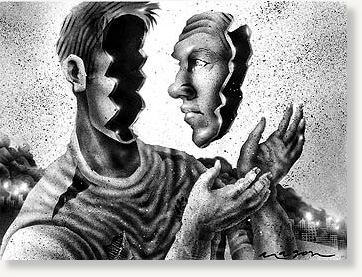
A birthday is a very slippery concept if you go a little beneath the skin. We are all made to believe that we were born on the day we emerged from the mother’s womb. But if birth is the same as coming alive then were we not alive the day before we came out of the womb or even a month before that? We were quite alive even then. So when were you really truly born / become alive? There are many possible answers.

  • You are born when you come out of the womb. This is the most widely accepted day as birthday. But here also there are slight complications. What if you are an American baby born in India. If you are born on 16th in India, it is 15th in America. So is your birthday 16th or 15th?
  • You are born when you became a fetus from an embryo – typically around the 9th week after the start of pregnancy. A fetus is recognizable as a human being while an embryo is not. This is the point of debate between those who think abortion is a choice versus those who think abortion is tantamount to murder.
  • You are born when you were conceived. i.e when sperm met egg. Why not? After all, both sperm and egg are living cells with the unique DNA that will determine what color your eyes will be. So if a cell is a living thing, why wait till it becomes a fetus to declare it a person?
  • You are born when your mom and dad thought of making a baby. Every action is born of a preceding thought. So it would not be totally wrong to say that you were not born as a thought first. If they had not thought about it, you would not be born.
  • You are born when your ego is born. Till then you are only a vegetable. Psychologists say that a child develops his ego / personality by the age of 5 which more or less remains the same through the rest of his / her life.
  • You are born when you are told you were born. Till that time you did not even know there was a thing like birthday. People tell you – you were born on 16th and therefore you accept that. So this is the semantic origin of birthday.
  • You are born when you become conscious of yourself. Now this is a tricky proposition. It is very difficult to determine that. Most people live their lives unconsciously and therefore the spiritual masters say that you are truly born only when you die (ego death). And so many people are attempting to give birth to themselves by struggling to kill their ego.
  • You are born when your soul is born. They say that the soul is never born and never dies but only changes bodies as if they are clothes. So unfortunately, your soul can never celebrate its birthday.

Scientists point out that each cell in our bodies is replaced once every 7 years. That means we are a new person every 7 years and must celebrate our birthday only once in 7 years. Too less!

Going further the Meditators say that everything changes every moment, so from that view, we are born every moment and die every moment so every day is a birthday. Too much!

I am sure wise people would have deliberated about all this and coming to a consensus, would have arbitrarily decided one event as the birthday.

Now that the decision is made, whatever it may be, a birthday is definitely a time to feel good. Many people remember you at least once a year and reach out to wish you. It is a nice feeling. There is cake and the snacks and all the friends and family with you as you become the center of attention. Probably that’s the origin of the saying – every dog has its day!
Das Experiment (2001)

Director – Oliver Hirschbiegel

1118full-the-experiment-screenshot

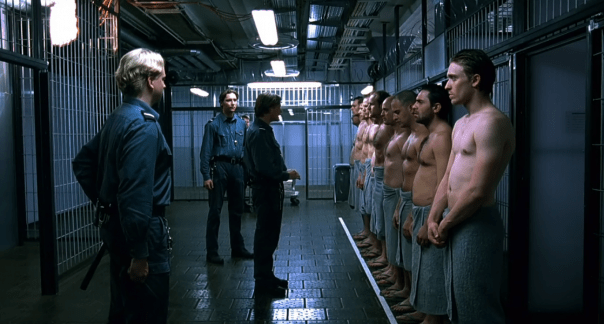
This is a German movie. Das Experiment translates to The Experiment. The experiment is about observing human behavior in a simulation of a prison environment.

In 1971, Philip Zimbardo a professor at Stanford conducted a real life prison experiment using college students in order to study the psychological effect of perceived power. This film and many others are inspired by those events.

In Das Experiment, there is a professor who recruits 20 paid volunteers for the experiment of which 8 are selected to play the role of prison guards and 12 selected to play the role of prisoners. He sets one rule that there must be no violence of any kind during the simulation. The job of the prison guards is to maintain law and order and the job of the prisoners is to be locked up in their cells and to follow some arbitrary rules that the prison guards would make.

The movie depicts how the situation deteriorates over the course of a few days as the volunteers start taking their roles seriously, forgetting that they are doing this for money as volunteers in the experiment. As the story develops, it starts to focus on the battle between one dominant prisoner Tarek who tries to break the rules and one sadist prison guard Berus who will go to any extent to subjugate Tarek. Eventually the story takes a violent turn resulting in deaths and injuries. At the end, both Tarek and Berus comment to each other – you started it all.

But if you watch the film, you will not be able to find out where it all started and who was to blame. Maybe it was the setting of the experiment, maybe it was that the volunteers forgot who they were and took their roles too seriously, maybe it was the fact that both prisoners and guards were given their specific uniforms and were told to behave as them.

In real life also, whenever we take our roles too seriously, we forget who we are and resort to physical and vocal violence. We can even take this analogy further. In life we are born into a specific country, a community, a religion and we start taking that position seriously and become prisoners of that thinking.

Just imagine if the prison experiment was conducted on a mass scale across generations, then prisoners and prison guards would no longer know that it was all an experiment. Prison guards would start to believe that they were chosen by God while prisoners would believe that they are being unjustly tortured.

Pushing the analogy to its limits. Self-realization is when we wake up from this identification of who we are – whether a doctor or an entrepreneur or a factory worker, or a man or a woman or a Catholic or a Jain – and intuitively know that we are THAT. In that moment, all our assumed pretenses fall away and we will truly become a nobody. And even if we have to live out a role in the society, we will be able to do that without the associated anxieties and stress.

In the film, Tarek’s co-prisoner Steinhoff (#38) displays this level of awareness during the whole experiment. He is constantly aware that he is only there for the experiment and avoids getting involved in the escalating situation with the prison guards. In the end he also helps the other prisoners escape from the cells.

Warning: The film contains several scenes depicting male and female nudity. So watch responsibly. Also use subtitles as the film is in German


This is the true joy in life, the being used for a purpose recognized by yourself as a mighty one; the being a force of nature instead of a feverish, selfish little clod of ailments and grievances complaining that the world will not devote itself to making you happy.

I am of the opinion that my life belongs to the whole community, and as long as I live it is my privilege to do for it whatever I can.

I want to be thoroughly used up when I die, for the harder I work the more I live. I rejoice in life for its own sake. Life is no “brief candle” for me. It is a sort of splendid torch which I have got hold of for the moment, and I want to make it burn as brightly as possible before handing it on to future generations.

shaw

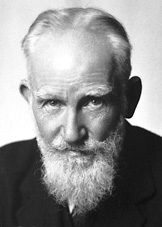
George Bernard Shaw

This is a powerful quote from G B Shaw’s play Man and Superman. Werner Erhard uses this quote often in his talks and why not? In less than 150 words, Shaw manages to highlight the petty mindset of humanity and at the same time calls for finding true joy in making the maximum contribution one can before one dies.

George Bernard Shaw often remarked that he hated Shakespeare and so it is interesting possibility that the remark that life is no “brief candle” is a retort to a quote from Shakespeare’s Macbeth –

Out, out, brief candle! Life’s but a walking shadow, a poor player that struts and frets his hour upon the stage and is heard no more. It is a tale told by an idiot, full of sound and fury, signifying nothing.

The Five Requirements for Enlightenment

Five Requirements

For a human being to attain enlightenment, there are five requirements that must be fulfilled. If any one of these requirements is not met, then the conditions are not met for insight to happen. What are these five key requirements?

SUITABLE INCLINATION

Every person has some natural inclination. Some people equate this with karma from past life. Whatever that might be, some people are more inclined towards self-inquiry than others. In some cases, certain experiences in life provide such a big shock to a person that he has no choice but to turn inward to find out the meaning of life.

This inclination when nurtured builds momentum as the person reads, listens and gets in touch with others on the path of self-inquiry. The condition of suitable inclination is fulfilled when the inclination is pure and not tainted with some ulterior motive. The desire must be to discover the truth for what it is, not to achieve a worldly end. The individual must be willing to walk the extra mile for achieving enlightenment.

If suitable inclination is not there then the person will be distracted by the world around him and will not be able to proceed in a focused manner towards enlightenment.

SUITABLE HEALTH

Enlightenment requires the full energy available to a human being. If energy is divided into multiple things, then enlightenment is not possible. Therefore, a person must be in his peak physical and mental health to go deep into self-inquiry. This is especially important for meditation.

Most people think they can keep spirituality for their old age after they have completed their life’s work. But by that time, most people develop a number of physical ailments which create hindrances. Even the mind through years of conditioning, is not ready to unlearn what has been learnt and learn something new. Every new idea is filtered through biases built over the years. In such a state, the human body does not have the requisite energy to attempt enlightenment.

A man is in his prime during his late twenties and early thirties. The body is at its physical peak and can provide the maximum throughput of energy when called for. The mind is alert, in a learning mode and even though conditioned by the influences of the world, it has the possibility of breaking through that conditioning.

SUITABLE ATTITUDE

A person desiring enlightenment must depend on his own attitude and approach. Even if there exists an enlightened master to guide him, the person cannot let go of critical evaluation of whatever advice he is given. The right attitude is to experiment, test, try, experience and learn. There must be sincerity in the effort, seriousness in the intention and silence in action.

Enlightenment is something to be experienced individually. It cannot be given by a guru to a disciple. Therefore, the individual must depend on his own understanding at all times.

Many people have the time, have the inclination, and are in their prime, and yet because they depend on another for guidance, they do not reach enlightenment.

SUITABLE ENVIRONMENT

A person is born into an environment which comprises of his family, the family’s economic condition, the societal influence, the country and education. The environment is supposed to provide for the basic necessities of life – food, clothing, security. Once these necessities are provided for, a person can give some time and space for the exploration into oneself, which is the starting point for enlightenment.

If a person is born in a country embroiled in a civil war, or if a person is born into utter poverty, then he does not get the time and space which is needed for inquiry because is he too busy running for safety or food.

But if a person is born into reasonable environment where the basic necessities are available, then there is a possibility of devoting some time and space to the inquiry into oneself. However, just having this space and time is not enough. A lot of people have this space and time, but they are busy filling it with more work or more entertainment.

SUITABLE DISENCHANTMENT

Most people are enticed by the show of the world – the money, the things which money can buy, the women, fame, status in life and so on. Such people’s attention is distracted by everything around them. They will follow their whims and fancies without any reflection or consideration of consequences or learning anything from their past experiences.

Disenchantment is not renunciation. It is simply the realization that more money or more worldly things do not equate to genuine happiness. And this realization has to be based on personal experience not merely a theoretical idea. This does not mean that a person shuns money or gives up material comforts. The individual simply realizes that there is a limit to the effectiveness of such comforts and that there is no end to them.

So these five conditions are key for the attainment of enlightenment. When these five conditions are met, then the possibility of enlightenment arises. There is no guarantee. Just the possibility.

Self Help

Picture1

We all need help in some or the other way in what we wish to achieve. Right from childhood, someone has helped us to walk, to eat, to read, to write, to speak and to play. We have also been told directly (through instructions) and indirectly (through actions) how to live life, how to understand things, how to draw conclusions and how to make sense of what happens to us.

When we do something wrong, we are told what is right and how to correct it. When we are young, we blindly accept everything we are told by parents and teachers. As we grow up and as our knowledge increases, every new information that comes our way is evaluated on the basis of what has already been told to us. So we start to agree or disagree with new information. To change our mind, we demand more concrete proof.

Once the knowledge is engraved in rules and policies, it is even more difficult to make changes. Many people cannot change their views despite all the proof to the contrary. However, help is always available when someone wants to listen. As the saying goes: You can take the horse to the water but cannot make him drink it. In the same way, help is available when you are thirsty.

Help does not have a specific form. It is not necessary that what helped one person will help another in exactly the same way. It depends on where the person is, in what state of mind, and what he has achieved before. It is a common realization for many people that they find new insights from the same book when they read it the second time and a third time. The book is the same but in the first reading, not all levels of meaning were apparent. As the level of the reader increased, he discovered more meaning in the second reading. In rare instances, if a reader has deeper understanding, he can gain new insights from a book which even the author had not intended to express.

To awaken we need help in different ways again and again. In the final analysis, it is you yourself who has helped you, not anyone else. We can learn immensely from books, movies, stories and metaphors

BOOKS

What is life without books! Reading is our only source of knowledge – knowledge which we cannot experience ourselves. And we must read a lot – different styles, different subjects, even from different ages. The more the variety we read the more our minds open up to new concepts. While it is true that concepts imprison us, it is also true that only through other concepts the road to freedom opens up.

MOVIES

Movies are not just for entertainment. There are some movies that help us reflect on our lives and show us things which the usual movies don’t.

STORIES

The purpose of telling a story is to convey a coded message. While the story can serve to entertain and pass time, it is the responsibility of the listener to grasp the meaning which is woven in the story, even if the story teller does not make it apparent. Stories serve to develop the faculty of attention in the listener.

METAPHORS

Metaphors and analogies are excellent means for explaining a concept. Drawing a parallel from what one already understands, makes it easy to grasp what one does not understand.

I wish you good luck in your endeavor.


On the Treadmill of Life

The curious thing about man is that he is always seeking something. He may seek one thing today and another thing tomorrow but he is constantly seeking. The objective of the seeking is always to move from a state of discomfort and dissatisfaction to a state of comfort and satisfaction.

Man is never satisfied with what is – the current experience. As man observes his surroundings and assesses his present situation, in itself and in comparison with others, sooner or later, he starts to experience discomfort and dissatisfaction. Not liking this experience he starts to seek out a state of comfort and satisfaction.

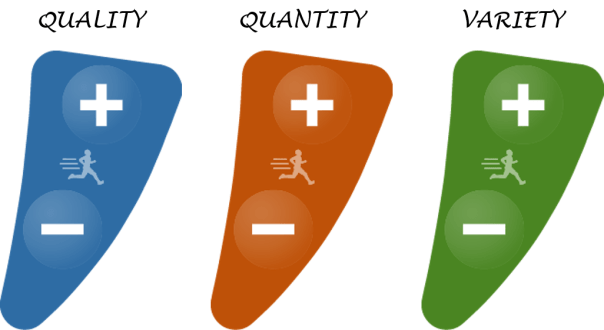
And on this path, he inevitably gets on the treadmill of life which runs with 3 controls – Quantity, Quality and Variety. These are the only three buttons on the treadmill. At any given moment, man perceives that his satisfaction is going to be derived from pushing one of these three buttons.

QQV

At one point, he might think that he needs a higher quantity of something in order to be satisfied. At another time, he might think that he needs a better quality of something in order to be comfortable. And yet at another time, he will seek out a different variety of something to attain satisfaction. A little more sometimes, something different at another time or something better the next time. This is how man runs on the treadmill of life. He keeps running, yet never arrives at his desired destination.

If you look around you, almost every man is on his personal treadmill. And this permeates all his life, in whatever he may be doing.

Consider money – a thing that no man is ever satisfied with how much he has. So he will usually run after more money. When that fails, he will try to invest in different types of money such as Gold or Bitcoins. He will also try to invest in money instruments which promise better ROI – mutual funds, share markets and other financial tikdams.

When it comes to dissatisfaction with his house, a man may try to move into a bigger house or furnish his existing house to give a premium feel or he might just move from one type of house to another – maybe from an apartment to an independent bungalow.

Relationships are always a big source of discomfort, so a man might want to improve the quality of his existing relationship by spending quality time with his partner. Some men might want to associate with multiple partners as that gives them satisfaction while others might want a different partner in their life.

When bored of eating the same dal and rice every day, a man might want to eat a different delicacy to satisfy his appetite. At other times, he might want to simply go on an eating binge to satisfy his desire. Some might want a better quality of rice and dal to feel satisfied.

Same is true of experiences – people choose the place of vacation depending on what they think will satisfy them – more time at the same place, or a more luxurious experience of staying or going off to a new place altogether.

Consider knowledge – some people want more knowledge to feel good, some people want more insights about their knowledge while some people want to acquire knowledge of a variety of subjects to feel good.

People live their life on the treadmill – choice of clothes to buy, choice of movies to watch, choice of a health and fitness program, choice of a company to work for and so on.

Even with organizations, the direction of effort is always determined by one of the 3 buttons. At one time, the organization may want more – more revenue, more profits, more headcount. At other times, it may want better quality – better manpower, better customers, better work-life balance. While at other times, it may look for a different outcome – different business lines, different country to work in, a different CEO and so on.

As the treadmill moves, on one day, quantity will determine our satisfaction, on another day, quality will determine our comfort and yet on another day, variety will decide our level of satisfaction.

As one becomes comfortable with a certain quantity or quality or variety, it becomes a threshold below which there is discomfort. Therefore, man is constantly on the treadmill to seek out more, better or different and pushing his threshold of comfort farther and farther. Eventually, the law of diminishing returns kicks in and man has to expend more effort, time and money to derive the same incremental satisfaction.

Some people are able to observe this circus and want to step off the treadmill. They are attracted to spirituality and meditation as a means of achieving ultimate satisfaction and comfort. But this is a booby trap. People still remain on the treadmill except now they want to do more meditation and yoga, or improve the quality of their concentration or simply try following a variety of spiritual practices. People do not realize that they are still on the same treadmill.

The true escape from this treadmill and the true gateway to satisfaction and comfort is awareness of current experience. Simple bare awareness of the current experience.

Awareness is awareness. There is nothing like more quantity of awareness or a better quality of awareness or a different variety of awareness. And therefore when you are aware, you are not on the treadmill.

With awareness, there comes about a radical change in our perception of things. What seemed desirable and worth striving for no longer seems to be so. Many people are afraid of this state thinking that it will take all the life force and the motivation to perform, away from them. It is not so. People do not realize that it is the treadmill which is making them run and that they are not free to go anywhere else. With awareness, man can be truly free, not bound to the treadmill, not allowing quality, quantity or variety to determine his satisfaction and comfort.

Then, looking at his surroundings with awareness, man experiences comfort and satisfaction in the current situation itself. He has the freedom to create something new, not simply more, better or different.

What Are We Living For?

41bVjjx6IuL._SX326_BO1,204,203,200_

What Are We Living For by J G Bennett

This is a small book of around 100 pages yet it is packed with a sweeping criticism of the current state of affairs of humanity. Although the book was first published in 1949, most of the observations are relevant even today and I believe they will remain relevant for centuries to come.

Bennett was deeply influenced by the ideas of Gurdjieff in writing this book. He highlights the manner in which humanity is sleeping by presenting an incisive criticism of three areas of human endeavor – education, science and religion. Finally he also suggests a way for individuals to wake up from this horror we call life.

He observes rightly that while there are innumerable efforts made by people through the ages to change the human condition, only a very few have focused on the root cause of all human suffering – the basic human nature. People simply hope for the best in this case, which really means ignoring the problem. He challenges the notion that man is truly more than a mere thinking animal.

On education, he says

In our modern civilization (as it is called), people are subject to political propaganda or the suggestions of advertising agents… No free individuals exist; everywhere people’s lives are determined and governed by a series of stereotyped external stimuli against which they have no resistance at all. The direct cause of all this is our so-called education. By the process of this education, men and women are produced who are perfectly adapted to a mechanized existence.


When children are born, they are subjected almost from birth to influences that will inevitably produce in them such characteristics as vanity, self-will, self-importance, distrust, deceitfulness, suggestibility, dependence upon other people, and at the very root and center of their being, egoism… Children are made to think and to feel by influences that are brought to bear on them almost from birth that it is only their external manifestations seen by other people that determine their value.


An influence present in almost every educational system is the stimulus to effort, not through inner decision, but through competition and reward… No effective steps are taken to develop in children the realization that one’s own impartial judgment of oneself, made inwardly, without reference to the good and bad opinions of other people, should be the basis of one’s own actions.


Apart from the absurdity of learning by heart “facts”, with no reference to their significance or interpretation, there are many kinds of so called intellectual disciplines that are taught in a way that has very serious after consequences – that is they are taught without reference to any concrete reality. The result is that into the very mechanism of thought there enters an inability to distinguish between words and the meaning for which they stand.


A man who does not know his own mind, who cannot make decisions valid for all his moods and all external circumstances, cannot be said to possess an “I”. … to have an aim in life chosen by oneself on the basis of one’s own self judgement, and not as a result of accidental influences or deliberate suggestion from without is one mark of a real I. to be able to make self-imposed efforts for the attainment of such an aim without the stimulus of anything either feared or hoped for from other people is another mark.

On science, Bennett says

A remarkable feature of the history of science is that in spite of the obvious impermanence of all scientific theory, there is always a tendency to draw final conclusions, affecting our attitude toward man and his place in the universe, from the particular theories that happen to be fashionable at a given moment. Although scientists who think seriously about these matters know very well that a theory is only a convenient method of description and not a statement about fact, they are no less prone than others to condemn as unscientific any views that do not conform to the theories in vogue.


Many people consider it quite legitimate, whenever any views about God and the universe are expressed, to ask the question – How do you know about this? Can it be scientifically proven? Implying that scientific proof is a well-established and proven procedure… it fails to allow for one indispensable element in scientific activity, and that is the ‘leap in the dark’ by which a new hypothesis is formulated.


My purpose in making the distinction between science and technology is to draw attention to one point often overlooked – the assumption that technological achievements presuppose the prior existence of valid knowledge. If this were true, it would follow that the achievement of certain results would be evidence of an understanding of the process by which results are achieved. … a very simple, obvious case – we all eat and more or less successfully digest our food, but this does not mean that we understand the process of digestion, or that any pronouncements we may choose to make about the energy that is needed for the life of man and the nature of this energy must be valid.


We take for granted that we are better than our ancestors and that our modes of life are superior to theirs… With all progress of biological science, we have scarcely succeeded in domesticating a single animal or a single plant not known to our early ancestors.

On religion, he says

Among the many strange things taught to children in their geography lessons are statistics of the world’s population distributed into various racial, economic and cultural groups…. We only know too well that these divisions mean very little in regard to the inner conventions and beliefs, the way of life and the dominating motives of the people concerned.


The concern of the founders of the great religions was not to offer man something external to himself, a body of doctrine, an institution, a ‘something’ to occupy a certain place in his life to safeguard him from particular dangers and to assure him particular benefits… it is an invariable characteristic of the authentic teaching of the founders that they rejected all theological speculation and ethical theory and emphasized the fundamental principle of self-perfecting through conscious labor and intentional suffering.


Bennett challenges us to think whether man is really better than animals. When it comes to raising a family and caring for and protecting the young, there is not much difference between man and animal. However, man has the possibility to be different when it comes to how he uses his free time and energy. Unfortunately, man devotes such time to activities of enjoyment and leisure and not working on becoming a free human being. The reason, as Bennett points out, is that man already thinks he is complete in all respects and nothing more needs to be done.

Man suffers from a tendency to self-deception and illusion for which he cannot be blamed except in so far as he fails to struggle against it. … there is a cosmic purpose that can be served only by free beings. In each one of us, the seed of free individuality is planted from above. The choice before us is slavery to that which is below or service to that which is above.

A Different Kind of Work

We are all doing some work, isn’t it?. From the time we wake up to the time we sleep, we are doing some kind of work. It can be as simple as brushing our teeth or cooking our food to as complex as designing a rocket or performing a heart transplant.

To do any kind of work, we need a certain knowledge and a certain skill. By applying our knowledge and skills in our work, we generate some outcomes. These outcome can be measured for quantity and tested for quality based on the parameters we have agreed upon. Without this measurement, we will not know when the work is completed or when more work is required. This is the case whether the work is as simple as combing our hair or as challenging as flying a fighter jet.

THE OUTER WORK

We are trained in schools and colleges to acquire this knowledge and then as we do something repeatedly, we learn the skills that are needed to do our work. Over a period of time, we gain experience to be able to work more efficiently and effectively. By doing work, we earn money and with money we buy the things we desire.

492364667

In a nutshell this is the typical story of all human beings. Whenever we meet someone new, we ask him – what do you do? Essentially we are asking what work do you do to earn your living or what work do you do to make money? Anybody who does not have to do any work is either filthy rich or a vagabond. Most people have to work. Even the economy is measured by its ability to create work opportunities for people.

As we understand what work needs to be done and what work opportunities are there, we lose no time in automating it or making a process of it. So we have millions of schools teaching the same subjects, colleges teaching engineering, medicine, commerce and so on. Learning on the job involves doing the same thing repeatedly, just like learning in school involved writing and verbalizing concepts repeatedly. They even took an exam to check how much we retained through the process of repetition. At work, we are rewarded for doing the same task consistently. So the emphasis is on repetition and following a pattern.

THE PATTERN

If one observes closely, most people follow some regular pattern and adopt a rigid set of trusted habits to help them succeed in their work. Once this pattern is adopted, then people conveniently stop thinking – why fix something which is not broken? People stop thinking to such an extent that they do not realize what they are doing. And then they complain that life is sad, unjust, dull and boring.

Because of the work patterns we have created, we have lost the ability to inquire and to think on our own. We have become masters at learning a repetitive pattern but we have lost the ability to question the pattern we are following and the ability to work from first principles.

In the pursuit of external work, we have forgotten to do inner work. We all have brains. The brain is considered to be the most complex instrument in the whole universe. Yet all we do with our brains is to train it to follow certain patterns of thinking, which ultimately drives our external work patterns.

The challenge with this is that we do not know what is happening in our brains much less anyone else’s brain. There are thoughts and feelings, emotions and intuitions but we do not have any control on them. They all happen in a random manner, depending on how the information was recorded in the brain during our school days or college days or past experience in working on the job.

Most people take this as a given – something that cannot be changed. They resign themselves to the situation by saying – I am like that. Despite the fact that the external world is constantly putting their pattern under stress, people simply think they must try harder to succeed.

It is not our fault because we have no clue about this power of our own mind to change our own pattern. Nobody throughout school and college told us about our own ability for independent thinking and inquiry. We were only told to repeat and become better at a certain pattern because the pattern would help us earn money to survive.

THE INNER WORK

The ability to inquire and seek to understand the nature of our mind and how it works is what is called as inner work. It has to be done by oneself. One comes to see this fact only after something external breaks the regular comfortable pattern and when one realizes that even when the pattern has broken, one is not, so there must be something other than the pattern which has the power to regenerate.

introspection

Inner work has the potential to transform our way of looking at the world, the way we do our external work and our understanding of ourselves.

Consider a film actor. We see him or her acting out an external role, saying some dialogues and performing some actions. But that is only the external manifestation of the inner work that the actor does on the character he or she is acting. The depth and the quality of the inner work of the actor will determine the quality of the outer performance.

THE NATURE OF INNER WORK

Inner work begins by starting to pay attention. The ability to pay attention to what we are doing needs to be learnt. All further inner work is based on developing this ability. Just like we wobbled when we took our first steps as a child learning to walk and we blabbered when we tried to learn to speak as a child, we will face teething troubles while learning to pay attention. It is really a tragedy of humanity that we are not taught early enough the importance of the faculty of attention. And a real pity that most people live their whole lives without even knowing about this.

When we start to pay attention to what we are doing, we immediately lose it because something in our external circumstances draws us out and we get immersed in the event. Maybe after the event, we realize that we forgot about paying attention. So when we start inner work, it is like this. Gradually we need to work more.

If you are thinking – what are the benefits of doing this inner work – then realize that the whole notion of benefits is a pattern we have grown up with. We are trained to look for benefits in everything we do, otherwise we don’t do anything. When we are free of this pattern, we will be able to be free in the real sense to do what we want and to live the way we want, to be happy in what we do and who we are.

Everything real starts with attention. All else is unreal.