The Presence of the Absence of Ego

presence

There is much going on in the world with the ego.

People with ego are supposedly a nuisance. People without ego are supposed to be saints. Some people are seeking to destroy their own ego. Some are engaged in destroying other people’s ego. What is this ego? Does it really exist?

We can all agree that the ego cannot be seen directly. You cannot look at a person & know whether he has ego or not. Ego is supposed to be seen in action. It is implied to exist in a person when you observe his behavior or reactions to other people. Pride, Anger, Jealousy & other outward expressions are taken to be the result of having an ego. But the ego is never seen directly.

With so much talk about the ego, people already believe they have a personal ego. Not just that, egos are measured in sizes. There are tiny egos; there are small egos; there are large egos & there are gigantic egos. Egos are also measured in the amount of possessions one has, the type of car one drives, the type of house one lives in, and even the size of body parts.

There is much going on in the world with the ego.

Some people are not ashamed of their egos & are happy to increase it everyday. They believe ego is the source of their happiness. Some others who believe or are told that ego is the source of their suffering start to follow practices to destroy their ego. They understand that to be free of anger, hatred & other unwanted emotions, their ego must be destroyed. There is no dearth of teachers or ego fumigation experts who come up with meditation practices & other therapies to help their disciples to get free from ego.

Some wise men even point out that the whole attempt to get rid of the ego is an action of the ego itself so you are only boosting it in the process of eliminating it.

There is much going on in the world with the ego.

The point to realize is that the ego is just a name given to certain outward expressions of people or their behavior. These expressions are usually reactions to circumstances or to other people. And reactions are a natural process. When it rains, clothes get wet. When your car hits something, it gets scratches. Now scratches do not exist. There is only the car & its metal body which is disfigured. Scratch is the name given to that disfigurement or the removed paint. But a scratch does not exist by itself. But if you see around, you will find so many solutions to remove scratches. You cannot remove scratches. You can only try to re-form the metal shape to its original form or paint the surface.

Similarly there is no ego entity. You can neither increase or decrease your ego. You can only watch your behavior & correct it. Do not go on the invisible witch hunt of eliminating the ego.

There is much going on in the world with the ego.

Worldly Knowledge vs. Ultimate Knowledge

3764362_1_orig

Human beings have the unique privilege of being born with the capacity to learn. Using signs, symbols, language and science, we have gathered a lot of knowledge over the centuries. This knowledge has transformed our lives through its application in technology, medicine and engineering.

​As we know more and more, we realize there is always something more to know. In every theoretical discipline – physics, chemistry, mathematics and so on – the search for more knowledge continues. There does not seem to be an end to knowledge. Although many scientists are diligently seeking a unified theory which will be the mother of all theories and will answer all the questions, their quest has not been successful so far. This does not mean that one day they will be successful. Scientific discoveries in the field of Quantum dynamics tend to point to the conclusion that there might be fundamental limits to knowledge.

Despite such limits, knowledge can always increase endlessly. Such is the nature of worldly knowledge. The increase in the amount of this worldly knowledge has also increased the number of years young human beings have to spend in school. There is ever increasing amount of knowledge we need to imbibe before we are ready for working in the world. Beyond a point, one must choose a specialization and literally know a lot about very little.

One must observe this carefully in the world.

Realizing this some people go in search of spiritual knowledge – the knowledge of God. The case is the same in this field also. There is endless knowledge of meditation, consciousness, soul, higher energy and so on. It is crucial for one to realize that such knowledge is equally worldly. It has the same nature of being never ending.

​As one understands this, one begins to investigate how knowledge is created. One sees clearly how simple sensory inputs are concretized, symbolized, given a name and then woven to form the fabric of knowledge. Much of this is done by one person and then later just informed to others through the process of education, without the actual sensory experience.

By investigating deeper into this, the grip of knowledge on oneself weakens. Everything one knows is put under the microscope of the mind, questioned and understood in its entirety. Knowledge literally falls away and there is freedom from all that is known. All that remains is bare experience – the experience of the air on the skin, the sound on the ear, the object on the eye, and the taste on the tongue. The mind will still name the experience but not in the same way as before. There is a certain knowing of the knowing – a constant moving knowing state not an accumulating process. This is ultimate knowledge.

Kiss The Sky (1988)

Director – Roger Young

1852527

Sex and Spirituality somehow have a deep connection – Some people find spirituality in sex while others say it cannot be found in sex. This film shows that deep connection in a marvelous manner. The story revolves around two middle aged executives who are tired of their routine – family, mortgage and job. They think they have lost their freedom in the course of making life work for themselves and their wives. They decide to go to the Philippines to find freedom or at least a good holiday (from a man’s perspective).

Their lives are changed forever when they meet the beautiful Andy and later the Zen monk Kozan. All men will very easily relate to the dialogues in the film and not just the sensuous chemistry between the main characters. The film brings out the essential conundrum faced by men – doing everything so seriously in life with the best of intentions and yet not finding that inner satisfaction, either in their jobs or with their wives. The monk suggests to give up the search for the better asking the rhetorical question – whats so wrong with life that you need to struggle to make it better?

Half Full or Half Empty

4878178-orig_orig

The example of the glass which is half full or half empty is often used to show how people view the same situation differently.

​However, instead of giving equal importance to both the views, we tend to prefer the view that the glass is half full. Those who see the glass as half empty are advised to be more optimistic and see the glass as half full. Nonetheless, the statement that the glass is half empty is equally true.

The half full glass has no more space while the half empty glass has scope to take up more liquid. From this perspective, the half empty view seems to be more positive and optimistic than the half full view.

Yet again, the half full glass of water has the capacity to dissolve salt so it definitely has space within and we cannot say that the space is occupied fully by water. And similarly, the half empty glass is already filled with air so it was never empty, right from the beginning.

Now lets say, we pour out the water and suck out the air from the glass. What is remaining is called vacuum, which is supposed to be empty, really empty. But scientists say that even a vacuum is not empty – it consists of micro particles which are in some sort of flux.

So what does this tell us. That in this universe, there is nothing really empty. The notion of emptiness must always be qualified – empty of what? Like in the case of the half full glass, we can rightly say that it is half empty of water.

Similarly in the Buddhist concept of emptiness, the emptiness is the absence of an enduring self. However, that does not negate phenomena and therefore, emptiness is only in relation to fullness and in itself, it cannot be. Therefore, this is also known as the emptiness of emptiness.

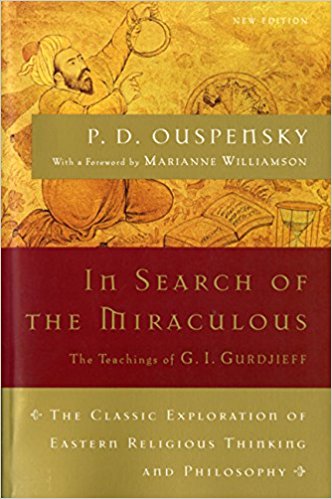
In Search of the Miraculous

51lYBJrYUBL._SX330_BO1,204,203,200_

In Search of the Miraculous by P D Ouspensky

When I first came across this book, the title “In Search of the Miraculous” had a strange impression on me. It made a permanent home in my mind and would not leave. It seemed as if the search for the miraculous was my own search and I had at last found what I was looking for though I could not really articulate what I felt.

Among all the books I have read, this book stands out as one of the most intriguing, fascinating and challenging. The ideas of Gurdjieff, explained so lucidly by Ouspensky in this book, can make a life changing impression on someone really seeking the meaning of life.

Most books are just re-telling of the same thoughts again and again in slightly modified words. The concepts of awakening are also the same whether you read buddhism, hinduism or any other ism. This book really makes you sit up and take notice. If you have watched a movie many times and then suddenly someone writes a review which explains the movie in a radically new way, you pay attention. You start wondering if that is true. That’s the effect of this book. It wakes up the mind’s capacity to wonder.

Quotes from In Search of the Miraculous

Everything happens. All that befalls a man, all that is done by him, all that comes from him—all this happens. And it happens in exactly the same way as rain falls as a result of a change in the temperature in the higher regions of the atmosphere or the surrounding clouds, as snow melts under the rays of the sun, as dust rises with the wind. Man is a machine. All his deeds, actions, words, thoughts, feelings, convictions, opinions, and habits are the results of external influences, external impressions. Out of himself a man cannot produce a single thought, a single action. Everything he says, does, thinks, feels—all this happens. Man cannot discover anything, invent anything. It all happens.


Immortality is not a property with which man is born. But man can acquire immortality. All existing and generally known ways to immortality can be divided into three categories:

  1. The way of the fakir.
  2. The way of the monk.
  3. The way of the yogi.

But all the ways, the way of the fakir as well as the way of the monk and the way of the yogi, have one thing in common. They all begin with the most difficult thing, with a complete change of life, with a renunciation of all worldly things. A man must give up his home, his family if he has one, renounce all the pleasures, attachments, and duties of life, and go out into the desert, or into a monastery or a yogi school. From the very first day, from the very first step on his way, he must die to the world; only thus can he hope to attain anything on one of these ways. The fourth way requires no retirement into the desert, does not require a man to give up and renounce everything by which he formerly lived.


Man has no permanent and unchangeable I. Every thought, every mood, every desire, every sensation, says ‘I.’


A man must begin observing himself as though he did not know himself at all, as though he had never observed himself

Beware of Your Self

When we see a warning like “Beware of Dog”, we are instantly alert and look around for any dangerous dogs. In the same way, the warning “Beware of Your Self” should make us alert and watch our dangerous selves.

Am I really saying that our self is dangerous? Yes, quite true. Not just dangerous but deadly and poisonous and can lead to death.

The self which is also called ego is a fictional notion. It does not exist apart from the notion of ego or self. It is neither body nor mind. It comes into its notional existence when others start calling it by its name and start talking about it.

As a child, its parents and relatives start calling it by a name and over a period of time, the child starts believing that he/she is that name. With the name the whole story starts building around it – what I do, what I wear, what I eat, where I go, what happens to me and so on.

With the self comes the other automatically. The self likes or dislikes others, loves or hates others, plays with other people and things and so on. Everything he/she does strengthens the notion of the self. In fact, the world, the society, the culture and the education are all engaged in building up a better, stronger, independent self.

The self then creates, builds, kills and destroys. It continues the sustenance of itself and other selves. The self, with science, makes medicines to prolong itself and also bombs to destroy other selves.

This illusion of self is dangerous. Because of its assumption of separateness, it creates division and conflict between one self and another. It can know no peace of mind and is always acting to sustain itself, always in the race to making itself bigger, better, smarter and wealthier than others. Slowing down creates panic in the self and it starts to engage in more and more activity.

The self feels it is alone and has to stand up against the whole world. So it forms groups of like-minded selves and fights other groups. The groups can be religion, companies, countries and you name it.

The self is the source of all the confusion, conflict and sadness in the world. Ironically, the self does everything in order to attain happiness but ends up doing the exact opposite. Where there is the self, there is danger – grave danger.

That is why I say – beware of your self.

Jain Zen – Getting Down from the Elephant

The origin of the Jain religion is in a story that is so Zen-like.

The first Tirthankar of the Jains, Rishabdev, left a major part of his property to his two sons, Bharata and Bahubali, and renounced the world. Bharata had ambitions and he conquered the rest of India and also asked Bahubali to surrender his share. Bahubali had a great ego and he refused and it was decided to settle the matter in a one on one combat.

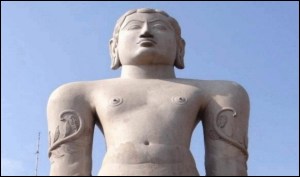
Bahubali turned out to have the upper hand and right at the moment when he was about to kill Bharata, he realized the futility of it all. He stood at the same place and entered meditation. It is said that he stood there for a year and still did not attain enlightenment. Tribute has been paid to his meditative position through the various Bahubali statues in India, the most famous being the one at Shravanbelagola.

So when one stands in the same position for a year, he will lose his clothes and creepers will grow on him. Bahubali’s sisters got worried and asked their father Rishabdev what to do. He said, nothing can be done unless Bahubali gets off the elephant first. So the sisters went to Bahubali and asked him when he will get off the elephant. Hearing this, Bahubali got instantly enlightened. He is said to be the first person to get enlightened in this cosmic era.

The analogy is apparent to those who understand but the point is that the story is so Zen-like. Zen, as we know it, came much later but the essense of what we call Zen is clearly seen in this story.

The Elusive Zen Journalist

I enjoy reading Zen stories. It is so wonderful to read those interactions between master & student – the innocent question from the student and the crazy answer from the master.

Most of the times there is a question asked by the student, followed by the master’s enigmatic reply. The master’s reply is mysterious only to a non-enlightened student. The reply which takes many forms, not just words but sometimes a whack of a stick or a kick or a loud shout, is always intended to point directly to the mind.

Zen is described by many to be a teaching beyond scriptures & tradition, directly pointing to bare reality.

​So, not surprisingly, many students get enlightened on hearing the master’s reply. Such stories are the most interesting ones. We hope too to get an insight into the master’s response.

Zen Story of Gutei’s Finger

Whenever anyone asked him about Zen, the great master Gutei would quietly raise one finger into the air. A boy in the village began to imitate this behavior. Whenever he heard people talking about Gutei’s teachings, he would interrupt the discussion and raise his finger. Gutei heard about the boy’s mischief. When he saw him in the street, he asked the boy and asked him a question. The boy raised his finger as usual. Gutei grabbed his finger and cut it off with a knife. The boy cried and began to run away, but Gutei called out to him. When the boy turned to look, Gutei raised his own finger into the air. At that moment the boy became enlightened.

Zen Story of Dojen’s Enlightenment

One day Master Ju-Ching was scolding another monk for sleeping, and said, “The practice of Zazen (Sitting Meditation) is the dropping away of body and mind. What do you think dozing will accomplish?” Upon hearing these words, Dogen became fully enlightened.

Enlightenment apart, I really wonder who is it that takes the time to write down these stories?

The dialogue in a Zen story is a deeply intimate, intensely personal and mostly private exchange between the student & the master. So for the story to have passed down through the oral tradition, someone has to report it verbatim, for us to enjoy.

Is it the teacher who takes pride in his responses to his students & keeps repeating them to others so as to make stories out of it? I doubt it because if they are real Zen teachers, they would be more concerned about the student getting enlightened than about making a story of it to brag about.

So is it the student who reports his conversation with the teacher & shows off how he got enlightened? Again I doubt it because if the student really attained enlightenment, that would be such a great event, he would have been too out of his mind to cry “Eureka” and run down the street.

So there must be somebody else – the elusive journalist – who eavesdrops on the conversation, sees the changed expression on the face of the student & infers whether he got enlightened & then runs away to share the story with fellow students.

​There were no hidden microphones or voice recorders in those days & obviously neither Zen master nor the student who got enlightened would be interested in making silly stories, then WHO THE HELL NOTED ALL THESE ZEN STORIES? – TAKE IT AS A KOAN TO SOLVE.

Zen Story of Huike’s Enlightenment

Huike and Bodhidharma were climbing up a mountain peak. Bodhidharma asked, “Where are we going?” Huike replied, “Please go right ahead—that’s it.” Bodhidharma retorted, “If you go right ahead, you cannot move a step.” Upon hearing these words, Huike was enlightened.

The Missing Context in Zen Stories

Zen stories are very popular among students of Zen. These stories have been around since the time Bodhidharma went to China.

​Monk asked, “What is the meaning of Bodhidharma’s coming to China?” Joshu said, “The oak tree in the garden.”

All Zen stories have the same two characters – a student monk and the master – and it contains an interaction between them. The student wants to know “why did Bodhidharma come from the west?” in other words he wants to know the essence of the teaching or the true nature of reality. The Zen master responds & sometimes the student gets enlightened.

​The Zen master’s response is usually mysterious & that is the main reason why Zen stories are so popular. However the Zen master does not intend to be mysterious. He is as direct as one can be in that moment & intends to point to the essence directly.

​Monk asked, “What is Buddha?” Unmon said, “A dry shit-stick”

Over the centuries, as these stories have been retold by students & translators, they have lost their details. The only part that is passed down is about what the student asked & what the master said. The whole context & the situation in which the dialogue took place has gone missing.

​A Zen master helps a particular student at a particular point & it is so very intimate. Everything in that moment is important to the story – what the master was doing when the student asks him, how the student asks, things around the place, time of the day – not just the words.

Monk asked, “What is Buddha?” Tozan said, “Three pounds of flax”

For an astute student, knowing the context of the master’s response can help a lot in understanding what the master is pointing to.

Monk asked, “Does a dog have Buddha nature?” Joshu said, “Mu”

Joshu did not merely say “Mu”. He shouted at the top of his voice. Mu is a Japanese word that means No.

Slow and Steady Wins the Race

tortoise-and-hare_orig

A hare one day ridiculed the short feet and slow pace of the Tortoise, who replied, laughing: “Though you be swift as the wind, I will beat you in a race.” The Hare, believing her assertion to be simply impossible, assented to the proposal; and they agreed that the Fox should choose the course and fix the goal. On the day appointed for the race the two started together. The Tortoise never for a moment stopped, but went on with a slow but steady pace straight to the end of the course. The Hare, lying down by the wayside, fell fast asleep. At last waking up, and moving as fast as he could, he saw the Tortoise had reached the goal, and was comfortably dozing after her fatigue.

The moral of the story has always been told as – slow & steady wins the race.

Why is this the only moral of the story? Can the moral not be stated as – Do not be too proud of your strengths?

Is it not possible that this particular hare was foolish enough to doze off? Is it not possible that the hare learnt his lesson after losing the race?

What is the probability that the tortoise has more than 50% odds of winning in any given race with a hare? Will you bet on the hare or the tortoise?

Why is the moral told from the tortoise’s viewpoint but not from the hare’s viewpoint?

I think there would be no story if the hare had won the race. The tortoise was the underdog & therefore his winning is the crux of the story.

But it is still difficult to wrap one’s head around the point that a slow & steady approach of the tortoise will always be a winning strategy against the hare.

While this seems obvious, there is another perspective from which this approach makes real sense and this is what Aesop was referring to as the moral of the story.

​The slow and steady approach is actually a mental attitude towards attaining one’s aim. It refers to remembering one’s aim and not forgetting it. Even if one makes a slow and steady progress, it is better than making fast, random, distracted efforts like the hare, who got lazy, tired and slept off. The hare did not remember his aim and ultimately lost to the tortoise.