All posts by Big Picture Zen

Unknown's avatar

About Big Picture Zen

Center for Self-inquiry and Awakening is a space for inner exploration and self-realization.

Psychological Balance

balance_orig

We observe that sometimes we get carried away by our emotions. When things are going well, we are excited and which shows in our animated behavior. On the other hand, when things are not going well, that also shows as a relative heaviness in our behavior.

Most of us tend to spend our lives on one side of our emotions. Some people are always depressed no matter what the external situation is. They will always find something to complain about in the best of events. Psychologically, they are carrying a burden of expectations, ideals and thoughts which makes the surroundings heavy with anxiety and worry. Very rarely do these people experience carefree joy.

Then there are others who always want to have a positive attitude even if things are not going as per their expectations. They are always hoping that the future will bring better tidings and this is what helps them live.

While it may seem that the second way is advisable, a positive attitude does not imply psychological balance. Those who advocate positive attitude suffer equally as those who possess negative attitude.

Having any attitude – positive or negative – is like a crutch. It is a dependency. Real balance is when there is no attitude. One takes things as they are without differentiating the situation as being fine or not fine.

A person who is psychologically balanced does neither complain about the situation nor takes the help of a positive attitude to endure the situation. When you get involved in a situation, you lose balance. The only way to be balanced is not to get involved psychologically with anything or anyone. A high order indeed!

Note to a Seeker: Stop Seeking

14959

A seeker is searching for something higher, some meaning in life, God, enlightenment or inner peace. That something, he may believe is external and in order to find it, he will visit sacred places and meet holy people. If the seeker believes that what he seeks is within, he will read scriptures, meditate, or practice different techniques in order to attain it.

Now, seeking may have two orientations – seeking for something you do not have or seeking for something you had but have lost. Although the two may seem very different, eventually those who believe that they are seeking for something they do not have, come to understand as they investigate deeper, that it makes more sense to believe that they are seeking for something they had and now it is lost.

Seeker, I tell you to stop seeking.

Lets say you dropped your pen somewhere but do not know that you have dropped it. Your mind is not agitated. Suddenly you realize you have misplaced it or someone tells you that your pen is missing and you start seeking for it. Now your mind becomes agitated. You do not need the pen to write anything but you still want to know where the pen is so you continue to search. You spend an hour searching and finally you find the pen under the chair. Great relief. The mind is calm again.

The mind was calm when you did not know you had misplaced the pen. When you knew you had lost it, the mind was agitated even though the pen was right there under the chair. When you found the pen, the mind was happy again.

The pen was there all the time. The only change was in your knowledge. First you did not know that you had lost the pen. Then you knew you had lost it. You spent an hour in agitation and mental torture searching for the pen even though there was no use of it immediately. Finally, when you found it, the relief that resulted was not an attribute of the pen but due to the dropping of the stress you developed in yourself during the search!

So Seeker, I tell you to stop seeking. What you are seeking is right there. It will always be there.

You may ask whether the mental state of a person who does not know he has lost the pen is different from the mental state of the person who has found the pen. The mind is calm before also and after also. It is possible that the person may forget once again where he has kept the pen but this time he will not be so troubled because he knows the pen is there somewhere. There is no need to search.

So Seeker, I tell you to stop seeking.

What you seek is right there. Only you do not know. All your seeking is because you know there is something to be sought. Those who do not know, do not seek. You may cause them great harm by telling them there is something to seek. Because once a person starts seeking, it becomes a passion, difficult to stop.

So Seeker. I tell you to stop seeking. If you renounce seeking, that which you are seeking will appear to you on its own. You will then laugh at yourself and all the seeking you did.

So Seeker. I tell you to stop seeking.

A Clockwork Orange (1971)

Director – Stanley Kubrik

a-clockwork-orange-puremovies-620x299

This is a film that stays in your mind for a long time. You cannot forget the raw imagery in this film. And the super performance by Malcolm McDowell. The film contains depiction of violence and nudity so naturally it is meant for a mature audience.

The Clockwork Orange is not about entertainment but is a thought provoking take on techniques of preventing violent behavior. The story is about Alex DeLarge, a gang leader who engages in fights, rapes, robberies and senseless violence.

He is caught by the police during one of his raids and sentenced to prison.

After a couple of years in the prison, the authorities are looking for a volunteer for the Ludovico technique, a procedure for curing violence in a person. Alex volunteers for it.

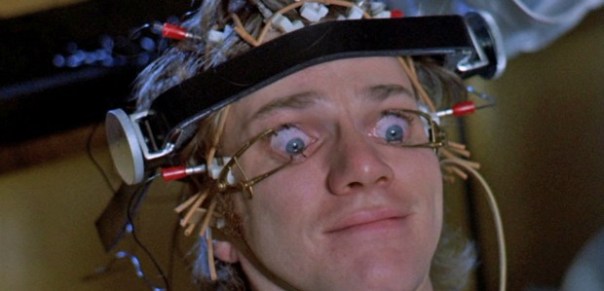
The technique involves tying up the person so that he cannot move and forcibly keeping his eyes open with instruments. He is then shown violent movies, scenes of crimes being performed, and extreme violence. Initially, Alex enjoys this but after some time aversion starts to build up. The problem is he cannot end this, he is forced to watch it because his eyelid are kept open.

After two weeks he is ‘cured’. In a demonstration of the cure, he is shown to be incapable of fighting even when provoked and convulses at the sight of a topless woman.

A Clockwork Orange is based on a 1962 satirical novel by the same name written by Anthony Burgess. The idea is similar to George Orwell’s 1984 in which the authorities are trying to control humans and making them mechanical gadgets (clockwork) in skin and flesh (orange).

The central question is whether violent behavior can be cured with external techniques. One of the reasons for putting people in prison is that they should be punished and as a result should realize their wrong doing, repent and become better citizens, apart from keeping them away from ‘civilized’ society to prevent further violence.

But the film tries to point out that criminals are only an extreme form of the basic nature of society which is violence.

I am reminded of a documentary “Doing Time, Doing Vipasana – Meditation in Indian Prisons” which deals with this issue of change of heart in prisoners happening from within rather than through punishment and the time spent in prison. It shows how Kiran Bedi, India’s first woman IPS officer introduced the ancient Vipasana meditation practice in Tihar jail with amazing results.

Siddhartha (1972)

Director – Conrad Rooks


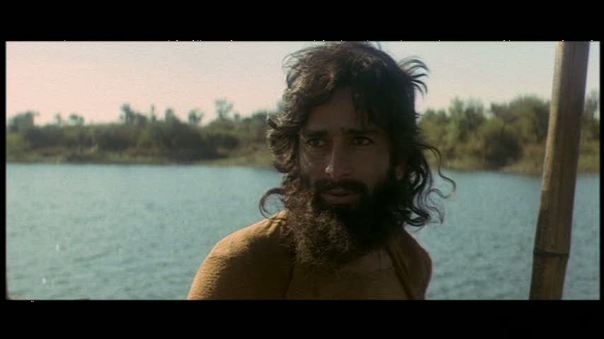
siddhartha3

The film is a masterful adaptation of the novel written by Hermann Hesse and is considered to be one of the spiritual classics – one man’s search for the meaning of life. If you have liked the book, you will definitely love this movie.

Set in the time of the Buddha i.e. 2500 years ago, the movie tells the story of Siddhartha, the contemplative son of a priest, who wants to become a sadhu. The spiritual search leads him to spend time with wandering ascetics, learn the wisdom of the Buddha, indulge in sensual pleasures, experience success in business, and even become a father.

When he realizes that he has lost the real goal, he walks away from everything and happens to meet a ferryman who teaches him how to learn from the river. Eventually, Siddhartha becomes enlightened and attains happiness.

I found reading the book to be a more engaging experience as one could read the thoughts that went through Siddhartha’s mind. The movie cannot bridge this gap because everything cannot be verbalized. Despite this, the movie is one of my favorites. The background songs pierce deep into the heart.

I see Siddhartha as a timeless allegory for a spiritual seeker. At any age, in any part of the world, there is pain and suffering in every human activity – be it the striving for material pleasures or the spiritual search. Enlightenment is only to be discovered every moment with the realization of the emptiness of knowledge and desires.

Spirituality in Films: A Sublime Combination

Films with a spiritual theme not only carry a spiritual message but are also tremendously entertaining and sometimes full of humor

​Films are made for entertainment. We all love to watch the characters, their stories, and their situation in the film. Many people would go to the films only to watch their favorite actor. Some are attracted to action movies while some are attracted to drama and some to comedy. Films become trendsetters for fashion. They also shape attitudes of the masses. And some films also pass on a spiritual message. Spiritual films are not films about spiritual masters like Jesus or the Buddha but about the teachings in real life.

Spiritual Films that Draw on Allegories and Symbolism

Some of the best spiritual films are based on extensive symbolism. There is a meaning to the names of the characters and a meaning to the actions and storyline which is akin to a spiritual search. Some of the best spiritual films of this type are The Matrix (Directed by the Wachowski Brothers in 1999) and The Holy Mountain (Directed by Alejandro Jodorowski in 1973).

Spiritual Films Adapted from Novels

A few of the spiritual classics have been made into movies which not only bring to life the characters in the story but also engulf the viewer in its message. These movies are best watched after reading the novel. Some of the most excellent spiritual films adapted from novels are Siddhartha (Directed by Conrad Rooks in 1972 based on the novel by Hermann Hesse) and The Razor’s Edge (Directed by John Byrum in 1984 based on the novel by Somerset Maugham)

Spiritual Films that Walk the Talk

There are some films which not only entertain or simply pass on a spiritual message through symbolism but also make you sit up and reflect on one’s position in life. These films have the potential to become a life changing event if the viewer has a spiritual inclination. The finest spiritual films of this type are The Truman Show (Directed by Peter Weir in 1998) and The Peaceful Warrior (Directed by Victor Salva in 2006).

Spiritual Films that cannot be Categorized

There are some films which are so extraordinarily beautiful that they cannot be classified in to any stereotype. These are the rarest of the rare films watching which is like having a spiritual experience. A couple of such unparalleled films are Waking Life (Directed by Richard Linklater in 2001) and Why Has Bodhi-Dharma Left for the East? (Directed by Yong-Kun Bae in 1989).

Watching spiritual films is a special treat because it combines entertainment and insight, not to forget humor as in I Heart Huckabees (Directed by David O. Russell in 2004)

Why Has Bodhidharma Left For The East? (1989)

Director – Yong Kun-Bae

bodhi_3

Bodhidharma was a 6th century Buddhist monk from India who is generally credited for introducing Buddhism to China. The question “Why has Bodhidharma left for the east?” is a famous koan or riddle, the purpose of which is to free the student of attachment to conceptual thinking. This movie, however, has nothing to do with either Bodhidharma or koans. But is is an apt title for this meditative and quiet film.

​The movie is set in the Korean mountains wherein a Zen master lives alone with an orphan boy. A young monk who has left the city life with his old mother and responsibilities in search of enlightenment is staying with the ailing Zen master. The movie deals with the perennial issues of man – sorrow, peace, desires, responsibilities, and death. There are very few dialogues in the movie but it still communicates a lot. The film shows a sharp contrast between the life of the city and the life in the forest. The story moves at a slow pace allowing one to absorb the happenings on the screen – the mountains, the stream, the trees, the antics of the boy, and the inescapable fact of life i.e. death.

Real Happiness Does Not Depend on Anything

t

It is very normal to think that once I get something, I will be happy. Most people search for happiness in events and struggle to make those events happen.

While there is a certain pleasure and joy to be had when you get what you want, that is not real happiness. This is because, things do not remain the same. They change and when they do, you will lose the happiness you had.

Many people even lose the sense of joy when they get what they want because they have been struggling so hard to get that that they are emotionally drained and cannot feel any joy at all.

Real happiness is something totally different. It is not dependent on anything external. When a person discovers this happiness, it is totally irrelevant whether there is food to eat or house to stay or money to spend.

This happiness can only be discovered when one sees the insubstantial and hollow nature of worldly achievements and possessions. It is through this sense of emptiness that one can get in touch with what is real. When you throw away all that is false, what remains has to be the genuine.

RIP Time

illusion-738387

The responsibility of proving that time exists lies with those who say that time exists. The existence of clocks & watches does not prove that time exists just as existence of rulers do not prove the existence of inches or the existence of thermometers does not prove the existence of temperature.

Time is a concept that helps to standardize the measurement of change. How is it done? One change is kept as base & everything else is compared to that. For e.g. The movement of the shadow on a sundial or the movement of a pendulum or the oscillation of a quartz crystal is used to measure time.

Man has created the notion of time & applied it to everything.- the age of the universe, age of dinosaur fossils, history…

Time causes psychological stress. So you must understand this illusion of time

SOME THOUGHT EXPERIMENTS

Right now, what time is it? In India, it is 5:30pm , in London it is 12 noon, in Japan midnight & USA morning. But on earth, what time is it?

Try this one

Visualize yourself at night going up like a balloon into the sky. Keep going up, go beyond the earth’s atmosphere. Keep going. You will see the sun at some point. Does it mean it is day now? Day & night is only a happening on earth. we count the alternate days & call it the calendar. Then we extend that infinitely in two directions & call it past & future.

The universe is a dark place. Just because we are near a star, we see light. In fact our existence is because of the sun.

Watch closely. When does “this” moment end & the “next” moment begin? You won’t find a boundary. If Taj Mahal was in the past, why do we see it today in the present?

Here is another one.

Monday, Tuesday,… January, February,… 1,2,3… are all concepts. If you do not have a calendar for several days & you wake up one day, how do you know what date, what year it is?

Past, Present & Future are only constructs of language & thought for the purpose of communication and mutual convenience. Nothing is moving from past to present or present to future. Things are only changing & we interpret them in terms of time. Whatever was, is and will be has always been, will be right NOW.

Sequence & Order is only a mental illusion. Imagine that I show you an apple & then an orange. What came first? You say – the apple. But fact is both apple & orange existed simultaneously. The order or sequence was created by mind.

LAYING TIME TO REST IN PEACE

Movement of thought is Time. No movement, no time. When you realize there is no time, you change totally.

Don’t TRY to live in the present moment. You have always been in the present moment. You ARE the present moment.

Understanding Fear and Insecurity

insecurity-620x330

We all strive for security in life – we want good education in the hope of securing a high paying job, we invest money in property and funds so that we can secure our future, we save money for our children’s education and marriage, we buy insurance for safeguarding our family against accident and death.

Insecurity is caused by fear. Deep down there is an unconscious fear, a certain insecurity which drives us to do these things. But we never question it or investigate it.

Insecurity must be understood at two levels. One is the inherent insecurity of life. Everything is impermanent; nature is in a constant state of flux. Seasons change, we grow old, we fall ill, we die. There is nothing we can do to prevent this.

Since we are born, we must grow old and die one day. The uncertainty is when and how we die, not whether we die. Even if there are tremendous advances in medical science, nothing can prevent death. So this is the basic level of insecurity in life which will never go away – whatever your job, position, bank balance, and health is.

The second level of insecurity arises from people trying to find more security in life for themselves and their families. This is the insecurity most of us are caught in. We all want to be settled in a job earning a monthly income and saving for the future. We also keep trying to find more ways to earn additional income such as changing jobs, investing in shares and real estate and so on.

We think of our future, then our children’s future and then our grand children’s future. All this thinking creates more insecurity and we strive harder to acquire more property and money – all with an underlying sense of panic, thinking what will happen in the future.

Even if we are not driven by family concerns we are simply driven by competition – by looking at what others are doing around us and wanting to do better than them. The more people we see running after property and wealth, the more insecure we become and strive harder, increasing the insecurity. This is a vicious cycle.

Whereas the first level of insecurity is natural and cannot be eliminated, the other is created by us, is totally unnecessary and is the root of all evil actions, cheating and corruption in the world.

​In order to full grasp the first level of insecurity, one must see through the illusory insecurity and stop acting in a manner which increases that insecurity.

When one is free of the man made insecurity by not chasing after symbols of security such as property and wealth, one can then tackle the original insecurity of life i.e. death.

Finally, when even this level of insecurity is penetrated to its roots by discovering what you truly are, you can be free of all fear.

The Razor’s Edge (1984)

Director – John Byrum

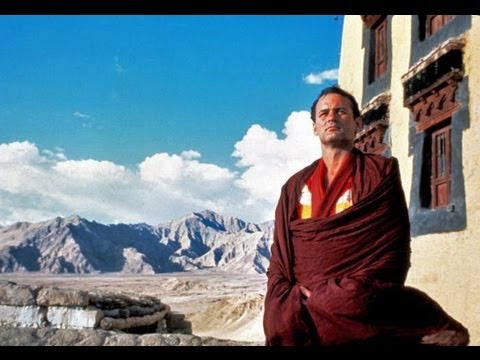
hqdefault

The sharp edge of a razor is difficult to pass over; thus the wise say the path to salvation is hard. – Katha Upanishad

​This is the epigraph of Somerset Maugham’s 1944 novel The Razor’s Edge. The film is an adaptation of this story.

A World War I fighter pilot Larry is disillusioned with his war experiences. He decides that he wants to search for the meaning of life. His fiancée refuses to stay with him and instead marries a rich man. Larry then moves through Europe staying in Paris for sometime, working in a coal mine for some time and eventually reaching India. His adventures bring him to Ladakh where he finally achieves enlightenment.

​Throughout the film, Larry’s non-conformist behavior and thoughts are contrasted with the conformist views of Elliot Templeton, his fiancee’s uncle. Larry is going against the stream of the society and dares to live his life with the ultimate happiness of enlightened activity while Elliot always talks about happiness derived from conforming to society’s demands.