Finding Answers

Mostly we keep ourselves so busy so as to keep our deepest questions submerged under the surface of our daily consciousness. The questions poke their nose time and again but we push them back with some or the other busyness or temporary gratification.

What questions are these? The question of boredom, dissatisfaction, lack of direction, uneasiness about everything, fear and insecurity. These are just the surface questions. We don’t even touch the real deeper questions.

We search for the answers in some book or in the words of some guru or spiritual teacher. We may listen to their talks or spend few days in some silent retreat. And we may keep doing the same for years together without any substantial benefit, except the ability to more easily push back the questions with canned answers that we collected from our efforts.

The truth is that the answers cannot be found in words and sutras. You cannot find them in the past or the future, neither at home nor in the wilderness, neither in temple nor in a brothel. The answer is not of space and time. It is not of belief or doubt, neither of God or nature. It cannot be found by logical reasoning or blind faith. It cannot be found by striving or sitting in meditation. It cannot be found on Google or ChatGPT

The answer you are seeking is a reaction to a question. So long as the question exists you will seek an answer. The question will not allow you to rest in peace. But the fact is that to find the answer, you must first understand the question and the questioner.

Most spiritual seekers engage themselves with trying to find the answer to the question – “Who am I?” but in reality, they need to seek the answer to the question – “Who is asking the question who am I?”

The question must be asked without words. If you ask the question in words, you will get the answer in words but that answer cannot satisfy your hunger. You must get the wordless answer – direct sight! So you must ask the wordless question.

Turn your whole being into a question. Become the question, don’t just repeat the words in your mind. When you do this, you become still. And stillness is the invitation to the answer you are seeking!

What to do in life?

This is a critical question – What to do in life?

Most people do what everyone else is doing.  For example – study, go to school, college, do a job, start a business, marry, make kids, send them to school, get them married and so on. Society encourages you to make money, become successful and famous, buy property and make life more secure for yourself and your family. That is the general direction of humanity. If you observe all this closely from a very objective standpoint, it all seems mindless and boring. It is sheer stupidity.

You also see some people who live the so called religious life or spiritual life i.e. they do meditation, follow some practices like chanting mantras, go to some religious places or on a pilgrimage, join some satsang and listen to some guru. They may also engage in occasional charity, yoga, participate in workshops and also admonish others who are living the regular life to mend their ways and follow the higher path. At the end of the day, this is equally boring and senseless.

Gurdjieff talks of Type A, Type B and Type C influences. Most people live under Type A and Type B influences. But there is still disillusionment. Nothing seems worth doing. One can do the things as pointed out by society and others and also earn the fruits from them but then what? For someone who thinks too much and sees too far like The Outsider of Colin Wilson, the prospect of living like this for the entire life is meaningless.

Religions have pointed to something higher e.g. Nirvana, Atman, Brahman, merging your consciousness with the higher consciousness, becoming one with the Universe. You are That! Until you experience that, there seems to be no escape from the mundane. But once you see that, once you experience that even for a moment, then life is not the same. Then ‘I’ does not matter, it’s a lie, an illusion, once the ‘Nameless’ is seen.

Having seen that and experienced that, the daily life is even more drudgery – the recurring chores, eating food, washing clothes, going to office, making presentations – a drab and dreary life. One reflects – what can I do to wake up every day and live like God? There is a great sense of urgency. Earlier, one thinks it’s a long life but now one sees how fleeting life is and desires to merge with God consciousness at the soonest. 

Quitting one’s job is not the solution. It will create more stress since you will need to focus on the dull and boring task of making ends meet. So what to do? You cannot go into ecstasies like Ramakrishna all the time and forget about everything.

A sure sign of progress on this path is the voluntary reduction in the intellectual tasks like planning, working out alternatives, etc. You just want to do simple things like organizing the house items, working on some craft ideas, reading a book, not doing anything in general but just breathing and living in the present moment. 

Once you realize that all things are fleeting i.e. they are impermanent, that in fact they don’t exist at all but only appear to be there, then there is no desire to possess them. Even if there is an interest, it wanes soon. This is true of money, property and things.

Once you realize that all time is now, then there is no worry of the past and the future. You look around and see yourself everywhere. The universe breathing in and out. You don’t wish for something to happen or regret for something that happened because those are just your interpretations.

Once you realize that others don’t exist as people but only appear to be so, you develop compassion for them and their silly life. You prefer to stay alone in seclusion. You don’t need anything from them and neither do you have anything to advise them or give them. If something pops in your mind to do, you simply do that. There is no guilt, shame, fear, anger or desire.

To conclude, you live fully by NOT living in the worldly way. Stopping the worldly activities is the only way to live more abundantly. You are relaxed and not stressed about anything. Relaxation is enlightenment as Kenichi san says.

The Buddha talks of extinguishing the flame. It means you are so much one with the existence that the separate entity does not exist. The thoughts cease and that is called the end of the cycle of birth and death.

Do you have any alternative way of living? Do you want to continue living and going through all the sufferings, tensions, troubles and frustrations or having to put up with the world. How should one engage with the people of the world who tell you what to do – to you who sees more than they do?

You need to tell them how short-sighted they are, how foolish, ignorant and deluded they are. They will not like it, they will not relate to you, they will ignore you or even persecute you. But you cannot join them in their tomfoolery and play their games and pretend to like it.

You must live by your truth!

Dusshera – Good Over Evil

Dusshera is symbolic of the victory of good over evil. The myth and legends point to the victory of Rama over Ravana and Durga over Mahishasura.

We are all happy that Rama defeated Ravana and Goddess Durga killed Mahishasura. So now that both Ravana and Mahishasura are out of the way long ago, does it mean that we are now living in good times? Hardly.

Look around you and you will find so much evil in the world today also. So has Ravana taken birth again? Has Mahishasura become alive again? If so, where is Rama and Durga? Are they just imprisoned in temples and Chief Guests during Navaratri?

The point that we miss in all this is that these stories are not external. There is a Rama and Ravana within us. There is a Durga and Mahishasura within us. It is the way we think that determines whether we are Rama or Ravana, Durga or Mahishasura. The battle is in our minds – the battle of good and evil. Who will win?

It is said that good ultimately wins over evil. But is it that given enough time, good will win? What about till then? Is evil dominating till then? Will good win before we die?

It is very important to realize the evil within us. We mistakenly believe it is outside. But look closely. Is anger out there? Is envy or jealousy or hatred out there? Or in here? Who gets frustrated and irritated when things are not going your way?

We think other people are the cause of our negative reactions. It may be so. But that does not let you off the hook. The inner war is the cause of the outer war, not the other way round. If you are at peace internally, where is the need to hate someone, get angry at someone, or become irritated?

Check within who is in charge – good or evil. Have you taken offence on someone saying something bad about you? Are you complaining about something or someone? Are you wishing other people in your life were different and treated you more lovingly? Do you feel misunderstood and that no one is listening to you? Are you carrying grudges against someone who has hurt you in the past? Are you planning to take revenge for some wrong done to you? Are you constantly worried about how you will succeed in life? Are you afraid about what others will think about you?

If any of this is true even momentarily, it means evil exists in you. One of the characteristics of evil is that it keeps you in deception. You feel everything is ok. That it is natural to be this way. That the problem is not with you but with others. This gives evil time to incubate and grow till it becomes very difficult to manage and overcome. In the end, we die without experiencing the victory of good over evil.

Our notions of good are quite superficial, just limited to good external behavior. It is like putting on a fake smile while going to a party you don’t want to or congratulating someone on their success while internally smirking that he did not deserve it.

Appearing to be good has become more important than truly being good. In fact, we do not even know what it means to be truly and genuinely good. We keep repeating that good ultimately wins in the end. After all that is what is conveyed in all the movies and all the mythological stories, isn’t it?

The point is not that I am painting a picture of the world in which nothing can be done. The point is that the hero of the movie is not some other person. It is YOU.

There is a Rama and Durga within you. Instead of identifying yourself with your name and circumstances, you must identify yourself with these forces of good within you. That is when the battle of good against the evil actually begins. Until this battle begins, evil is winning hands down.

Once evil is seen within, the seeing itself is the good, the fight begins. You will see how your anger has fractured your relationships. You will see how your misperceptions have ruined your friendships. You will see how your envy and jealousy have distorted your understanding of others. You will see how your vengefulness and hard feelings have crippled the quality of your life. You will see you have no love within you for anyone. You will repent for carrying hard feelings for someone. You will forgive and ask for forgiveness. You will start loving everything for the first time.

Only and only then good is said to win. Once good awakens, it will know what to do, it will tell you what to do. There is no chance then for Ravana and Mahishasura to gain any foothold. There is a path of goodness, there is a good life that one can live. It is our birthright to live a good life with love and affection for nature and other human beings. Are you ready for such a life?

Mahishasura was a shape-shifting demon. Just like him, the evil within us comes in different manifestations. You have to be as agile and persistent as Durga to overcome these stratagems. Your aim must be to live a life of goodness, to be a genuinely good human being. No amount of wealth, success and fame can compare with such a life.

I invite you to live the good life. Wish you a Happy Dusshera!

Inner Independence

Today, India is celebrating its 75th independence day. It is a big day. 75 years ago, the British got out of the car and handed over the steering wheel to Indian people. So yes, we are independent of the British rule. We have our own government now. We have our own constitution, our own rules, our own dreams to follow and our own identity in the world. Our independent India allows us freedom to choice of education, freedom to run our business, and freedom to choose the government.

But are we truly free? Free as an individual? Inner independence!

Aren’t we still in the prison of divisive views, wrong understanding, and ignorance? Aren’t we still in the prison of afflicting or troublesome emotions like hate, jealousy, lust, anger and pride? Aren’t we still in the prison of reactive behavior, biases and prejudices? Aren’t we in the prison of egoistic thinking, self-delusion, and attachments?

Who will struggle for our inner independence? There is no one else. We have to struggle with our inner prison on our own. Another person cannot get us out. We have to break the walls, open the lock and walk out.

The biggest hurdle in this struggle is the perception that one is free already. Just because there is outer independence, does not mean there is inner independence. Since we believe that we are already free, there seems to be no need for any struggle.

The struggle may begin when one becomes aware of one’s being in the inner prison. The choice is clear. Stay in the prison, do what the guards tell you to do so as to avoid any punishments and carry on the life in prison thinking there is no way out. The other choice is to break the patterns of conformity and try to break free. The world will prevent it. Others who are with you in the prison will dissuade you from attempting to escape.

Fighting with the powers does not help. The powers are too strong. Just like India’s independence was won with the power of non-violence and non-cooperation, so must the inner struggle be carried out with non-judgmental awareness and non-cooperation with your inner compulsive desires.

Inner freedom is possible and it is your birthright. You must aim for that. Inner freedom allows you to be your true self without pretending to be someone else, it allows you to love everyone without limitations and it allows you to lead a conscious life leading to inner joy.

The Mechanism of Letting Go

Everyone advises letting go but no one precisely tells how to let go. One of the best instructions I have come across for letting go is from David Hawkins. It goes as follows

Letting go involves being aware of a feeling, letting it come up, staying with it and letting it run its course without wanting to make it different or do anything about it. It means simply to let the feeling be there and focus on letting out the energy behind it. The first step is to allow yourself to have the feeling without resisting it, venting it, fearing it, condemning it or moralizing about it. It means to drop judgment and to see that it is just a feeling. The technique is to be with the feeling and surrender all efforts to modify it in any way. Let go of wanting to resist the feeling. It is resistance that keeps the feeling going. When you give up resisting, or trying to modify the feeling , it will shift to the next feeling and be accompanied by a lighter sensation. A feeling that is not resisted will disappear as the energy behind it dissipates.

David Hawkins

That’s all there is to letting go. Most people are unable to let go because they are caught up in the thoughts of letting go. But realize one thing very clearly that thoughts, feelings and sensations are one body. They are not separate. When there is a thought, there is also feeling and also sensation.

Most people talk about letting go of attachments. You can let go of attachments only in the moment the attachment arises, not at any other time. Same is the case of letting go of fears.

Supposing you are afraid of dogs and you want to get over the fear of dogs. If you are at your home, you cannot do anything to get over the fear of dogs. There is no dog around so there is no fear. The fear arises when there is a dog around. And that is the time, the only time, you can deal with the fear and let go of it. If you are attentive, you will see the fear arising and the feeling take over you. That is the time you need to follow the instructions on letting go as described above. Allow the feeling of fear to arise, to stay and to subside. If you are watching it in the moment without resisting or without following your usual habitual reactions to the dog, then that feeling will come, arise, stay and disappear. If you have done this (allowed this to happen) then you will notice that you do not have the same intensity of fear the next time you are around a dog. Because you do not allow the fear to arise in the first place, because you resist that feeling the instant it arises, you are unable to let go of that completely. Instead, it becomes stronger and stronger.

This is true of any other fear or attachment. If you want to break the habit of smoking for example, then you have to deal with it when the urge to smoke arises. No amount of thinking or talking to yourself will get you to stop smoking. The only thing you can do in the time when that feeling is not there is to develop awareness or mindfulness. When you are developing your awareness, then that awareness helps you when the real fear or the urge arises.

Most of our feelings are learnt by the automatic nervous system in a state when we were not aware, like in early childhood or when we did not know the words for certain things. These become automatic reactions hard wired in our system. The continuous practice of letting go can help us to become free step by step. As you become more and more aware, you become more sensitive to the feelings arising within your body, you are more aware to the sensations in your body and the movement of your thought. It becomes easier to let go.

Awareness is the master key.  

Half Knowledge is Dangerous

There is a saying that half knowledge is dangerous.

If you have read the stories of Suppandi in the children’s magazine Tinkle, you will know what I mean. Once Suppandi’s master instructed him not to let anyone in the house while he was gone. Suppandi diligently followed the instructions and when his master returned, he did not allow even him to enter the house. Another time, some guests had come over to the house and Suppandi was asked to bring some Samosas. He brought them in his hand and was reprimanded by his master to bring everything in a plate. Next day his master asked him to bring his shoes and Suppandi brought them in a plate.

Image Credit: Tinkle

These stories illustrate in a funny way how half knowledge is dangerous. However, it is true in real life also. Cooking a new dish without knowing the nuances may affect the taste of your preparation. Writing a complex piece of code without knowing the entire context of the customer’s requirements will lead to unintentional bugs. Travelling to a distant city without accurate maps will lose you hours in getting on the right track. In the simplest case, if your knowledge is less than complete, you will get less marks in the exam. We can recognize innumerable such examples in our daily life.

If we really think about this, then whatever we know is always incomplete, always half. In fact the more we know the more we feel we know less about something. So at all times, our knowledge is half knowledge. We don’t know the entire story.

Just to clarify, when we say half, it is not exactly 50%. It means not knowing different facets of the subject. Whether you know 25% or 75%, it is still less than complete, therefore it is called half. You cannot say that someone who knows 25% is more ignorant than someone who knows 75% or the other way round.

So now the question begs itself. Is there a state of complete knowledge? If you keep on gaining knowledge, will you ever know everything? I doubt that.

New knowledge is always getting created and therefore it is an endless journey to gather complete knowledge. In the lifetime of an individual, it is not possible to acquire all the knowledge of all the things.

Since we all are in the state of half knowledge and we take action based on that, so we are all ‘dangerous’ people. Whatever action we take based on our half knowledge is less than optimum and will may create more harm than good in the long run. But that seems like a controversial statement. Obviously, we can do good for others and not all our actions are harmful.

At this stage, we reach a point where our understanding is limited by the collective understanding. It is possible that even though when the world says something is good, it may be harmful but you will know only when you get some more knowledge of the cause and effect of that action.

This discussion is taking us deeper into the meaning of knowledge, good and harm. It is not possible to conclude this at this level.

They say the Buddha had complete knowledge. In one of the suttas, the Buddha said to his monks that he knew far more than what he revealed to them, taking the analogy that he taught only a handful of leaves compared to all the leaves in the forest. According to the Buddha, we must focus only on the alleviation of suffering and not bother about who created the universe and whether it is eternal or not.

According to the Buddha, knowledge that helps in alleviation of suffering is superior to knowledge that may lead to increase in suffering or have no impact on suffering.

Vedanta philosophy points seekers to go beyond knowledge. It speaks of the ending of knowledge. Ved + Anta = Vedanta. The Vedas were considered to be the repository of all knowledge till then. But it was found by the wise that that knowledge was not conducive to emancipation or awakening. It merely was leading people on the path of rituals and worship.

Could it be that the clue to solving this conundrum is to get an insight into knowledge i.e. understanding the very nature and structure of knowledge.

That which we call knowledge is a consensus, a provisional conclusion, not ultimately real. It is something that helps you to get along in life, work with others and do things but none of that fundamentally is true, it’s not the substance of the universe.

Mathematicians will argue otherwise and speak of the perennial constants and universal ratios which are at the root of the laws of nature. But such laws are just the result of our universe being the way it is and mathematics a way to understand that through symbols. They are the truth only of our observable universe dependent on the way we have designed our science.

Knowledge, if we understand it as a description of the world whether in language of English or Mathematics, has inherent limitations, which cannot be overcome by gathering more knowledge.

Knowledge is the description of the world and description = words and words are symbols to represent what is. But ‘what is’ cannot be captured as symbols or in words and descriptions. Knowledge by its very nature is a representation of ‘what is’ and a re-presentation is not the real deal.

To know ‘what is’, knowledge must be dropped and only bare awareness must be retained. When you are able to look and hear what is with bare awareness without creating knowledge of that, then there comes a time when you can directly experience ‘what is’ and know directly, not through any representation of words and formulas.

Direct knowing is complete at all times. This is not gathered knowledge or applied knowledge. This direct knowing is new and fresh every moment. And action based on this direct knowing is the right action that is good, not harmful.

So it is not a question of half or complete knowledge, it is a question of direct knowing or indirect knowledge.

Will You Sit With Me Here?

Veer Savarkar Udyan, Nigdi, Pune

Will you sit with me here?

Till our thoughts and memories flow past us and fade

Will you sit with me here?

Till the breeze stops playing music on the leaves

Will you sit with me here?

Till the sunrays stop playing hide and seek with the trees

Will you sit with me here?

Till the water in the stream stops singing

Will you sit with me here?

Till nature’s performance goes silent

Will you sit with me here?

Till we perceive that it is us who are on the stage

Inner Life Joy

Experience is a continuous process. It is always there from the time we are born till we die. It is always there from the time we wake up to the time we sleep. It is also there during our sleep. However, the nature of our experience changes during different times of the day and age. Each experience is not the same.

Come to think of it, how do we know we have experienced something? Because it stands out from the rest of the stream of experience isn’t it? We only notice the peaks of experience. If nothing has happened in the past one hour, it does not mean we have not experienced anything.

However, if suddenly there is a loud crash on the road and you are jolted from your sofa, then you say you experienced a loud noise. You may run out to the balcony to see what happened. If you see someone you know has met with an accident, you will experience something more than if you see some stranger involved in the accident.

If life is just a series of events that you experience day in and day out, then are you in control of what experiences you get? It seems not. Is our mind or brain just a box meant to receive sights and sounds and tastes and smells and experiences?

Are our experiences just a reaction to the external world? It does seem so. If it is hot outside, we feel miserable. If it is chilly outside, we feel uncomfortable. If someone says “You are a great person” you experience some emotion of happiness or pride. But if someone says “you are a lousy person” you may experience anger or sadness.

Is our inner life so tightly connected with what we see, hear or feel that we have no control on our own experience? It does seem to be the case. But we never pay attention to this. It seems so natural for us to blame some person or some condition for the experience we are having.

It should therefore come as a big surprise to you if I declare that you can experience any emotion you want in any situation. Since you have never exercised your ability to choose the emotion you want,  it may seem difficult at first. Moreover, the external world is constantly throwing sensory impressions at you and you are constantly experiencing something or the other depending on your prior experiences and habitual tendencies. Further, you are continuously blaming something or someone for your experiences so the thought of being responsible for your own experiences never occurs to you.

To get out of this negative loop, we need to remember that we can choose our experience. The first step in that direction is to notice our current experience. If you notice what you are experiencing right now, then only you will be in a position to replace it with another experience. So the next question is obviously, with what experience would you like to replace your current experience?

It is not worthwhile to imagine replacing a sad experience with a happy one on the flick of a switch. It would seem odd that while others are crying because they have lost someone in an accident and you suddenly burst out happy and laughing. That is not the kind of experience changing I am talking about. What is reasonable to be able to do is that while others are crying, you may not experience that level of anguish. And even if you are crying, you may notice that you are crying. Noticing itself is a big thing. Noticing itself if maintained as pure noticing, will bring about a change in the experience.

If you continue to notice, you do not need to choose another emotion to replace your current experience with. The natural process will automatically bring you to a stable experience. That experience, if practiced, is also known as a equanimous calm or inner joy. This experience when practiced through non-judgmental noticing becomes unshakeable in due course.

Then you will not experience the ups and downs of your earlier emotional roller coaster which was totally under the influence of external events and persons. Now, there is an experience of a constant source of energy and joy underneath your outer appearance and which is not a result of any forced effort. But it is just there and you continue to notice the same.

This inner joy is your true nature. You will know yourself as this inner joy and not be caught up with your name and designation and other egoistic identifiers. There is no name for this inner joy but this is your true nature.

May you find this inner joy. There is nothing more valuable than this in the whole universe.

Ae Bhai Zara Dekh Ke Chalo

Bollywood songs and spirituality – there seems to be no connection between the two. 80% of the song are romantic songs where the male and female actors express their love for each other or grieving songs because they did not get the love they desired. Other 19% are different genres of songs – travel, dance, kids, or situational. Very few, less than 1% songs would be devotional or related to God, Ishwar or Allah.

Now, if you have a spiritual bent of mind, and if you have never turned over this idea in your mind, let me suggest to you that if you replace the lover in the songs with God, most of these so called romantic Bollywood songs can as well be sung for the love of God. Yes, with no change of lyrics but just a change in direction or rather just a change of image in your mind.

Let me share some examples. Listen to these songs and replace the man or the woman with God, Ishwar, Allah or simply a higher power.

सजदे में यूँ ही झुकता हूँ
तुमपे ही आ के रुकता हूँ
क्या ये सबको होता है

हमको क्या लेना है सबसे
तुमसे ही सब बातें अब से
बन गए हो तुम मेरी दुआ

खुदा जाने के मैं फ़िदा हूँ
खुदा जाने मैं मिट गया
खुदा जाने ये क्यूँ हुआ है
के बन गए हो तुम मेरे खुदा

From Bachna Ae Haseeno (2008)

हम तेरे बिन अब रह नहीं सकते
तेरे बिना क्या वजूद मेरा
तुझसे जुदा गर हो जाएँगे
तो खुद से ही हो जाएंगे जुदा
क्योंकि तुम ही हो
अब तुम ही हो
ज़िन्दगी अब तुम ही हो
चैन भी, मेरा दर्द भी
मेरी आशिकी अब तुम ही हो

From Aashiqui 2 (2013)

तू आता है सीने में
जब-जब साँसें भरती हूँ
तेरे दिल की गलियों से
मैं हर रोज़ गुज़रती हूँ
हवा के जैसे चलता है तू,
मैं रेत जैसे उड़ती हूँ
कौन तुझे यूँ प्यार करेगा
जैसे मैं करती हूँ?

From M S Dhoni: The Untold Story (2016)

Pick any song you like. See how easy it is to get into a spiritual mindset by simply changing the direction of your love.

What is love? Love is love, if we don’t categorize it as parental love or sexual love or compassionate love. You can love a person, love an animal, love an activity or love a higher force.

All of Rumi’s compositions were about love. For instance this one below

“I want to see you.
Know your voice.
Recognize you when you
first come ’round the corner.
Sense your scent when I come
into a room you’ve just left.
Know the lift of your heel,
the glide of your foot.
Become familiar with the way
you purse your lips
then let them part,
just the slightest bit,
when I lean in to your space
and kiss you.
I want to know the joy
of how you whisper
“more”

Rumi

Or this one

“This is how I would die
into the love I have for you:
As pieces of cloud
dissolve in sunlight.”

Rumi

So you never thought you could get enlightened by humming Bollywood songs in the shower? I hope you are convinced of the possibility now. You were just thinking of the wrong person all this while.

I particularly like the song – Ae bhai jara dekh ke chalo from Mera Naam Joker, picturised on Raj Kapoor and sung by Manna Dey with music by Shanker Jaikishan. It not only is an entertaining song but also carries a deep meaning, if you care to think about it, as deep as Buddha’s teachings. I don’t know with what feelings the lyricist Neeraj (Gopaldas Saxena) composed this song but I am sure he definitely had some insight. Anyway, here is how this song can be interpreted spiritually.

Ae Bhai Zara Dekh Ke Chalo

ए भाई ज़रा देखके चलो
आगे ही नहीं पीछे भी
दायें ही नहीं बाएं भी
ऊपर ही नहीं
नीचे भी ए भाई

Hey human, be mindful, be watchful, be aware of what you are doing. Do not be distracted by what is on your left or right or up or down. Whatever you do, wherever you go, maintain your awareness. You might trip and fall and hurt yourself or you might hurt others. So be watchful.

तू जहां आया है वो तेरा
घर नहीं गली नहीं
गाँव नहीं कुचा नहीं
रास्ता नहीं बस्ती नहीं

The place where you have come – this earth – is not your home, not your village, city, street or residence. Do not attach yourself to this place and its attractions. It is not what it seems. You may think it is your home or your city but it is not so.

दुनिया है और प्यारे
दुनिया यह एक सरकस है
और इस सर्कस में
बड़े को भी चोटे को भी
खरे को भी खोटे को भी
मोठे को भी पतले को भी
निचे से ऊपर को
ऊपर से नीचे को
बराबर आना जाना पड़ता है

Dear friend, this world can be compared to a circus. And in a circus whether you are young or old, rich or poor, honest or dishonest, the rules are the same. Everyone experiences ups and downs in life. No one is spared. You can desire for a more comfortable life and so you may run after some sort of success or wealth but getting that or having that will not change how life works. You will still face losses sometime and gains sometime, happiness sometimes and grief sometimes.

और रिंग मास्टर के कोड़े पर
कोड़ा जो भूख है
कोड़ा जो पैसा है
कोड़ा जो किस्मत ह
तरह तरह नाच कर
दिखाना यहाँ पड़ता है
बारबार रोना और
गण यहाँ पड़ता है
हीरो से जोकर
बन जाना पड़ता है

And in a circus there is a ringmaster, the one who makes the animals dance to his whip – the whip being hunger, money, and fate. You have to sing and dance to the tune of this whip. With time, a hero may become a joker and a joker may become a hero. It is all a part of this circus.

गिराने से डरता है क्यों
मरने से डरता है क्यों
ठोकर तू जब न खायेगा
पास किसी गम को न
जब तक बुलाएगा
ज़िन्दगी है चीज़ क्या
नहीं जान पायेगा
रोता हुआ आया है
रोता चला जाएगा

So if this is a circus, why are you afraid? Why do you fear failure? Why do you fear death? Unless you experience loss or suffering, you will not know what is life. You will continue to cry all your life that life has not been fair to you. You will complain about other people, the government, the society, and your fate. But you will not experience insight into life if you do not experience the ending of any experience – a relationship or a good phase of life. Because life is characterized by change and impermanence. Everything that starts must end. When you understand this, you will stop complaining and start smiling & accepting what life is.

कैसा है करिश्मा
कैसा खिलवाड़ है
जानवर आदमी से
ज़्यादा वफ़ादार है
खाता है कोड़ा भी
रहता है भूखा भी
फिर भी वो मालिक पर
करता नहीं वार है
और इंसान यह माल
जिस का खाता है
प्यार जिस से पाटा है
गीत जिस के गाता है
उसी के ही सीने में
भोकता कतार है

What an irony it is that dumb animals are more loyal than humans. An animal will suffer the beatings of his master, will stay hungry but will never hurt his master. But a human will hurt the same person whose money he enjoys, whose love he experiences and even whose praises he sings. Humans are the product of this world, they come out of this world, they are born in this world because of this world and yet they speak bad about their life and exploit everyone for their selfish goals.

हाँ बाबू, यह सरकस है
शो तीन घंटे का
पहला घंटा बचपन है,
दूसरा जवानी है
तीसरा बुढ़ापा है

So buddy, this circus is a 3 part show – first phase is childhood, second youth and third old age.

और उसके बाद – माँ नहीं, बाप नहीं
बेटा नहीं, बेटी नहीं,
तू नहीं, मैं नहीं,
कुछ भी नहीं रहता है रहता है
जो कुछ वो – ख़ाली-ख़ाली कुर्सियाँ हैं
ख़ाली-ख़ाली ताम्बू है,
ख़ाली-ख़ाली घेरा है
बिना चिड़िया का बसेरा है,
न तेरा है, न मेरा है

After that, nothing remains, neither mother, father, son, daughter, you and me. Nothing. It is all empty. The house is empty, there is no audience, just an empty nest, which is neither yours nor mine.

Death is the trigger for all spiritual inquiries. Siddharth Gautama, overwhelmed by the prospect of death coming to himself and his family, left everything in his search for the meaning of life and death. In every genuine spiritual teaching, the idea of death is one of the central points for introspection.

Gurdjieff likened humans to goats living in ignorance even while they are being taken to the butcher. How can you enjoy life when you know you are going to die one day and do not know when that day will come. Death is certain but when and how it will come is not certain.

And when life ends, all your achievements, all your wealth, all your legacy – what happens to that? Does it stay with you? Nope. It is all empty. It was empty all along even while the circus was going on. 

To know this emptiness is not the end of motivation for life or the end of the life energy. You may think emptiness is nihilistic but that is only because you have not gone to the very depth. Knowing emptiness deeply, you will no longer be attached. You will in fact be free for the first time. Since there is no you, to rephrase, there will be freedom and an end to suffering. You will not suffer from the ups and downs of life. You will be equanimous in the face of comfort and adversity both. Isn’t that a worthwhile goal, something that every human must aim for?

So, Ae bhai, please, Jara Dekh Ke Chalo! Won’t you?

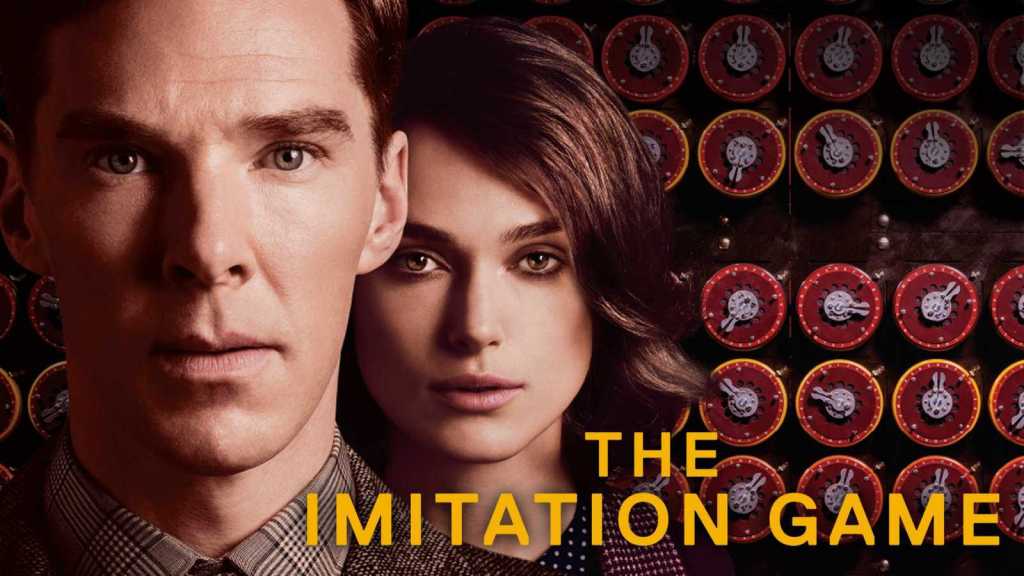
The Imitation Game (2014)

Director: Morten Tyldum

Alan Turing committed suicide at the age of 42. However, during his short life, he left a big legacy in the form of his contribution in deciphering the German Enigma codes during World War II and laying the foundations of modern computer science. The Imitation Game movie is based on the book Alan Turing – The Enigma by Andrew Hodges.

The history of cryptanalysis contains some of the most thrilling and intellectually stimulating stories of people involved in deciphering messages either long lost by civilization or deliberately used during wartime. Alan Turing’s contribution lies in the fact that he took decryption beyond any individual person’s mental powers by employing machines to perform rapid calculations for decrypting messages.

At the height of the World War II, Hitler’s Nazis started to dominate the war using encrypted communications generated from their innovative machine called Enigma. The machine could accept message in plain German and produce an encrypted output which could be transmitted over open radio signals to the various Naval, Air Force and Army leads in the war. Another Enigma machine which was as small as a typewriter was available with the Generals and they could decrypt the messages and act as per those instructions in a coordinated fashion.

Other countries like England and Poland even though they could easily intercept the German messages found it extremely difficult to decrypt them because the Nazis were changing the settings every day. So England decided to bring in the country’s best brains into Bletchley Park and ask them to try to crack the Enigma codes using an Enigma machine smuggled in by the Polish intelligence. 

Alan Turing, who was a maths professor at Cambridge and who used to advocate universal machines capable of solving any problem was also brought in as part of that elite team. They struggled for 2 years at the problem during which Turing worked on building his universal machine, a sort of a programmable computer, the size of a room. The movie brilliantly captures the mood of the time, the efforts of the team and the frustrations of the Head of the unit who thought Turing was only wasting Govt funds.

Although the movie does not delve deep into the mathematics of the encryption or decryption or the settings of the Enigma machine and what exactly they were trying to solve, there were two scenes which struck me as parallels to the nature of spiritual inquiry and enlightenment.

In one scene, one of the team members of Alan Turing who was feeling depressed by the lack of results said that it seemed as if they were not doing anything while millions were losing their lives out there in the war.  He said his brother was supplying food to soldiers, another cousin was a fighter pilot in the air force and yet other friends were all contributing to the war effort in some way while they were just sitting and building some stupid machine.

So in life, if you are in the spiritual search, a search for meaning or enlightenment, it may seem that all the other people in the world are doing something significant out there – like helping the poor, or leading an organization or teaching part time while you are just sitting and watching your mind and your thoughts, doing nothing. It does seem like wasting your life.

But like in the film, everything is not as it seems. What Alan Turing was doing and what he was able to do, some historians quantify that as shortening the war by 2 years and saving 14 million lives. You may ask what if Alan Turing did not succeed? That’s another thing altogether. He was aiming for the impossible. Is it wrong to aim for what seems to be impossible?

So what if you do not achieve enlightenment? Should you stop the effort? Should you go back to living your regular life and give others the impression you are doing something meaningful while deep down you know the hollowness of it all? Once you are on the spiritual search, there is really no way back. You have to push yourself ahead till you achieve it. And whatever people may say, sitting and doing nothing, watching your mind is the only way it gets done.

The second scene is when Turing actually cracks the Enigma code and is able to deduce the position of the next attack by the Germans, which was targeted on a British passenger ship. The team was ecstatic and was about to call the British intelligence to warn them but Alan Turing stopped them from doing so. They were all angry but gradually the realization sinked in that if they were able to prevent the German attack, it would clearly tell the Germans that their Enigma messages were cracked.

This was a big moral dilemma. If you act on the message, you could save hundreds of innocent lives but if you do that the Germans would shift to another way of encrypting their messages and all the work done by Turning in the last 2 years would be gone down the drain and they would have to start all over again. The Germans should never know that their messages were being read by the Allied forces. But how to use that intelligence if that was not actionable at all? Turing and the British intelligence worked out a camouflage of lies and alternative means which would be presented to the media so Germans would think that their Enigma machines were still safe while the information got leaked through some other sources. The British could not save everyone because doing that would stop the intelligence coming in so they had to choose to allow Germans to win at times and lose at times.

Drawing a parallel with enlightenment, you realize that you did not really attain anything after getting enlightened. During the search, enlightenment meant a lot and you thought you will really find something at the end of it. But when you get it, there is nothing at all. So one Zen master after getting enlightened exclaimed, “The Buddha did not teach anything at all”. And that is a big dilemma for any enlightened person. There is nothing to teach at all and yet when he sees people going about their lives suffering from their petty actions, there is a great urge to teach them about this vast nothingness.

If you really talk too much about emptiness, people think you are crazy and if some people do realize this emptiness, they may think it is too depressing and nihilistic because they do not want to face the truth. So in the end, you cannot help everyone, even your closest family members. You have to allow them to be as they are and experience what life has in store for them. But you can help some at the right time with the right guidance, not less not more.

Sometimes it is the people no one imagines anything of who do the things that no one can imagine.

Alan Turing